
Ingredients
Equipment
Method
- Mill your dry spelt berries into fine whole grain spelt flour. Measure out 440g for the dough. Add the salt.
- In a separate large mixing bowl, stir together the warm water, active sourdough starter, and honey or maple syrup until mostly smooth. Mix the flour with the wet ingredients until no dry bits remain and a shaggy dough forms.
- After the rest, perform your first set of stretch and folds. Because spelt dough can be more delicate than other sourdough bread dough, I handle it gently and avoid overworking it. Over the next 1 ½ to 2 hours, do 3 to 4 sets of stretch and folds, spaced about 30 minutes apart. The dough should gradually become smoother and more elastic, though it may still feel softer than a standard sourdough bread made without spelt.
- Cover the bowl and let the dough continue bulk fermentation at room temperature until it looks puffier, smoother, and slightly risen. Depending on the temperature of your kitchen, this usually takes about 4 to 6 hours total from the time the dough was first mixed. I watch the dough more than the clock here. With spelt sourdough, over proofing can happen faster than expected, so I look for a dough that has visibly expanded and feels airy, but not overly loose.
- Turn the dough out onto a lightly floured surface and gently shape it into a loose round. Let it rest for 15 to 20 minutes uncovered. Shape the dough into a boule, creating surface tension without pressing too hard. Place it seam side up into a banneton basket or a bowl lined with a tea towel dusted with flour. Cover the dough and let it proof for about 1 to 2 hours at room temperature, or refrigerate it for a longer cold proof if that works better with your schedule. I often refrigerate it after shaping because it makes scoring easier and helps the dough hold its shape
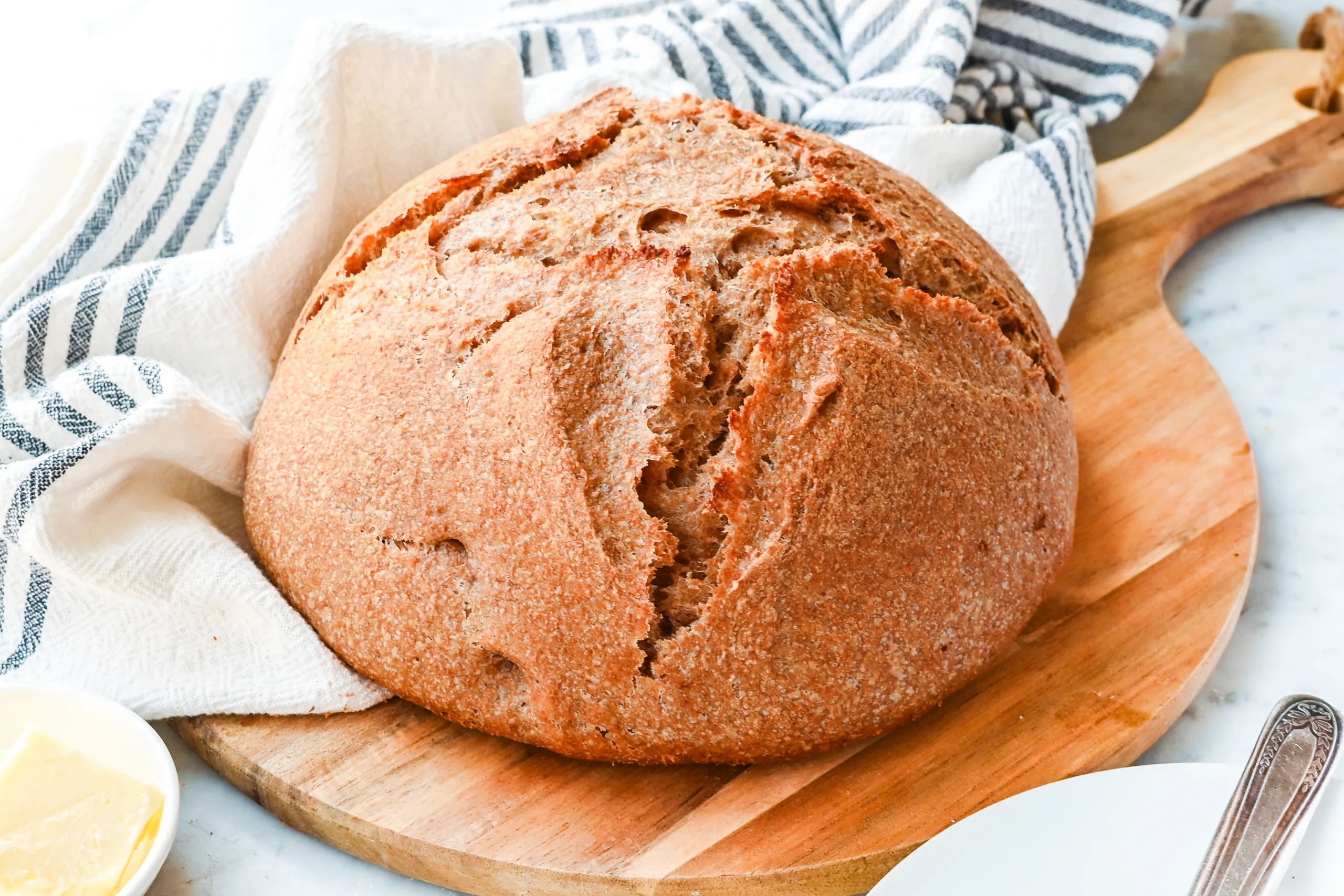
- Place your dutch oven in the oven and preheat to 450°F. Turn the dough out onto parchment paper. Dust off excess rice flour if needed, then score sourdough bread with a lame or sharp knife. Carefully transfer the loaf into the hot dutch oven. Cover and bake for 20 minutes. Remove the lid and bake for another 20 to 25 minutes, until the loaf is deeply golden and the crust is firm.
- Move the loaf to a cooling rack and let it cool completely before slicing. I know it is tempting to cut into it early, but waiting helps the crumb finish setting.
Notes
Spelt flour can make a softer dough than many other sourdough bread recipes, so I try not to add too much extra water unless the dough truly needs it. This is why I like starting with the slightly safer hydration level in this recipe.
Fresh milled whole grain flour can vary a bit depending on the grain and the fineness of the grind. If the dough feels unusually stiff, add a little water. If it feels overly slack, use slightly wetter hands during folds and focus on gentle strengthening instead of adding a lot of extra flour.
Do not overproof this loaf. During bulk ferment and final proof, spelt dough can move more quickly from nicely risen to overly relaxed.
Using rice flour in the banneton or tea towel helps keep the dough from sticking better than regular flour.
For the best oven spring, bake the loaf cold from the refrigerator if you choose a cold final proof.