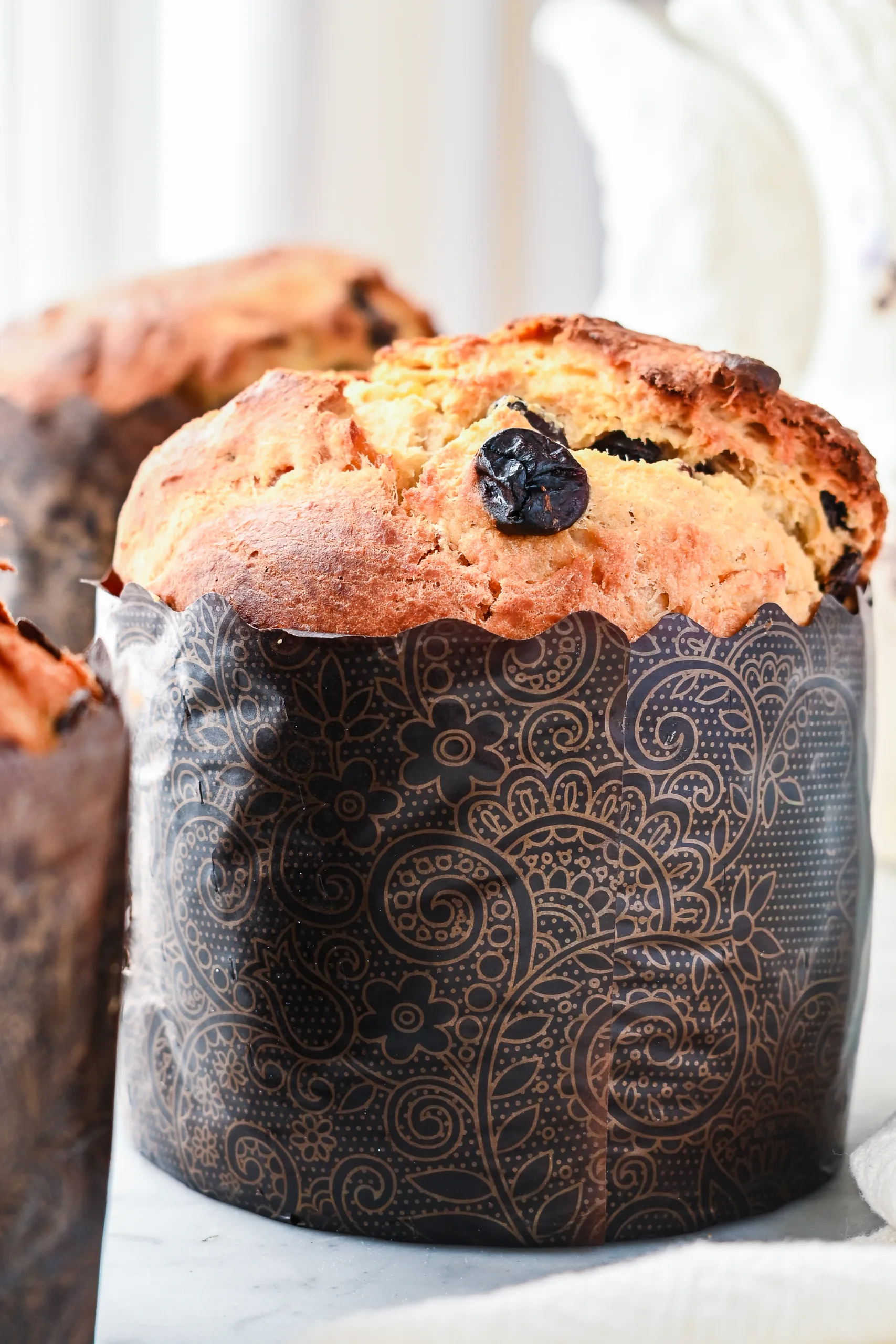
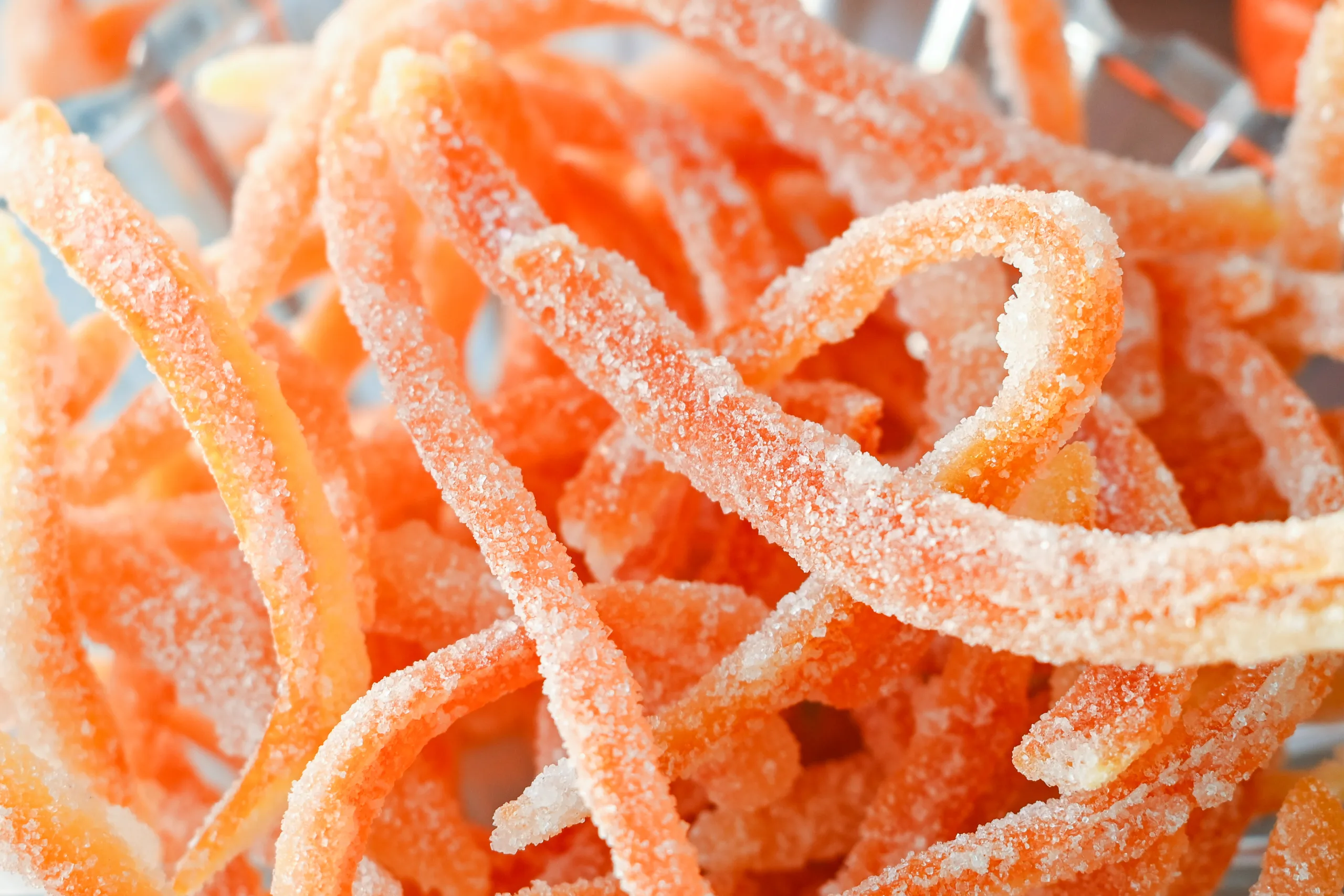
Panettone is one of those timeless Italian sweet breads that feels both celebratory and deeply comforting, no matter the season. It bakes up soft and airy, with rum-soaked fruit and my handmade candied orange peel folded into the dough before baking. The result is a gently sweet, fragrant bread that feels like something slowly and lovingly prepared in an old European kitchen.
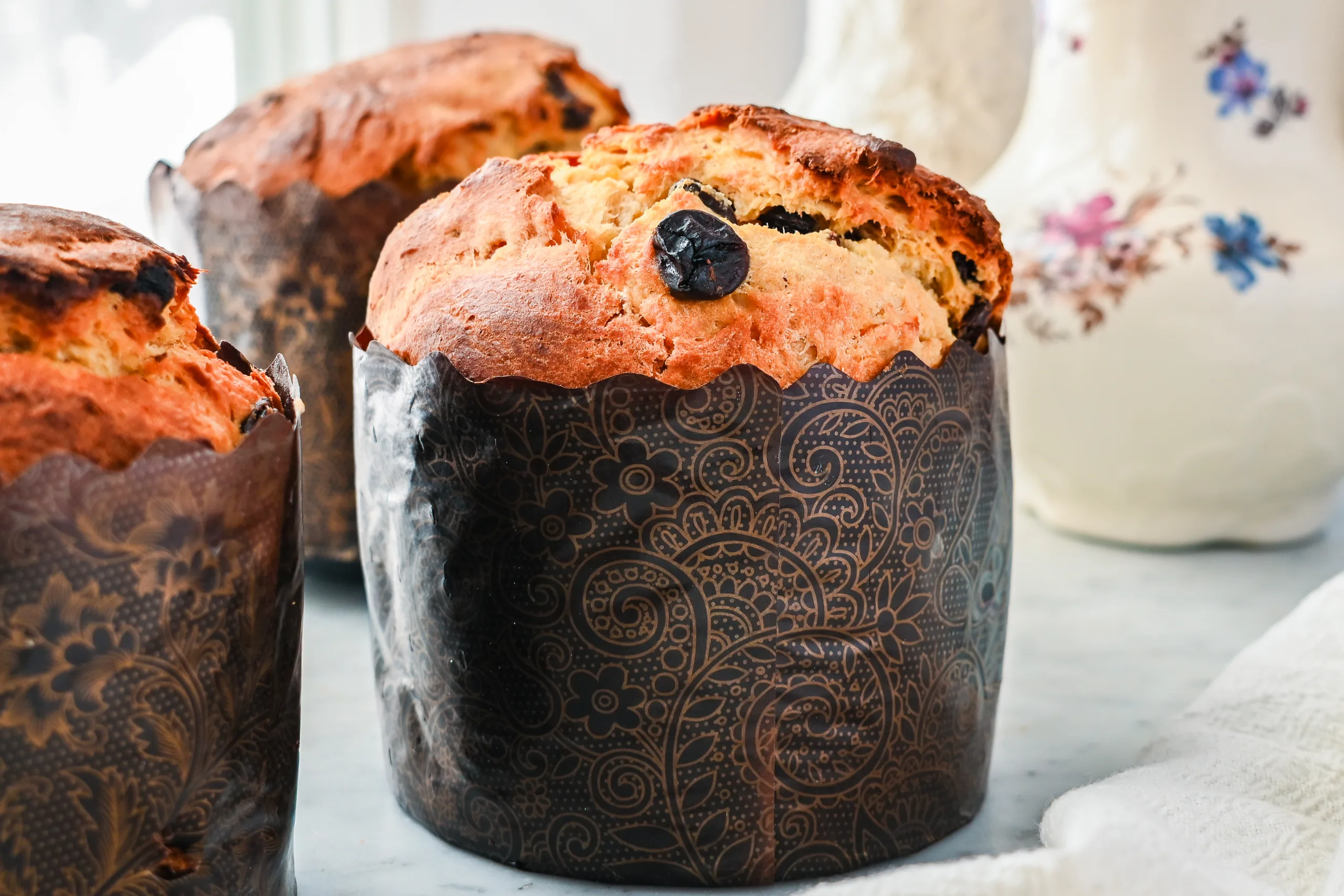
Table of Contents
This post contains affiliate links, which means I make a small commission at no extra cost to you. See my full disclosure here.
Quick Look at This Recipe
- Method: Traditional sourdough panettone made with a long, room-temperature fermentation
- Leavening: Active sourdough starter (naturally fermented)
- Timeline: 1 long day plus overnight cooling, or about 24 hours total
- Texture: Soft, tall, and airy with a delicate crumb
- Flavor: Gently sweet with citrus zest, soaked dried fruit, and homemade candied orange peel
- Skill level: Intermediate, but very doable with patience
- Special equipment: Panettone mold and skewers for cooling upside down
What is Sourdough Panettone?
Sourdough panettone is a softly risen sweet bread with a delicate crumb, rich butter and egg base, and a fragrant blend of citrus and dried fruit. It is traditionally enjoyed in Italy during Christmas and New Year, but you will also find it on tables during Easter and other family celebrations throughout the year. If you love seasonal sweet breads, you might also enjoy The Best Sourdough Hot Cross Buns Overnight Recipe or, for a healthier whole grain option, Milled Whole Wheat Sourdough Discard Hot Cross Buns.
Soaking dried fruit, the old-fashioned way
Traditionally, dried fruit for panettone is soaked in rum because it was widely available and keeps well, but apple brandy fits the same old-fashioned purpose and pairs beautifully with citrus zest and candied orange peel. From a baking standpoint, apple brandy behaves just like rum: it plumps the fruit, adds aroma, and helps keep the crumb tender without making the bread taste boozy.
For best results, the fruit should soak for at least 2 hours, though an overnight soak (8–12 hours) is ideal if you have the time. This allows the fruit to fully rehydrate so it stays soft in the finished bread and does not pull moisture from the dough. Before adding it to the panettone, drain the fruit well and gently pat it dry.
I often use my own homemade apple brandy when I have a batch aging in the pantry, and it adds a subtle depth of flavor that works beautifully in this bread.

A Note on Pasta Madre
Traditional Italian panettone is often made with pasta madre, a stiff sourdough starter maintained at a lower hydration. While it produces excellent results, maintaining a separate starter is not necessary for making panettone at home. This recipe is designed to work with a healthy, active sourdough starter, making it more practical and accessible while still honoring the traditional method.
Panettone Mold Sizes and Baking Times
This recipe makes approximately 1,560–1,620 g of dough in total and can be baked in one or multiple panettone molds. Always bake panettone of the same size together on the same oven rack, spaced apart for airflow. Fill every panettone mold to ⅓–½ full.
1 large panettone
- 1 × 1,000 g mold
- Bake 50–55 minutes
2 medium panettoni
- 2 × 750 g molds
- 780–810 g dough per mold
- Bake 40–45 minutes
3 small panettoni
- 3 × 500 g molds
- 520–540 g dough per mold
- Bake 32–38 minutes
Bake until the panettone is deeply golden and the internal temperature reaches 190–195°F (88–90°C). If the tops brown too quickly, tent loosely with foil during the last part of baking.

Equipment Needed
- Panettone mold (I used the smaller molds to make 3 panettoni)
- Skewers for cooling upside down

Ingredients
Fruit Soak
- 1 cup mixed dried fruit (currants, raisins, cranberries, cherries)
- ½ cup rum or homemade apple brandy You can use orange juice if you don't want to use alcohol.
Dough
- 4 cups bread flour (575 g)
- 4 large eggs, room temperature (about 200 g without shells)
- ¾ cup water (180 g)
- ½ cup bubbly, active sourdough starter (113 g)
- ⅔ cup sugar (134 g)
- 1 tablespoon honey (21 g)
- 1 ¼ teaspoons salt (7.5 g)
- 1 tablespoon vanilla extract (13 g) or 1 teaspoon vanilla bean paste (5 g)
- Zest of 1 orange
- Zest of 1 lemon
- 13 tablespoons unsalted butter, room temperature, cut into 1 tablespoon pieces (184 g)
- ¼ cup candied orange peel, diced (40 g) (do not soak)
How to Make Sourdough Panettone

Step 1: Soak the dried fruit
Place the dried fruit in a bowl and cover with rum or apple brandy. Cover and let soak for at least 2 hours, or overnight (8–12 hours) for best texture. Drain well and gently pat the fruit dry before adding it to the dough.

Step 2: Mix the dry ingredients.
In the bowl of a stand mixer or a large mixing bowl, add the bread flour, sugar, salt, orange zest, and lemon zest. Stir gently to evenly distribute the sugar, salt, and zest throughout the flour so the flavors are well mixed before adding the wet ingredients.

Step 3: Mix the wet ingredients.
In a separate bowl, whisk together the eggs, water, sourdough starter, honey, and vanilla until smooth and fully combined. Make sure the starter is bubbly and active, as this is what will give the panettone its rise and light texture.

Step 4: Combine wet and dry ingredients and knead the dough.
Pour the wet ingredients into the bowl with the dry ingredients. Mix on low speed with a dough hook, or stir with a sturdy spoon, until a shaggy dough forms and no dry flour remains. Scrape down the sides of the bowl as needed to ensure everything is fully incorporated. Continue kneading the dough on low to medium-low speed for about 8 to 12 minutes, or by hand for 12 to 18 minutes. At this stage, the dough will be sticky but should begin to smooth out and pull away from the sides of the bowl as gluten develops. Proper kneading here is essential for the tall, fluffy structure of panettone.

Step 5: Add the butter gradually.
With the mixer running on low speed, add the butter one tablespoon at a time, allowing each piece to fully absorb before adding the next. This process can take 10 to 15 minutes, and the dough may look like it is falling apart at first, but it will come back together. By the end, the dough should be glossy, elastic, and very soft. Check gluten development: Pinch off a small piece of dough and gently stretch it between your fingers. If it stretches into a thin, translucent sheet without tearing easily, the gluten is well developed. If it tears quickly, continue kneading for a few more minutes and test again.

Step 6: First rise (bulk fermentation).
Shape the dough into a ball and place it into a lightly greased bowl. Cover and let it rise at room temperature until it looks noticeably puffy and expanded, even if it has not fully doubled in size. Depending on your starter strength and room temperature, this can take anywhere from 6 to 12 hours

Step 7: Incorporate the fruit.
Once the dough has finished bulk fermentation, strain the soaked dried fruit through a fine-mesh sieve and let it drain for a few minutes, gently pressing to remove excess liquid. Turn the dough out onto a clean surface and press it into a rectangle. Scatter the strained dried fruit evenly over the dough, followed by the diced candied orange peel. Fold the dough over itself several times to enclose the fruit, working gently so the dough does not tear. Cover and let the dough rest for about 10 minutes to relax before shaping.

Step 8: Shape the panettone.
After resting, shape the dough into a tight, smooth ball by folding the edges toward the center and then flipping it seam-side down. Gently drag the dough against the counter using your hands to build surface tension. Place the dough seam-side down into the panettone mold.

Step 9: Final proof.
Cover the panettone loosely with plastic wrap or place the mold inside a large bag. Let it rise at room temperature until the dough reaches about 1 to 2 inches from the top of the mold. This final rise is critical for a tall, light panettone and can take 4 to 10 hours depending on conditions. When the dough is nearly finished proofing, preheat your oven to 350°F. Make sure the oven is fully heated before baking to ensure proper oven spring. Using a sharp knife or blade, gently score a shallow X across the top of the dough. If desired, place a small pat of butter in the center of the X to help the top open and brown evenly during baking.

Step 10: Bake and cool the panettone.
Place the panettone in the center of the oven and bake for 35 to 50 minutes, depending on the size of your mold and your oven. (Refer to mold size and bake time below.) The top should be a deep golden brown, and the internal temperature should reach about 190–195°F when tested in the center. Immediately after baking, insert two skewers through the lower portion of the panettone mold. Carefully turn the panettone upside down and suspend it between two sturdy surfaces so it hangs freely. Refer to How to cool panettone upside down using skewers in the paragraph below the baker's schedule. Allow it to cool completely upside down for 6 to 12 hours to prevent the soft crumb from collapsing.

Step 11: Slice and store.
Once fully cooled, remove the skewers and slice the panettone with a serrated knife. Store tightly wrapped at room temperature and enjoy within several days for the best texture and flavor.
Sourdough panettone baker’s schedule (room-temperature method)
Day 1: Mixing, dough development, and bulk fermentation
6:30 am – Soak the dried fruit
Place the dried fruit in a bowl and cover with rum or apple brandy. Cover and set aside to soak for at least 2 hours, or longer if possible. An overnight soak is ideal, but a morning soak works well for a same-day mix.
7:00 am – Prepare ingredients
Bring eggs, sourdough starter, and butter to room temperature. Cut the butter into tablespoon pieces and set aside. Zest the orange and lemon and dice the candied orange peel. This small bit of prep makes the long dough process feel relaxed instead of rushed.
7:30 am – Mix and knead the dough
Mix the dry and wet ingredients, knead the dough, and slowly incorporate the butter one tablespoon at a time. Continue kneading until the dough is smooth, elastic, and glossy, and passes the windowpane test.
8:15 am – Begin bulk fermentation
Shape the dough into a smooth ball and place it in a lightly greased bowl. Cover and leave at room temperature to ferment. The dough should slowly become puffy and airy over several hours.
2:00–4:00 pm – Check dough readiness
By mid-afternoon, the dough should look noticeably expanded and soft, though it may not have fully doubled. It should feel alive and elastic when gently pressed.
4:00 pm – Add fruit and candied orange peel
Turn the dough out gently and flatten it slightly. Sprinkle the drained, dried fruit and candied orange peel evenly over the surface. Fold the dough carefully to incorporate, taking care not to tear the gluten. Cover and rest the dough for about 10 minutes to relax.
4:15 pm – Shape the panettone
Shape the dough into a tight, smooth ball, building surface tension. Place seam-side down into the panettone mold.
Day 1 into Day 2: Final proof and baking
4:30 pm – Begin final proof
Cover the panettone loosely and let it rise at room temperature. This is the longest and most important rise. The dough should slowly climb toward the top of the mold without rushing.
Late evening or overnight (10:00 pm–6:00 am)
The panettone continues to rise quietly. Depending on room temperature and starter strength, it may be ready late at night or early the next morning. If the panettone reaches full proof late at night, it can be baked right away and cooled upside down overnight, which is actually very traditional. If baking that late is not practical, the fully proofed panettone can be placed in the refrigerator for a short 1 to 3 hour hold to slow fermentation, then baked straight from the fridge once the oven is preheated. This short rest is only meant to pause the rise, not replace the room-temperature method. Do not leave a fully proofed panettone sitting at room temperature for an extended period, as overproofing can cause the loaf to collapse.
When the dough reaches 1–2 inches from the top of the mold
Preheat the oven to 350°F. Score the top with a shallow X and add a small pat of butter in the center if desired.
Bake immediately
Bake for 35–50 minutes, until deeply golden and the internal temperature reaches 190–195°F.
Cooling (this part matters)
Immediately after baking
Insert skewers through the lower portion of the panettone mold, turn upside down, and suspend between two sturdy surfaces.
Cool upside down for 6–12 hours
Allow the panettone to cool completely upside down to prevent collapse and preserve the light, airy crumb.
Gentle reassurance for readers (optional note)
Panettone is not meant to be rushed. This slow, overnight rise is exactly what gives it its tall shape, delicate crumb, and old-fashioned character. If the timing stretches a little, that is normal and expected.
Optional Flavor Variations
Chocolate Chip Panettone
- Replace the fruit with 1 cup frozen chocolate chips
- Add zest of 1 orange
- Add 1 teaspoon vanilla bean paste
Orange Vanilla Panettone
- Use 1.5 teaspoons vanilla bean paste
- Add zest of 2 oranges
- Omit raisins
Perfect for gifting or serving with holiday breakfasts!
Tips for a Tall, Light Panettone
- How full to fill panettone molds. Panettone dough should be portioned so each mold is filled about one-third full before the final rise. During proofing, the dough should rise until it reaches just below the rim of the mold, then it is ready to bake. Starting lower allows the dough to rise upward and develop a tall, airy crumb without overflowing or baking dense.
- Adding a small amount of yeast if needed. Rich panettone dough can be challenging for sourdough alone due to the butter, eggs, and sugar. If the dough is slow to rise, a small amount of commercial yeast can be kneaded in before adding the fruit. About ½ teaspoon instant yeast for the full batch is enough to support lift without overpowering the sourdough flavor. This hybrid method is commonly used for enriched doughs and helps ensure a lighter texture and better oven spring.
- Preparing your sourdough starter ahead of time. Panettone requires an especially strong and active starter to lift the wet, enriched dough. Feeding your starter regularly for two to three days before baking, keeping it warm, and using it at peak activity can make a noticeable difference in rise and structure. A starter that doubles or triples quickly after feeding is best suited for this recipe.
How to cool panettone upside down using skewers
Once the panettone comes out of the oven, work carefully but promptly. While it is still in the paper mold, slide two long metal or wooden skewers straight through the lower third of the panettone, about 1 inch up from the bottom of the mold. Push the skewers all the way through so an equal amount sticks out on each side. Make sure the skewers run parallel to each other and are spaced evenly so the loaf stays balanced.
As soon as the skewers are in place, gently turn the panettone upside down, holding the skewers rather than the paper mold. Rest the ends of the skewers on two sturdy surfaces of equal height, such as the rims of two large pots, the edges of two chairs, or stacks of heavy books. As you can see in the picture above, I used two vases that were the same size to hang my panettone. This was an easier, quicker solution for me than stacking a bunch of books. The panettone should hang freely in the air without touching anything underneath. Leave it suspended upside down until completely cool, usually 6 to 12 hours, to prevent the soft crumb from collapsing under its own weight.
Frequently Asked Questions About Sourdough Panettone
Can I use pasta madre to make this panettone?
Yes. If you keep a stiff starter, often called pasta madre, you can use it in place of your regular sourdough starter. Feed it several times before baking for best strength.
Why does panettone dough take so long to rise?
This bread is enriched with butter, eggs, and sugar, which slow fermentation. Warmer dough temperatures help the rise move along naturally.
Can I make the dough ahead?
You can make the dough through the first rise, then refrigerate it overnight. Bring to room temperature before shaping.
How do I prevent my panettone from collapsing?
Hanging the bread upside down while cooling helps preserve the tall, airy structure created during baking.
How should I store panettone?
Wrap tightly and store at room temperature for up to 5 days. It also freezes well in slices.



Tried this recipe?
I would love to see it! Tag me on Instagram @idiesfarm and #idiesfarm so I can share your beautiful creation!


Sourdough Panettone Recipe (Traditional Italian Sweet Bread)
Ingredients
Equipment
Method
- Place the dried fruit in a bowl and cover with rum or apple brandy. Cover and let soak for at least 2 hours, or overnight (8–12 hours) for best texture. Drain well and gently pat the fruit dry before adding it to the dough.
- In the bowl of a stand mixer or a large mixing bowl, add the bread flour, sugar, salt, orange zest, and lemon zest. Stir gently to evenly distribute the sugar, salt, and zest throughout the flour so the flavors are well mixed before adding the wet ingredients.
- In a separate bowl, whisk together the eggs, water, sourdough starter, honey, and vanilla until smooth and fully combined. Make sure the starter is bubbly and active, as this is what will give the panettone its rise and light texture.
- Pour the wet ingredients into the bowl with the dry ingredients. Mix on low speed with a dough hook, or stir with a sturdy spoon, until a shaggy dough forms and no dry flour remains. Scrape down the sides of the bowl as needed to ensure everything is fully incorporated. Continue kneading the dough on low to medium-low speed for about 8 to 12 minutes, or by hand for 12 to 18 minutes. At this stage, the dough will be sticky but should begin to smooth out and pull away from the sides of the bowl as gluten develops. Proper kneading here is essential for the tall, fluffy structure of panettone.
- With the mixer running on low speed, add the butter one tablespoon at a time, allowing each piece to fully absorb before adding the next. This process can take 10 to 15 minutes, and the dough may look like it is falling apart at first, but it will come back together. By the end, the dough should be glossy, elastic, and very soft. Check gluten development: Pinch off a small piece of dough and gently stretch it between your fingers. If it stretches into a thin, translucent sheet without tearing easily, the gluten is well developed. If it tears quickly, continue kneading for a few more minutes and test again.
- Shape the dough into a smooth ball and place it into a lightly greased bowl. Cover and let it rise at room temperature until it looks noticeably puffy and expanded, even if it has not fully doubled in size. Depending on your starter strength and room temperature, this can take anywhere from 6 to 12 hours.
- Once the dough has finished bulk fermentation, strain the soaked dried fruit through a fine-mesh sieve and let it drain for a few minutes, gently pressing to remove excess liquid. Turn the dough out onto a clean surface and press it into a rectangle. Scatter the strained dried fruit evenly over the dough, followed by the diced candied orange peel. Fold the dough over itself several times to enclose the fruit, working gently so the dough does not tear. Cover and let the dough rest for about 10 minutes to relax before shaping.
- After resting, shape the dough into a tight, smooth ball by folding the edges toward the center and then flipping it seam-side down. Gently drag the dough against the counter using your hands to build surface tension. Place the dough seam-side down into the panettone mold.
- Cover the panettone loosely with plastic wrap or place the mold inside a large bag. Let it rise at room temperature until the dough reaches about 1 to 2 inches from the top of the mold. This final rise is critical for a tall, light panettone and can take 4 to 10 hours depending on conditions. When the dough is nearly finished proofing, preheat your oven to 350°F. Make sure the oven is fully heated before baking to ensure proper oven spring. Using a sharp knife or blade, gently score a shallow X across the top of the dough. If desired, place a small pat of butter in the center of the X to help the top open and brown evenly during baking.
- Place the panettone in the center of the oven and bake for 35 to 50 minutes, depending on the size of your mold and your oven. (Refer to mold size and bake time below.) The top should be a deep golden brown, and the internal temperature should reach about 190–195°F when tested in the center. Immediately after baking, insert two skewers through the lower portion of the panettone mold. Carefully turn the panettone upside down and suspend it between two sturdy surfaces so it hangs freely. Refer to How to cool panettone upside down using skewers in the paragraph below the baker's schedule. Allow it to cool completely upside down for 6 to 12 hours to prevent the soft crumb from collapsing.
- Once fully cooled, remove the skewers and slice the panettone with a serrated knife. Store tightly wrapped at room temperature and enjoy within several days for the best texture and flavor.
Notes
Tips for Success
- Start with a strong starter: Panettone relies entirely on natural fermentation, so your starter should be bubbly, active, and recently fed. A weak starter will struggle with such a rich dough.
- Take your time with the butter: Adding the butter slowly is essential. If it goes in too fast, the dough can break down and lose structure before the gluten is fully developed.
- Watch the dough, not the clock: Rise times can vary widely depending on room temperature and starter strength. The dough should look puffy and elastic during bulk fermentation and rise close to the top of the mold before baking.
- Drain fruit well before adding: Soaked fruit should be plump but not dripping. Excess liquid can weaken the dough and affect the final texture.
- Do not skip cooling upside down: Panettone has a very delicate crumb when hot. Hanging it upside down while cooling prevents collapse and helps it set properly.

Welcome!
Hi! I’m Stephanie, also known as Idie. Follow me as I tap into the methods of the past and learn how to make my world a little smaller.