In a large bowl, combine the sourdough starter, water, flour and salt and mix until a rough dough forms. Cover and let rest for 30 minutes. For best results, keep the dough around 70–72°F. Warmer temperatures can soften the butter and affect the layers.
After 30 minutes, perform your first set of stretch and folds. Gently stretch one side of the dough up and fold it over itself, rotating the bowl and repeating until all sides have been folded. Cover and let rest for 30 minutes.
Grate the cold butter. Sprinkle half of the grated butter evenly over the top of the dough. Perform another set of stretch and folds, gently incorporating the butter into the dough. Place the remaining butter back in the refrigerator to keep it cold until the next set of folds. Cover and let the dough rest for 30 minutes.
Sprinkle the remaining cold grated butter evenly over the dough and perform another set of stretch and folds. The butter will continue to disperse throughout the dough as you fold. Cover and let rest for 30 minutes.
Cover and let the dough rise at room temperature until it looks puffy and has increased in size by about 50 to 75 percent, about 3 to 5 hours depending on your kitchen temperature and the strength of your starter.
Gently tip the dough out onto a clean counter. Handle it carefully to avoid knocking out too much air. Using your hands or a bench knife, tuck the dough under itself while rotating it in a circle to create a loose round. This helps build a little surface tension.
Let the dough rest uncovered for about 20 to 30 minutes. It will relax and spread slightly, which makes final shaping easier.
Lightly flour the top of the dough and flip it over so the floured side is facing down. Gently stretch into a rough rectangle. Fold the top third down, then the bottom third up, like a letter.
For a loaf, roll the dough into a log and place seam-side down into a greased loaf pan.
For a round boule, shape the dough into a tight ball and place seam-side up into a floured banneton or towel-lined bowl.
Cover and let rise until the dough has puffed and risen and has increased in size by about 50 to 75 percent. This will take about 2 to 4 hours
Preheat the oven to 425°F (220°C) with a Dutch oven inside. Cut a piece of parchment paper slightly larger than your dough and set it aside. When the dough is ready to bake, gently tip the banneton or bowl upside down over the parchment paper and let the dough fall onto it. If it sticks slightly, lift the edge of the bowl and let gravity do the work rather than pulling the dough.
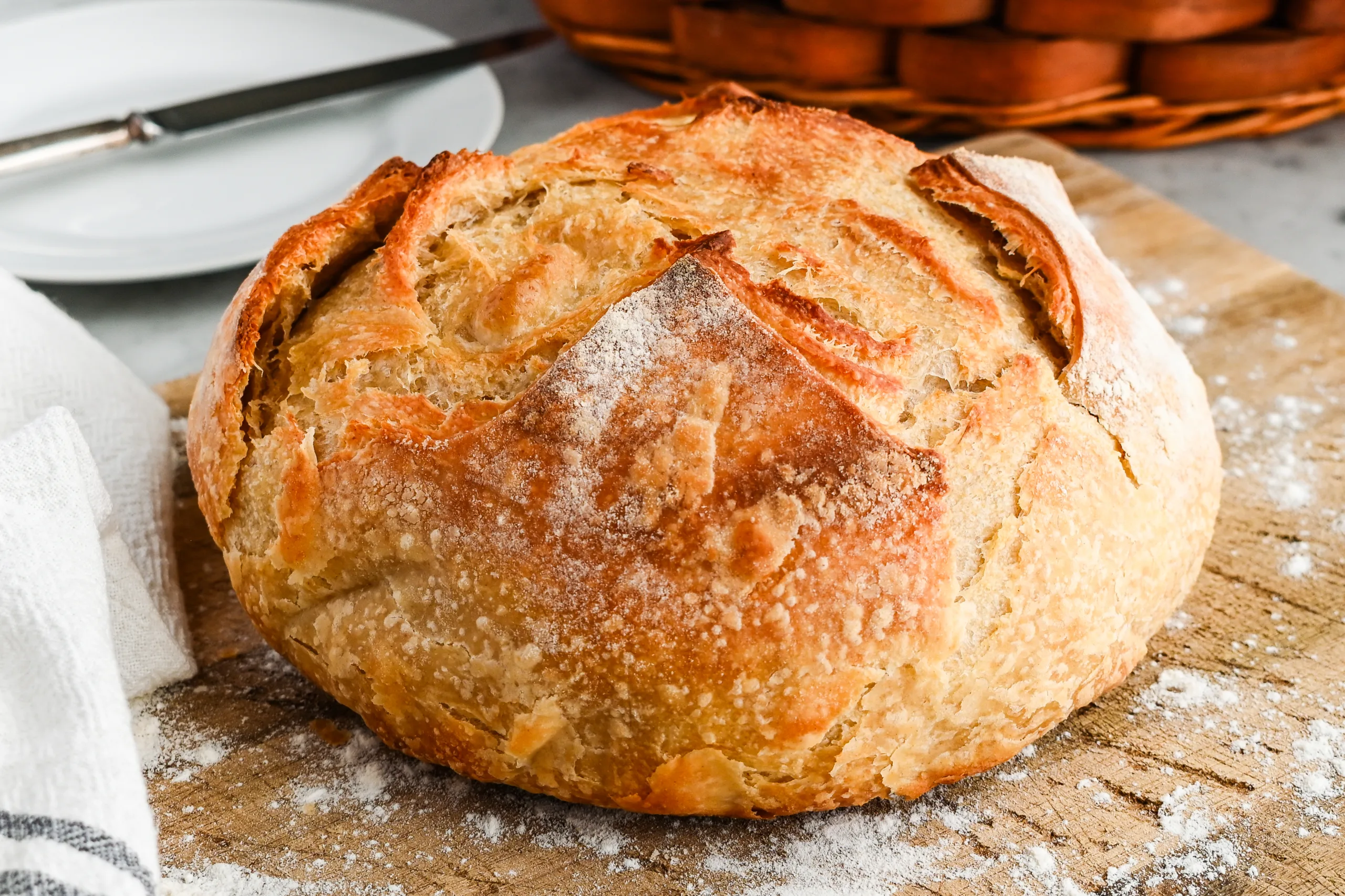
Lightly dust off any excess flour if needed, score the top with a sharp knife or bread lame, and use the parchment to carefully lift the dough into the preheated Dutch oven. Cover and bake for 25 minutes, then uncover and bake for another 15 to 20 minutes, until the crust is deeply golden and crisp.
Let cool for at least an hour on a wire rack before slicing.