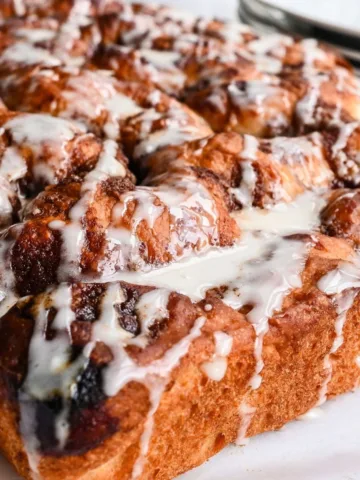
This sourdough croissant bread combines the flaky, buttery layers of a croissant with the structure of a sliceable bread. It is made with an active sourdough starter, cold milk and water, and a traditional butter lamination that creates tender layers throughout the dough. The result is a rich but not greasy crumb with a gentle sourdough tang and a soft interior that slices beautifully. If you are looking for a more traditional approach to puff pastry, my Traditional Homemade Puff Pastry Recipe with classic flaky butter layers is a wonderful place to start. If you prefer a naturally leavened option, my Sourdough Puff Pastry Recipe is another delicious variation to try.
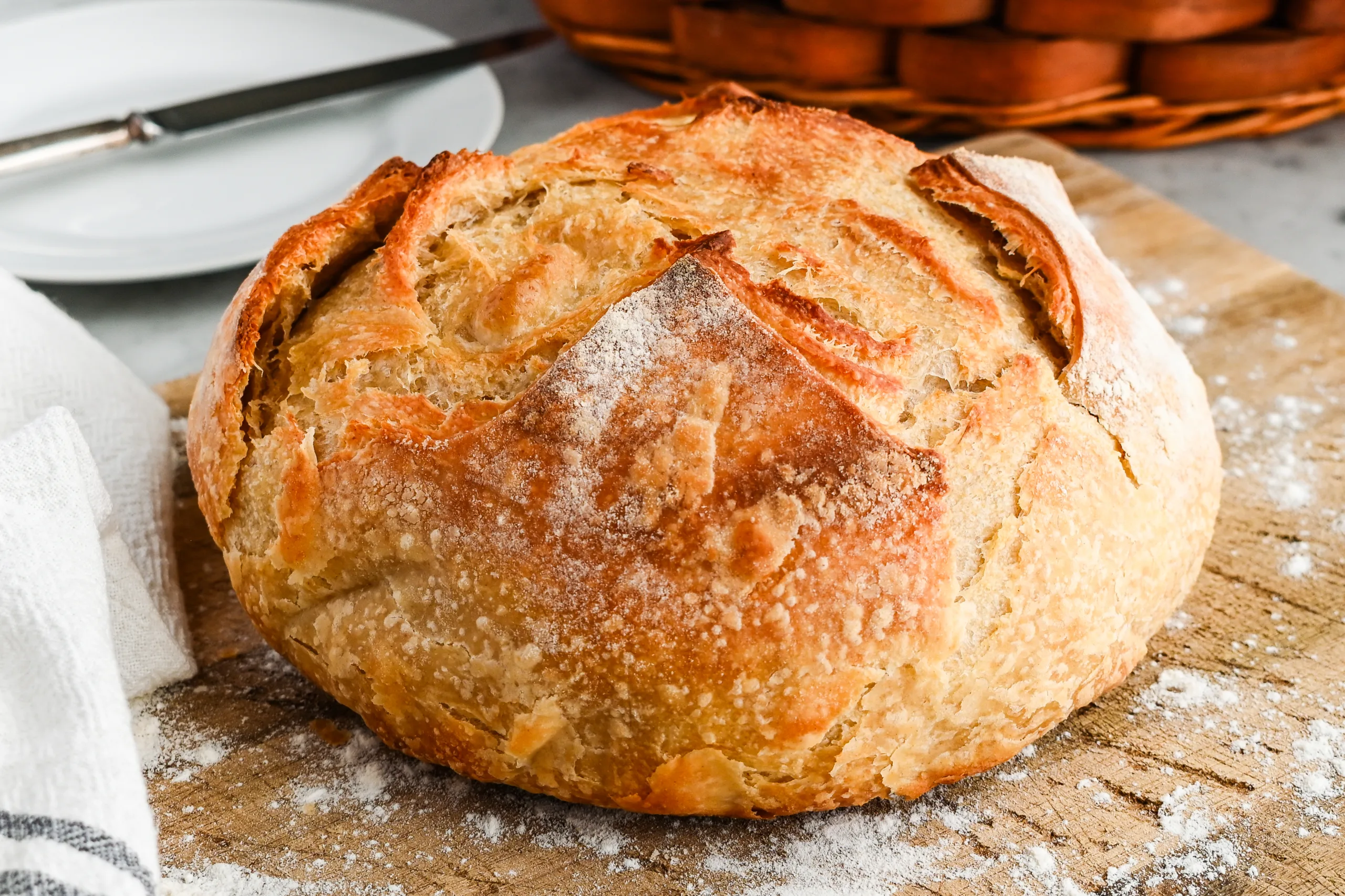
I love working with sourdough dough, but sometimes I want something a little more special than everyday bread. This sourdough croissant bread feels like a rewarding project while still staying rooted in traditional bread baking. It is especially lovely served warm with homemade raw butter and a spoonful of my homemade strawberry jam, letting the soft layers soak up just enough sweetness. It is the kind of recipe that connects me to the process step by step and reminds me why baking from scratch is worth the extra time.
Table of Contents
This post contains affiliate links, which means I make a small commission at no extra cost to you. See my full disclosure here.
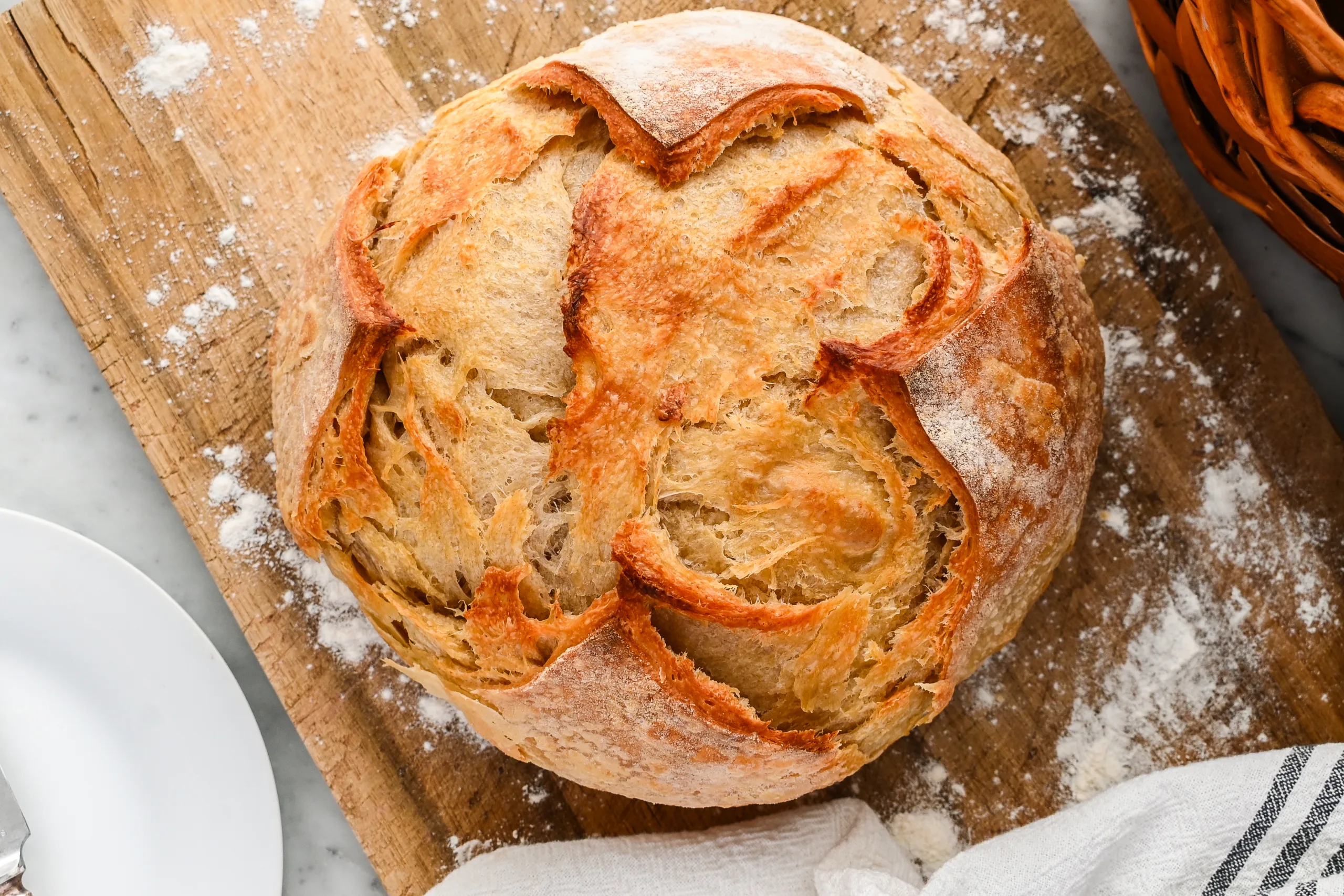
Quick Look at This Recipe
- Recipe type: Laminated sourdough bread
- Dough style: Croissant-style laminated loaf
- Prep time: About 45 minutes active
- Fermentation time: Overnight plus same-day proof
- Bake time: 40 to 45 minutes
- Yield: One Boule
- Texture: Flaky layers with soft crumb
- Flavor: Buttery with mild sourdough tang

What Makes Croissant Bread Different
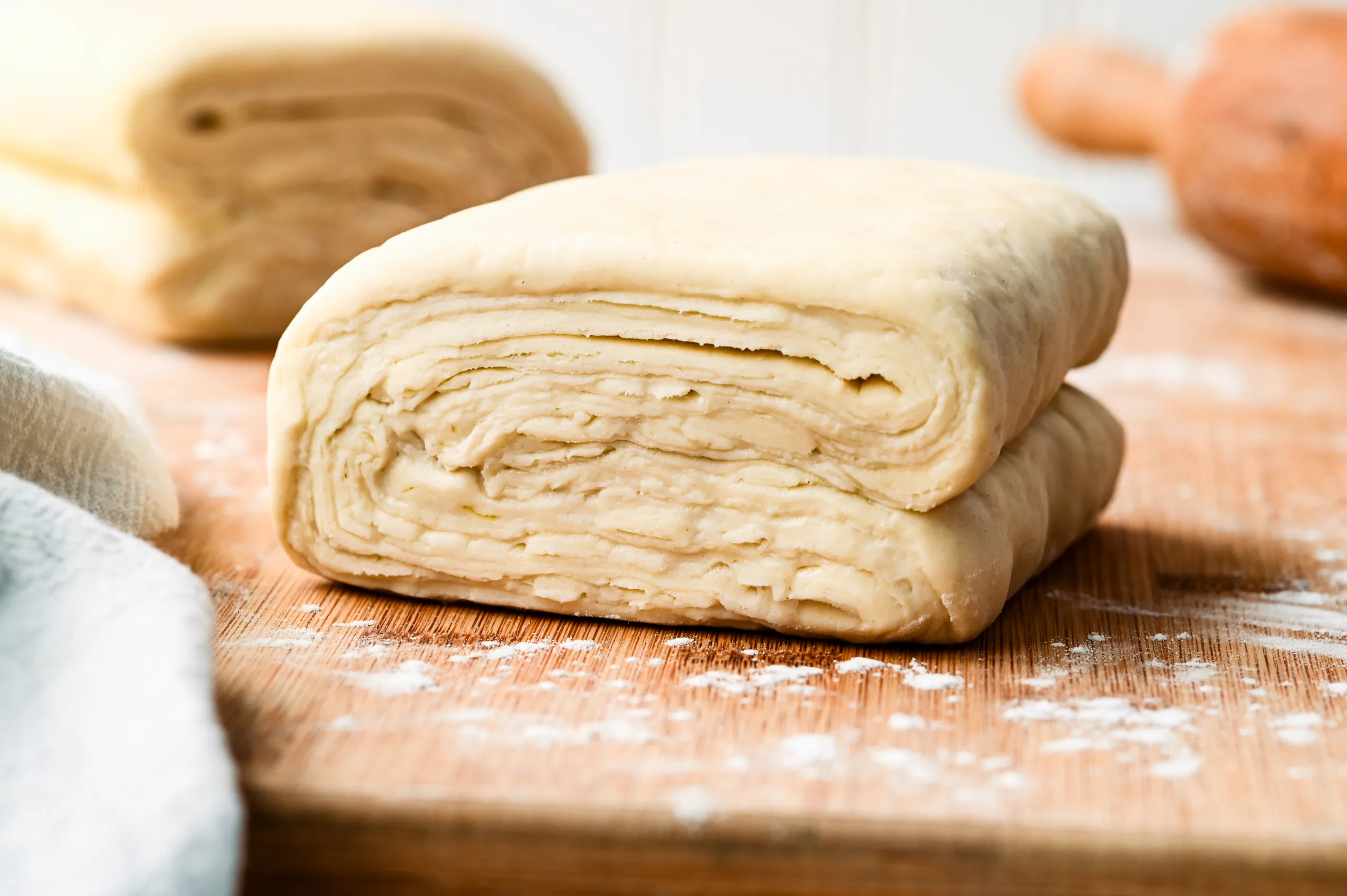
Unlike a standard sourdough bread recipe, croissant bread uses lamination. This means cold butter is folded into the dough in layers, creating steam during baking that separates the dough into tender, flaky sheets. Instead of shaping individual croissants, the laminated dough is shaped and baked as a round boule, giving the bread a crisp crust with buttery, pull-apart layers inside. Those layers make it especially good sliced and served simply, whether with butter or a spoonful of my Classic Homemade Strawberry Jam Without Pectin.
This approach bridges classic bread baking and pastry technique while still relying on simple ingredients like flour, water, butter, and sourdough starter.
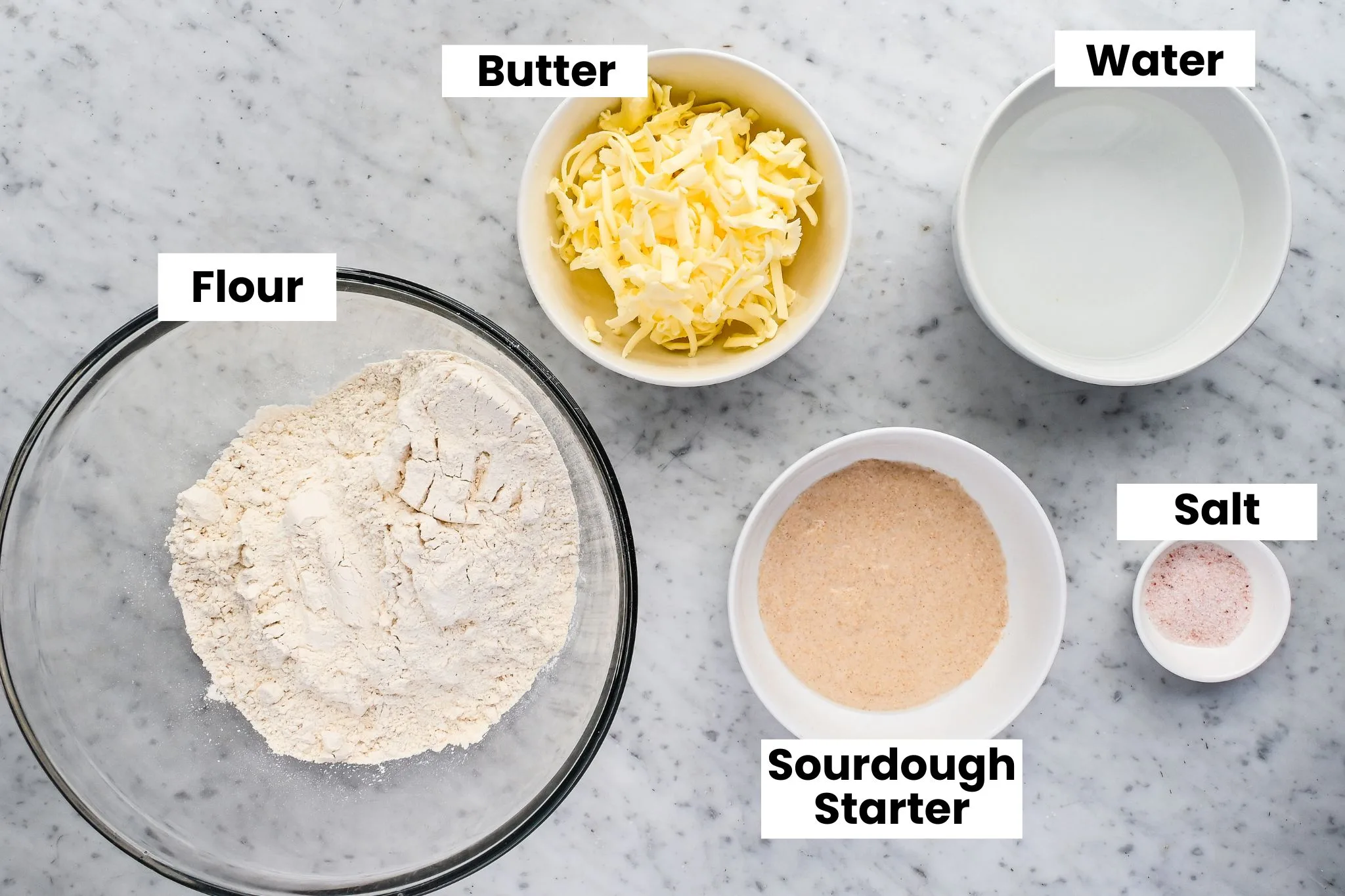
Ingredients
Dough
- ½ cup sourdough starter (120 g)
- 1 cup plus 7 tablespoons water (340 g)
- 1¾ teaspoons salt (10 g)
- 3½ cups bread flour (500 g)
- ½ cup cold butter (grated)
Equipment
- Mixing bowl or stand mixer
- Rolling pin
- Parchment paper
- Plastic wrap
- 9 x 5 loaf pan
- Instant-read thermometer (optional)
Instructions

Mix the dough
In a large bowl, combine the sourdough starter, water, flour and salt and mix until a rough dough forms. Cover and let rest for 30 minutes. For best results, keep the dough around 70–72°F. Warmer temperatures can soften the butter and affect the layers.

Stretch and fold #1
After 30 minutes, perform your first set of stretch and folds. Gently stretch one side of the dough up and fold it over itself, rotating the bowl and repeating until all sides have been folded. Cover and let rest for 30 minutes.

Stretch and fold #2 (add butter)
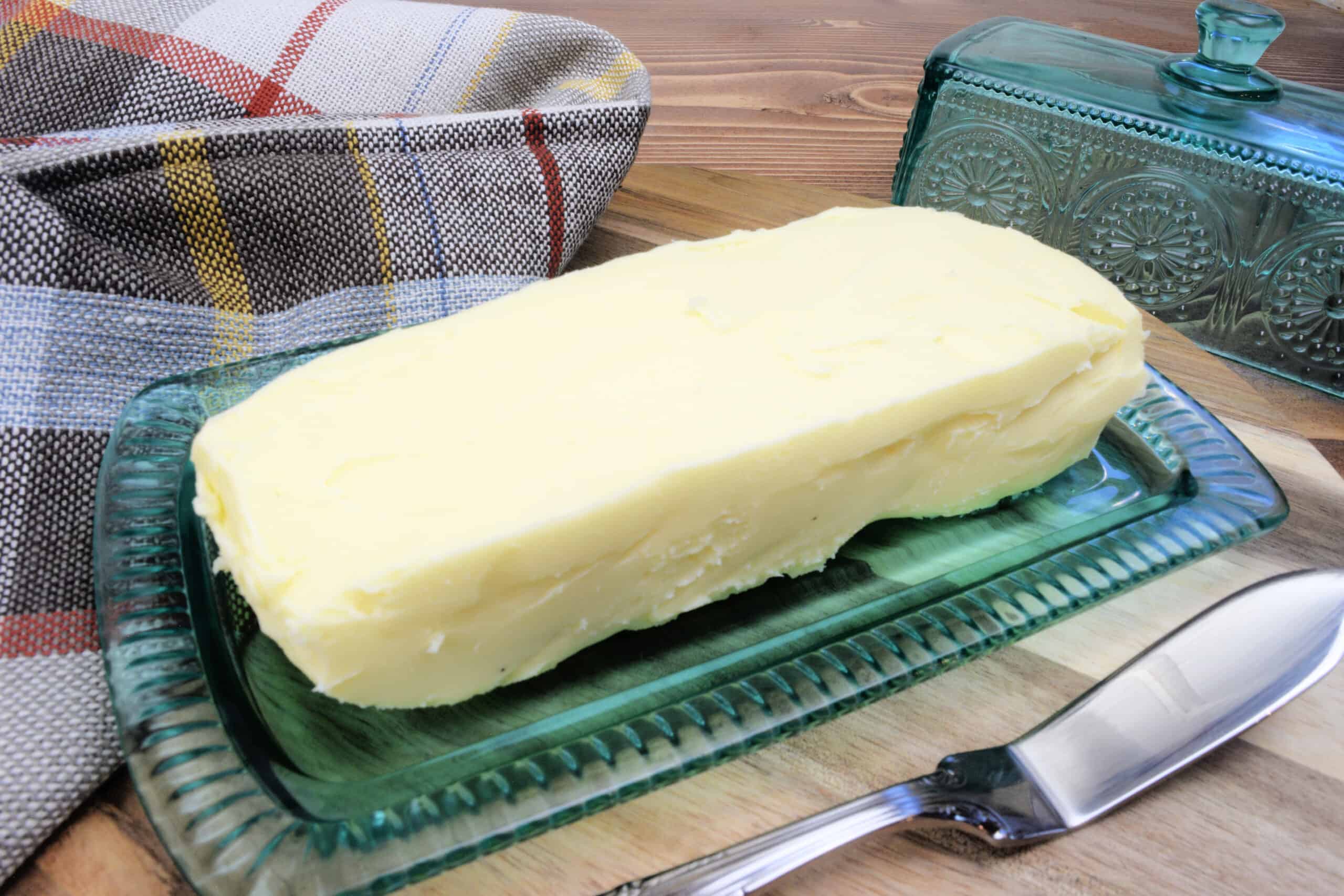
Grate the cold butter. Sprinkle half of the grated butter evenly over the top of the dough. Perform another set of stretch and folds, gently incorporating the butter into the dough. Place the remaining butter back in the refrigerator to keep it cold until the next set of folds. Cover and let the dough rest for 30 minutes.

Stretch and fold #3 (add remaining butter)
Sprinkle the remaining cold grated butter evenly over the dough and perform another set of stretch and folds. The butter will continue to disperse throughout the dough as you fold. Cover and let rest for 30 minutes.

Bulk fermentation
Cover and let the dough rise at room temperature until it looks puffy and has increased in size by about 50 to 75 percent, about 3 to 5 hours depending on your kitchen temperature and the strength of your starter.
Pre-shape
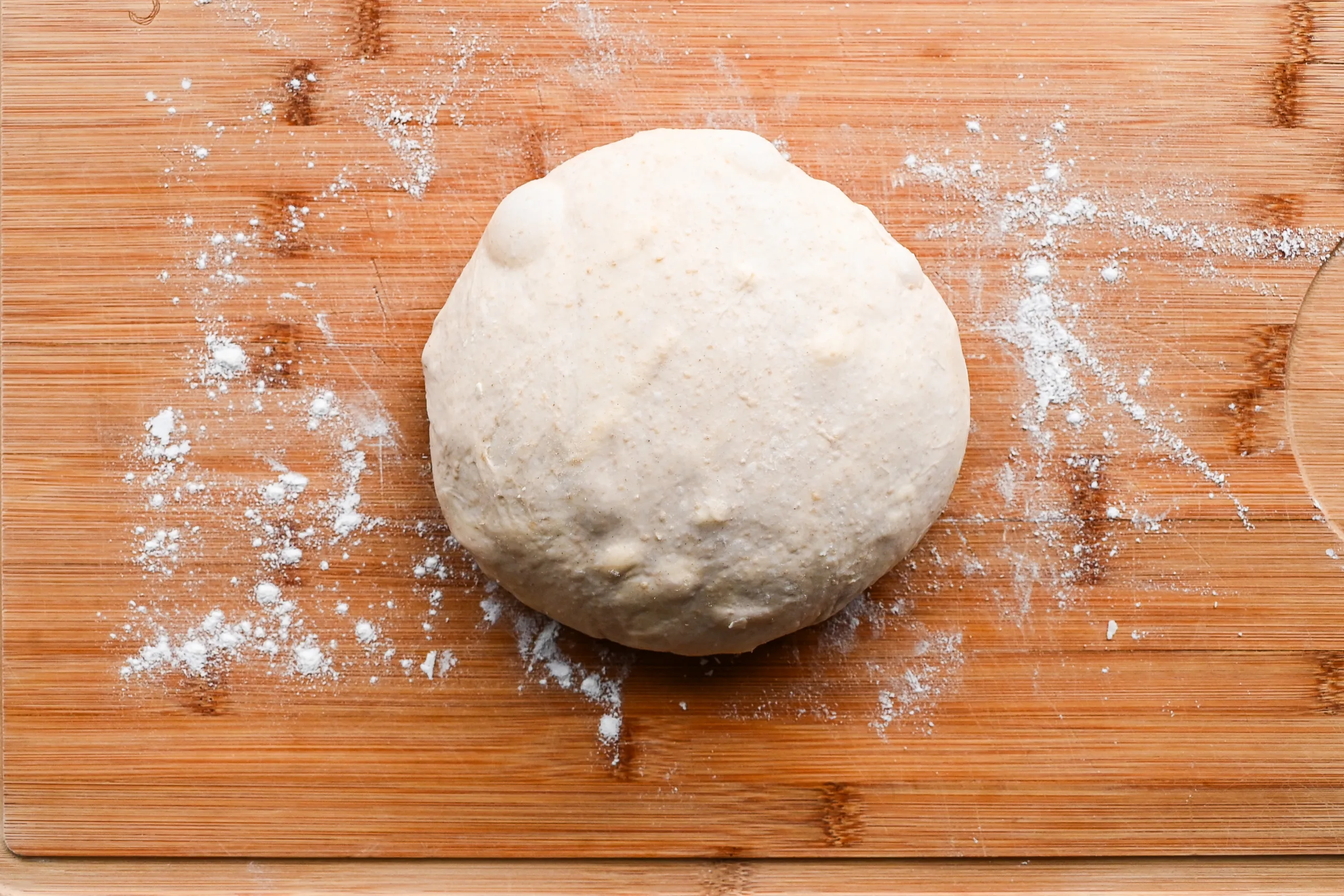
Gently tip the dough out onto a clean counter. Handle it carefully to avoid knocking out too much air. Using your hands or a bench knife, tuck the dough under itself while rotating it in a circle to create a loose round. This helps build a little surface tension. Let the dough rest uncovered for about 20 to 30 minutes. It will relax and spread slightly, which makes final shaping easier.

Final shaping
Lightly flour the top of the dough and flip it over so the floured side is facing down. Gently stretch into a rough rectangle. Fold the top third down, then the bottom third up, like a letter. Rotate the dough and gently tuck the edges under to form a tight round. Place seam-side up into a floured banneton or towel-lined bowl. Cover and let rise until the dough has puffed and risen and has increased in size by about 50 to 75 percent. This will take about 2 to 4 hours.

Bake
Preheat the oven to 425°F (220°C) with a Dutch oven inside. Cut a piece of parchment paper slightly larger than your dough and set it aside. When the dough is ready to bake, gently tip the banneton or bowl upside down over the parchment paper and let the dough fall onto it. If it sticks slightly, lift the edge of the bowl and let gravity do the work rather than pulling the dough. Lightly dust off any excess flour if needed, score the top with a sharp knife or bread lame, and use the parchment to carefully lift the dough into the preheated Dutch oven. Cover and bake for 25 minutes, then uncover and bake for another 15 to 20 minutes, until the crust is deeply golden and crisp. Let cool for at least an hour on a wire rack before slicing.
Overnight Refrigerator Option
If you’d like to slow things down and bake this loaf the next day, you can use the refrigerator for the final rise.
After shaping the dough and placing it in the loaf pan, cover it tightly and transfer it to the refrigerator. Let it cold ferment overnight for 8 to 12 hours.
The next morning, remove the loaf from the fridge and let it sit at room temperature for 1 to 2 hours, or until the dough has puffed and risen just above the rim of the pan. Then bake as directed.

What to Expect
- Flaky, buttery layers like a croissant
- A soft, sliceable loaf structure
- Mild sourdough flavor that does not overpower
- Rich crumb without feeling greasy
This bread is excellent toasted, used for sandwiches, or served simply with butter.
Tips for Buttery Sourdough Croissant Bread
- Keep the dough and butter cold during lamination. Cold butter stays in distinct layers, which is what creates flaky structure. If the dough warms too much, the butter melts into the dough instead of forming layers, and you lose the croissant-style texture.
- Do not rush fermentation. Slow fermentation develops flavor without overheating the dough, which helps protect the butter layers.
- Stop bulk fermentation at about 50 percent rise. Over proofing causes the dough to soften and can lead to butter leakage during shaping or baking.
- Chill the dough whenever it starts to feel soft. If the dough becomes stretchy, sticky, or difficult to handle, a short chill firms it back up and keeps the lamination intact.
- A cool kitchen works in your favor. Lower room temperatures make lamination easier and help maintain clean butter layers throughout the process.
- No Dutch Oven? Make this recipe and follow the instruction for my Easy Sourdough Bread Recipe Without A Dutch Oven.
Frequently Asked Questions About Sourdough Croissant Bread
Is this the same as croissants?
No, this recipe does not make shaped croissants. While it uses a similar lamination technique, the dough is baked as bread rather than individual pastries, giving it a more bread-like structure. If you are looking for a true pastry dough with classic flaky layers, my Traditional Homemade Puff Pastry Recipe (Classic Flaky Butter Layers) is a great place to start.
Can I freeze this loaf?
Yes. Slice once fully cooled, then freeze. Toast slices directly from frozen.
Do I need special equipment to make this bread?
No special equipment is required beyond basic baking tools. A rolling pin, bench scraper, and baking vessel are helpful, but this recipe is designed to be approachable for home bakers.
Is this recipe suitable for beginners?
This recipe is best for bakers who are comfortable with sourdough and ready to try a slightly more involved process. The steps are straightforward, but patience with chilling and folding is important for the best results.
Can I use this bread for sandwiches or toast?
Absolutely! Even though it has croissant-style layers, this bread is sturdy enough to slice and works beautifully for toast or simple sandwiches. It is especially good toasted and topped with butter or a spoonful of my Classic Homemade Strawberry Jam Without Pectin for an easy, old-fashioned breakfast.
Serving Ideas
- Toasted with butter or jam
- Used for breakfast sandwiches
- French toast made from day-old slices
- Served alongside soups or eggs

Tried this recipe?
I would love to see it! Tag me on Instagram @idiesfarm and #idiesfarm so I can share your beautiful creation!



Buttery Sourdough Croissant Bread Recipe
Ingredients
Equipment
Method
- In a large bowl, combine the sourdough starter, water, flour and salt and mix until a rough dough forms. Cover and let rest for 30 minutes. For best results, keep the dough around 70–72°F. Warmer temperatures can soften the butter and affect the layers.
- After 30 minutes, perform your first set of stretch and folds. Gently stretch one side of the dough up and fold it over itself, rotating the bowl and repeating until all sides have been folded. Cover and let rest for 30 minutes.
- Grate the cold butter. Sprinkle half of the grated butter evenly over the top of the dough. Perform another set of stretch and folds, gently incorporating the butter into the dough. Place the remaining butter back in the refrigerator to keep it cold until the next set of folds. Cover and let the dough rest for 30 minutes.
- Sprinkle the remaining cold grated butter evenly over the dough and perform another set of stretch and folds. The butter will continue to disperse throughout the dough as you fold. Cover and let rest for 30 minutes.
- Cover and let the dough rise at room temperature until it looks puffy and has increased in size by about 50 to 75 percent, about 3 to 5 hours depending on your kitchen temperature and the strength of your starter.
- Gently tip the dough out onto a clean counter. Handle it carefully to avoid knocking out too much air. Using your hands or a bench knife, tuck the dough under itself while rotating it in a circle to create a loose round. This helps build a little surface tension.
- Let the dough rest uncovered for about 20 to 30 minutes. It will relax and spread slightly, which makes final shaping easier.
- Lightly flour the top of the dough and flip it over so the floured side is facing down. Gently stretch into a rough rectangle. Fold the top third down, then the bottom third up, like a letter.
- For a loaf, roll the dough into a log and place seam-side down into a greased loaf pan.
- For a round boule, shape the dough into a tight ball and place seam-side up into a floured banneton or towel-lined bowl.
- Cover and let rise until the dough has puffed and risen and has increased in size by about 50 to 75 percent. This will take about 2 to 4 hours
- Preheat the oven to 425°F (220°C) with a Dutch oven inside. Cut a piece of parchment paper slightly larger than your dough and set it aside. When the dough is ready to bake, gently tip the banneton or bowl upside down over the parchment paper and let the dough fall onto it. If it sticks slightly, lift the edge of the bowl and let gravity do the work rather than pulling the dough.
- Lightly dust off any excess flour if needed, score the top with a sharp knife or bread lame, and use the parchment to carefully lift the dough into the preheated Dutch oven. Cover and bake for 25 minutes, then uncover and bake for another 15 to 20 minutes, until the crust is deeply golden and crisp.
- Let cool for at least an hour on a wire rack before slicing.
Notes
Tips for Buttery Sourdough Croissant Bread
- Keep the dough and butter cold during lamination. Cold butter stays in distinct layers, which is what creates flaky structure. If the dough warms too much, the butter melts into the dough instead of forming layers, and you lose the croissant-style texture.
- Do not rush fermentation. Slow fermentation develops flavor without overheating the dough, which helps protect the butter layers.
- Stop bulk fermentation at about 50 percent rise. Over proofing causes the dough to soften and can lead to butter leakage during shaping or baking.
- Chill the dough whenever it starts to feel soft. If the dough becomes stretchy, sticky, or difficult to handle, a short chill firms it back up and keeps the lamination intact.
- A cool kitchen works in your favor. Lower room temperatures make lamination easier and help maintain clean butter layers throughout the process.
- No Dutch Oven? Make this recipe and follow the instruction for my Easy Sourdough Bread Recipe Without A Dutch Oven.
Overnight Refrigerator Option
If you’d like to slow things down and bake this loaf the next day, you can use the refrigerator for the final rise. After shaping the dough and placing it in the loaf pan, cover it tightly and transfer it to the refrigerator. Let it cold ferment overnight for 8 to 12 hours. The next morning, remove the loaf from the fridge and let it sit at room temperature for 1 to 2 hours, or until the dough has puffed and risen just above the rim of the pan. Then bake as directed.
Welcome!
Hi! I’m Stephanie, also known as Idie. Follow me as I tap into the methods of the past and learn how to make my world a little smaller.