Go Back
+ servings
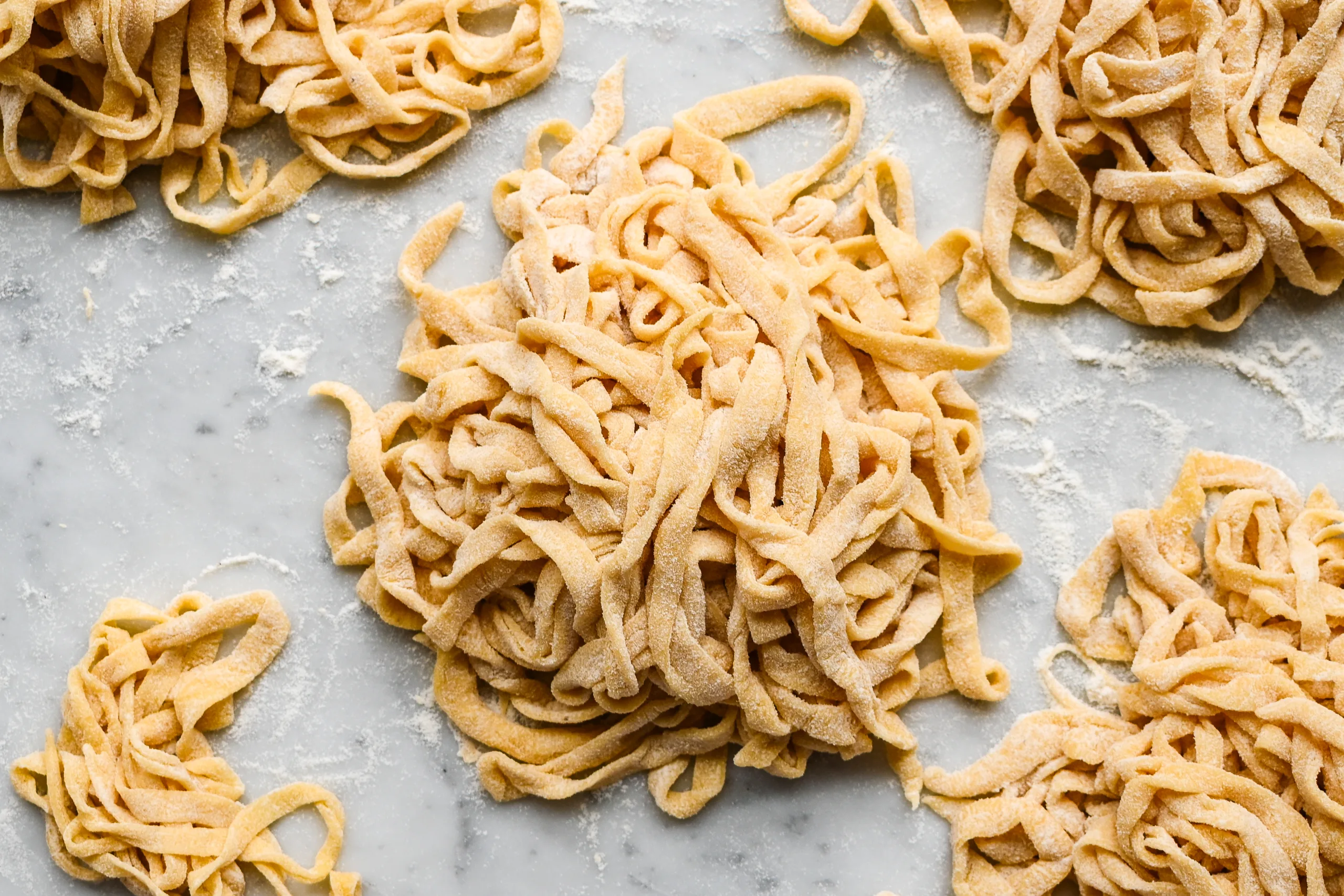
Floured nests of fresh sourdough pasta noodles on a marble surface, ready to cook or store for later use.

Easy Sourdough Pasta Recipe (Discard or Overnight)

This Easy Sourdough Pasta Recipe is made with simple ingredients and can be prepared two ways — with sourdough discard for a quick dough, or fermented overnight with active starter for added flavor and health benefits. The dough comes together easily with flour, eggs, olive oil, and a little salt, creating rich, golden noodles that cook up tender and perfectly al dente. Whether rolled by hand or with a pasta machine, this homemade sourdough pasta is a great way to use up starter and makes any pasta dish extra special.
Print Pin
Course: Dinner Ideas, Main Course, Side Dish
Cuisine: Italian
Keyword: Active Sourdough Starter, brine recipe, discard, dough, flour, fresh, homemade, pasta, sourodugh, water
Prep Time: 15 minutes
Cook Time: 2 minutes
Total Time: 17 minutes
Servings: 6
Author: Stephanie

Equipment

  • Stand mixer with dough hook attachment (optional)
  • Pasta machine or pasta roller / pasta attachment
  • Bench scraper and sharp knife
  • Pasta cutter or pizza cutter
  • Plastic wrap
  • Pasta drying rack or baking sheet for laying noodles
  • Large pot of salted water for cooking

Ingredients

  • 4 cups all-purpose flour 480 g
  • 4 large eggs 200 g
  • 1 cup active or discard sourdough starter 200 g
  • 1 teaspoon salt
  • 2 tablespoons olive oil
  • 2–4 tablespoons water add as needed

Instructions

  • On a clean work surface, make a mound with the flour and a well in the center. Add the eggs, sourdough starter, salt, and olive oil into the well. Use a fork to whisk and slowly pull flour into the mixture until a shaggy dough forms.
  • Knead the dough by hand or with a stand mixer and a dough hook attachment for about 8–10 minutes until smooth and elastic. If it feels sticky, dust with a little flour. If it’s dry, add a teaspoon of water at a time. The dough should feel firm and smooth, not sticky. If it becomes too wet, simply dust with a little flour until it comes together. Form into a dough ball, wrap tightly in plastic wrap, and let it rest for at least 30 minutes at room temperature (or refrigerate overnight for deeper flavor and longer fermentation). This rest period allows the gluten to relax and makes it easier to roll thin pasta sheets later.
  • Cut the dough into 4 equal pieces. Flatten them into a rough rectangular shape.
  • If using a pasta machine, set it to the widest setting and feed the dough through several times (about 5-8 times), re-rolling until smooth. (With my pasta machine, the Marcato Ampia Device, I start running the dough through setting #1, then run it though the #2 setting, followed by the #3 setting, then the #4 setting. Finally, I run it through the fettuccini setting. This is the thickness we like.) Gradually work down to your desired thickness.
  • If rolling by hand, use a heavy rolling pin on a floured work surface, turning the dough often to prevent sticking.
  • Once you’ve rolled out your fresh sourdough pasta sheets, use a pasta cutter, pizza cutter, or sharp knife to cut pasta into your desired pasta shapes, if you are not using a machine.
  • Dust with flour to prevent sticking, and lay in a single layer on a cookie sheet or baking sheet. You can also hang the noodles on a pasta drying rack if you prefer.
  • Bring a large pot of water to a rolling boil, then salt generously. Add the fresh pasta, stirring gently. It will cook fast — usually just 2–3 minutes until al dente. Reserve a bit of pasta water to toss with your favorite sauce, helping it cling perfectly. To dry for later, let the pasta air-dry until completely hard, then store in an airtight container or freezer safe bag.
Notes


  • Always start rolling on the widest setting and work down gradually to prevent tearing.
  • You are going to want to pass the dough through the pasta maker 5–8 times.
  • Dust lightly with semolina or all-purpose flour between passes so sheets don’t stick.
  • Let sheets rest on a floured surface or drying rack for 5–10 minutes before cutting; this helps the texture set.
  • If hand-rolling, aim for paper-thin but not translucent dough—when lifted, it should drape easily without breaking.
  • For best results, use a pasta roller or pasta attachment for even thickness.
  • A long fermentation (resting overnight) adds flavor and improves digestibility.
  • Always cook in boiling water — never simmer — for that perfect al dente bite.
  • Dust generously with flour before cutting or drying to prevent clumping.
  • Store dried noodles in an airtight container at room temperature or refrigerate fresh pasta to cook the next day.