There’s something incredibly satisfying about making your own pasta from scratch — especially when it’s homemade sourdough pasta. The fermentation process not only adds that signature tangy flavor we all love in sourdough bread, but it also improves the texture and even enhances the health benefits of this simple comfort food.
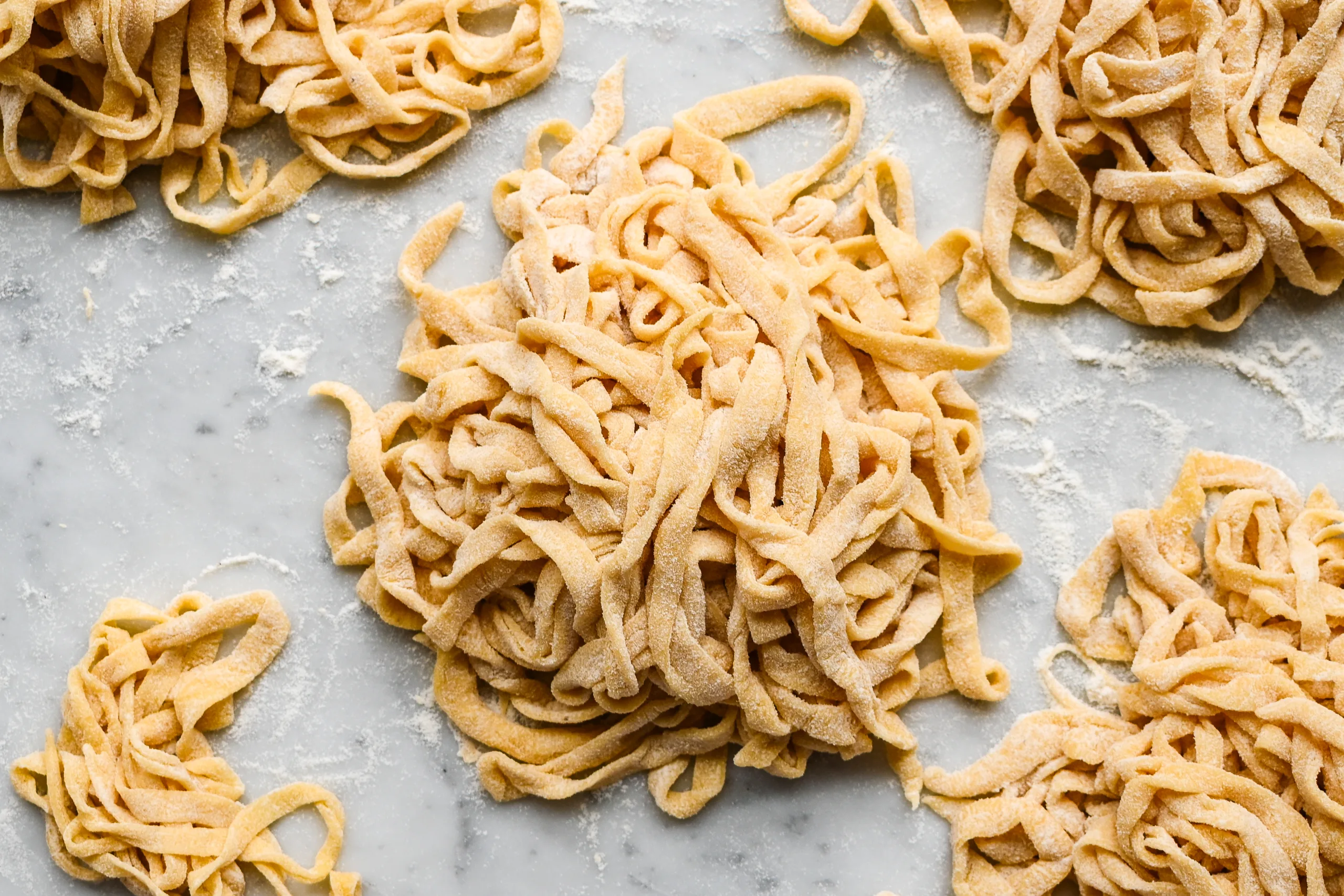
Table of Contents
This post contains affiliate links, which means I may earn a small commission at no extra cost to you. See my full disclosure [here].
This sourdough pasta recipe uses just a few simple ingredients — flour, eggs, salt, and an active sourdough starter made from scratch or sourdough starter discard — to create rich, flavorful noodles that are easy to roll and cut. Whether you’re using a pasta maker, stand mixer, or just a heavy rolling pin, the process is fun, beginner-friendly, and rewarding.
Why Make Sourdough Pasta?
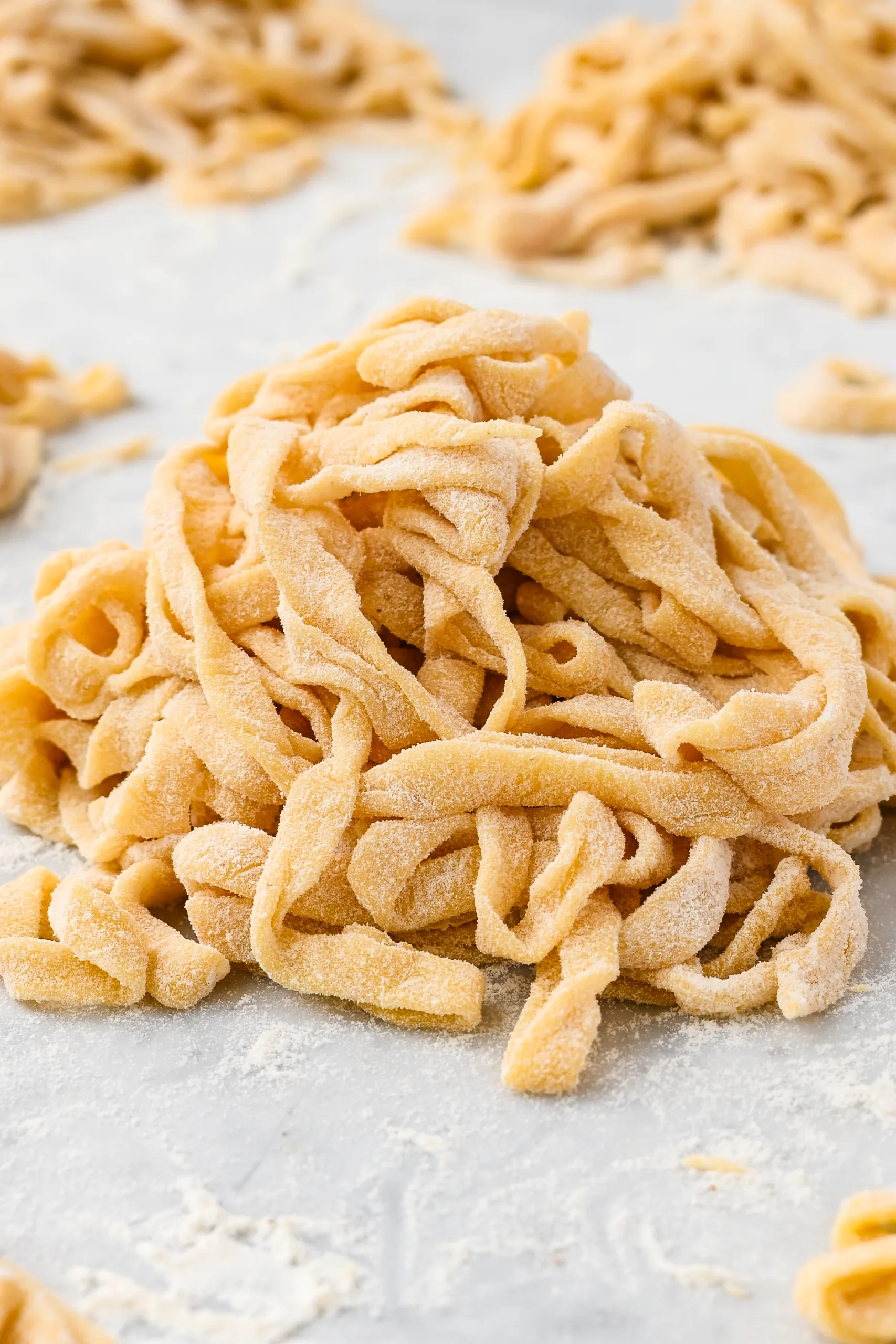
If this is your first time making fresh homemade pasta, this recipe is a great way to start. Using sourdough starter discard or active starter gives the dough a beautiful elasticity and flavor that store-bought pasta can’t touch.
The long fermentation helps break down gluten and phytic acid, making the pasta easier to digest and more nutrient-dense than regular pasta. It’s one of my favorite ways to use up a lot of sourdough discard, and it pairs perfectly with any of your favorite sauces — from rich tomato basil to creamy Alfredo. Serve it alongside this easy Italian sourdough flatbread for a complete homemade meal.

Tools You’ll Need
You don’t need much special equipment, but a few tools make the process easier:
- Stand mixer with dough hook attachment (optional)
- Pasta machine or pasta roller / pasta attachment
- Bench scraper and sharp knife
- Pasta cutter or pizza cutter
- Plastic wrap
- Pasta drying rack or baking sheet for laying noodles
- Large pot of salted water for cooking
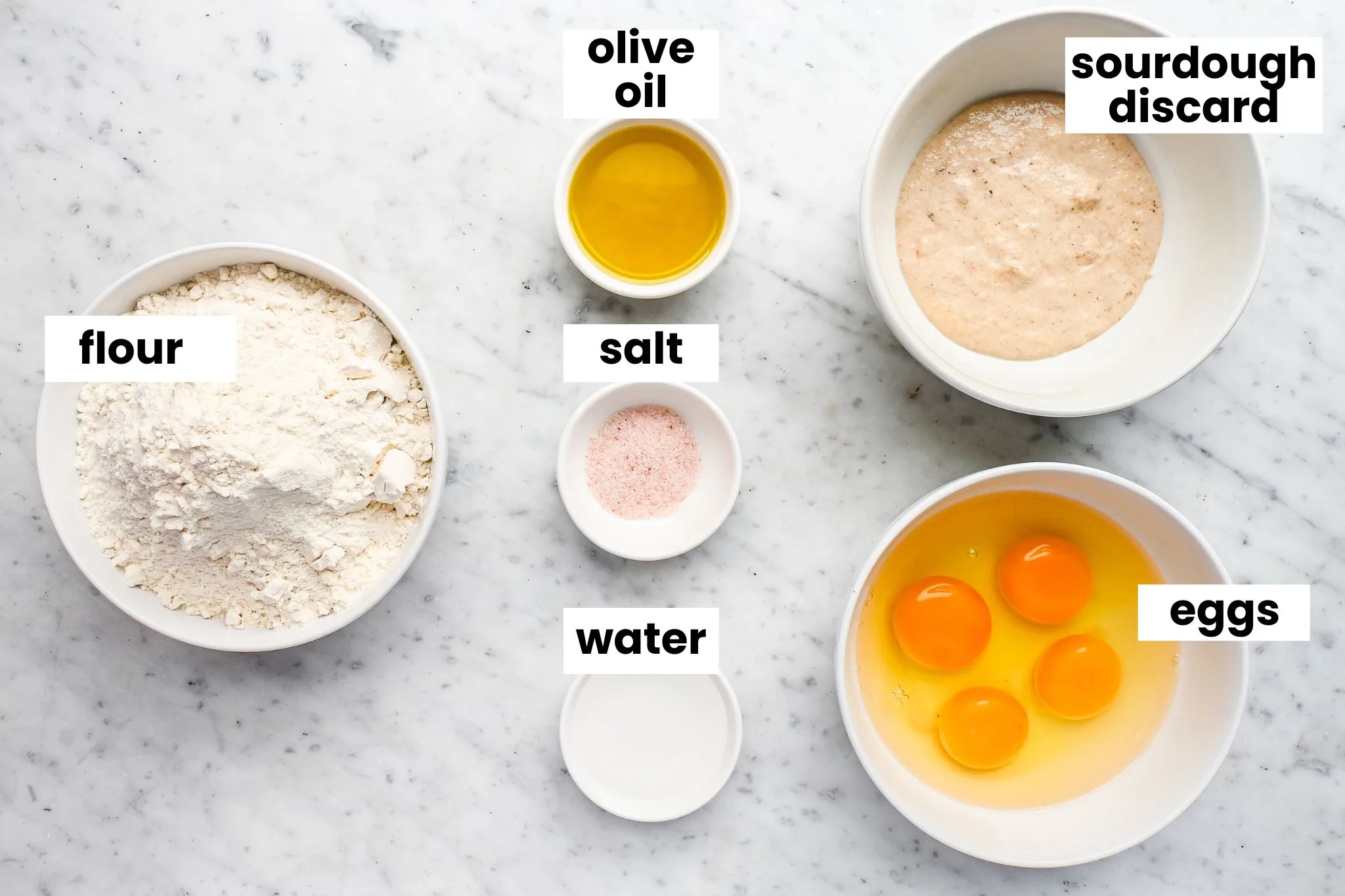
Ingredients You’ll Need
- 4 cups (480 g) all-purpose flour
- 4 large eggs (200 g)
- 1 cup (200 g) active or discard sourdough starter
- 1 teaspoon salt
- 2 tablespoons olive oil
- 2–4 tablespoons water (add as needed)
Optional: Substitute half the flour with whole wheat flour for a hearty, rustic flavor.
Instructions on How to Make Homemade Sourdough Pasta

Step 1: Mix the Dough
On a clean work surface, make a mound with the flour and a well in the center. Add the eggs, sourdough starter, salt, and olive oil into the well. Use a fork to whisk and slowly pull flour into the mixture until a shaggy dough forms.

Step 2: Knead and Rest
Knead the dough by hand or with a stand mixer and a dough hook attachment for about 8–10 minutes until smooth and elastic. If it feels sticky, dust with a little flour. If it’s dry, add a teaspoon of water at a time. The dough should feel firm and smooth, not sticky. If it becomes too wet, simply dust with a little flour until it comes together. Form into a dough ball, wrap tightly in plastic wrap, and let it rest for at least 30 minutes at room temperature (or refrigerate overnight for deeper flavor and longer fermentation). This rest period allows the gluten to relax and makes it easier to roll thin pasta sheets later.
Step 3: Roll the Dough
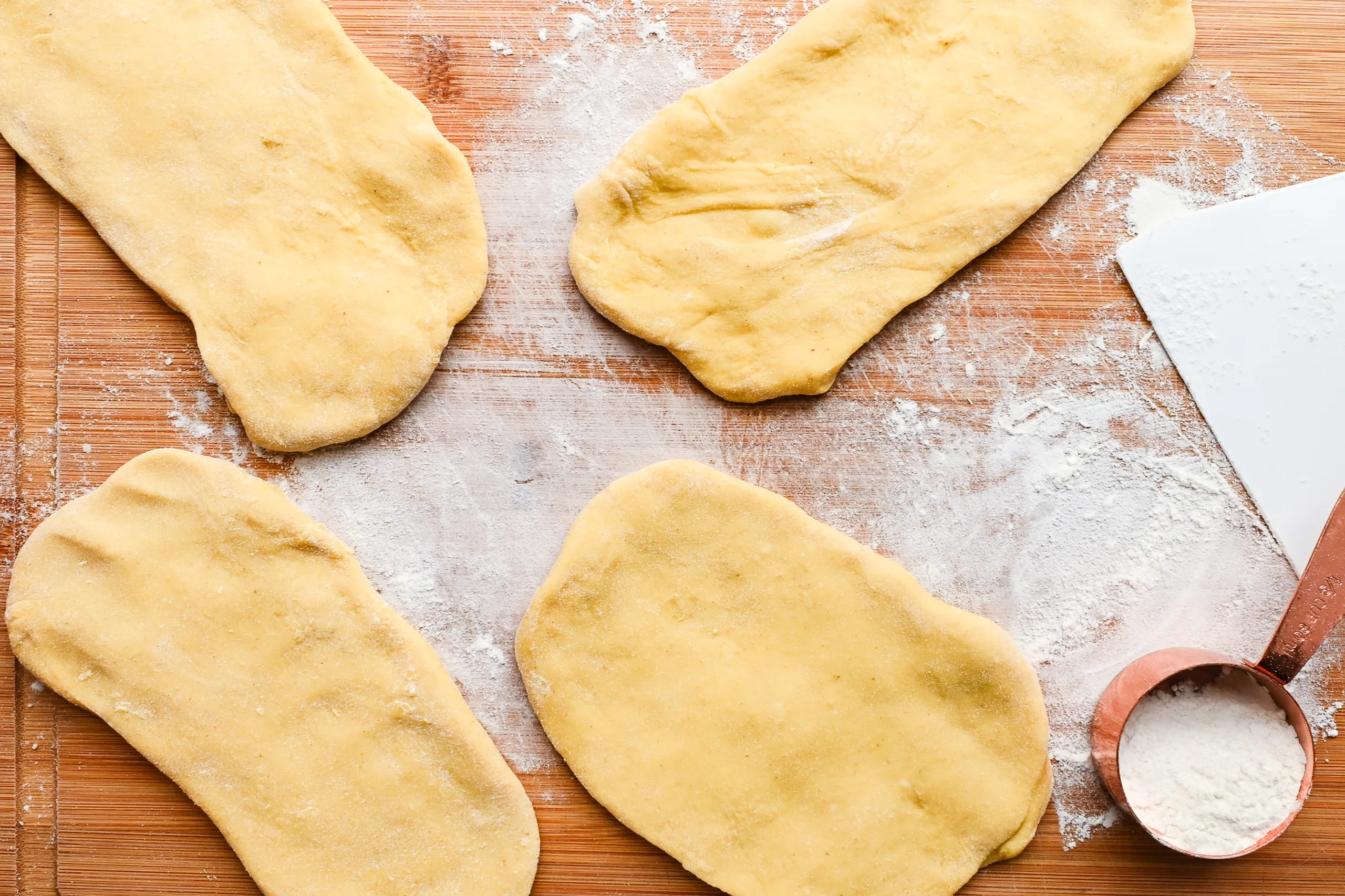
Cut the dough into 4 equal pieces. Flatten them into a rough rectangular shape.
If using a pasta machine, set it to the widest setting and feed the dough through several times (about 5-8 times), re-rolling until smooth. (With my pasta machine, the Marcato Ampia Device, I start running the dough through setting #1, then run it though the #2 setting, followed by the #3 setting, then the #4 setting. Finally, I run it through the fettuccini setting. This is the thickness we like.) Gradually work down to your desired thickness.
If rolling by hand, use a heavy rolling pin on a floured work surface, turning the dough often to prevent sticking.

Step 4: Cut and Shape
Once you’ve rolled out your fresh sourdough pasta sheets, use a pasta cutter, pizza cutter, or sharp knife to cut pasta into your desired pasta shapes, if you are not using a machine.
Dust with flour to prevent sticking, and lay in a single layer on a cookie sheet or baking sheet. You can also hang the noodles on a pasta drying rack if you prefer.
Step 5: Cook or Dry
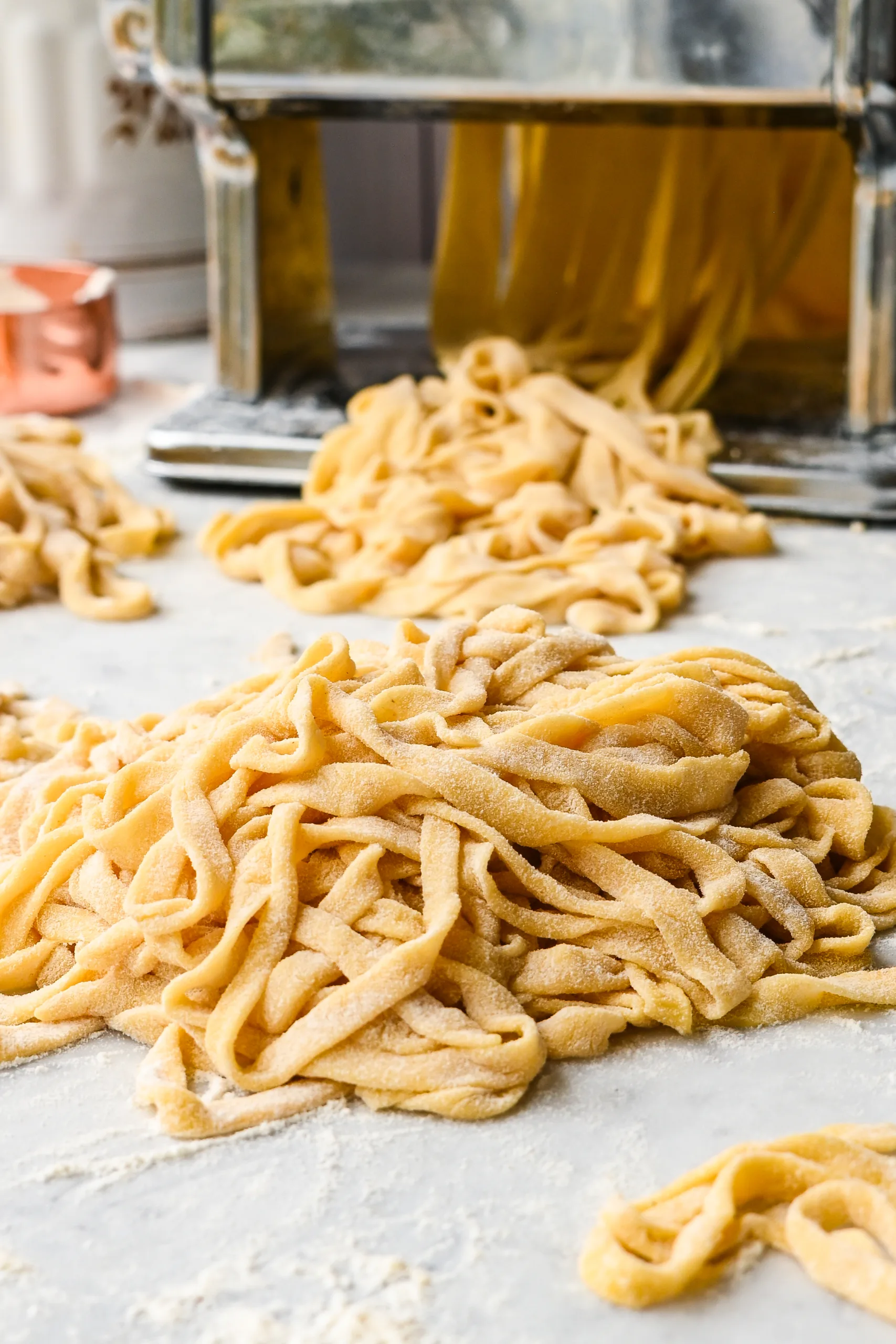
Bring a large pot of water to a rolling boil, then salt generously. Add the fresh pasta, stirring gently. It will cook fast — usually just 2–3 minutes until al dente. Reserve a bit of pasta water to toss with your favorite sauce, helping it cling perfectly. To dry for later, let the pasta air-dry until completely hard, then store in an airtight container.
General Pasta Thickness Guidelines
| Pasta Type | Thickness (Inches / mm) | Pasta Roller Setting | Notes |
|---|---|---|---|
| Lasagna sheets | 1/16 inch (1.5 mm) | #5 or #6 | Sturdy enough to hold sauces but still tender after baking. |
| Tagliatelle / Fettuccine | 1/16 inch (1.5 mm) | #5 or #6 | Ideal for creamy or meaty sauces. |
| Pappardelle | Slightly thicker, about 1/12 inch (2 mm) | #4 or #5 | Wide ribbons that hold up well to heavier sauces. |
| Ravioli / stuffed pasta | 1/32 inch (1 mm) | #6 or #7 | Thin enough to seal well without cracking when folded. |
| Spaghetti / Linguine | 1/16 inch (1.5 mm) | #5 or #6 | Classic noodle thickness; cooks evenly and quickly. |
| Angel hair (Capellini) | Paper-thin, 1/64 inch (0.5 mm) | #7 or #8 | Very delicate; cooks in under a minute. |
| Hand-cut rustic noodles | About ⅛ inch (3 mm) | Rolled by hand | Perfect for rustic soups or sourdough-style pasta with a bit more chew. |
Quick Visual Guide
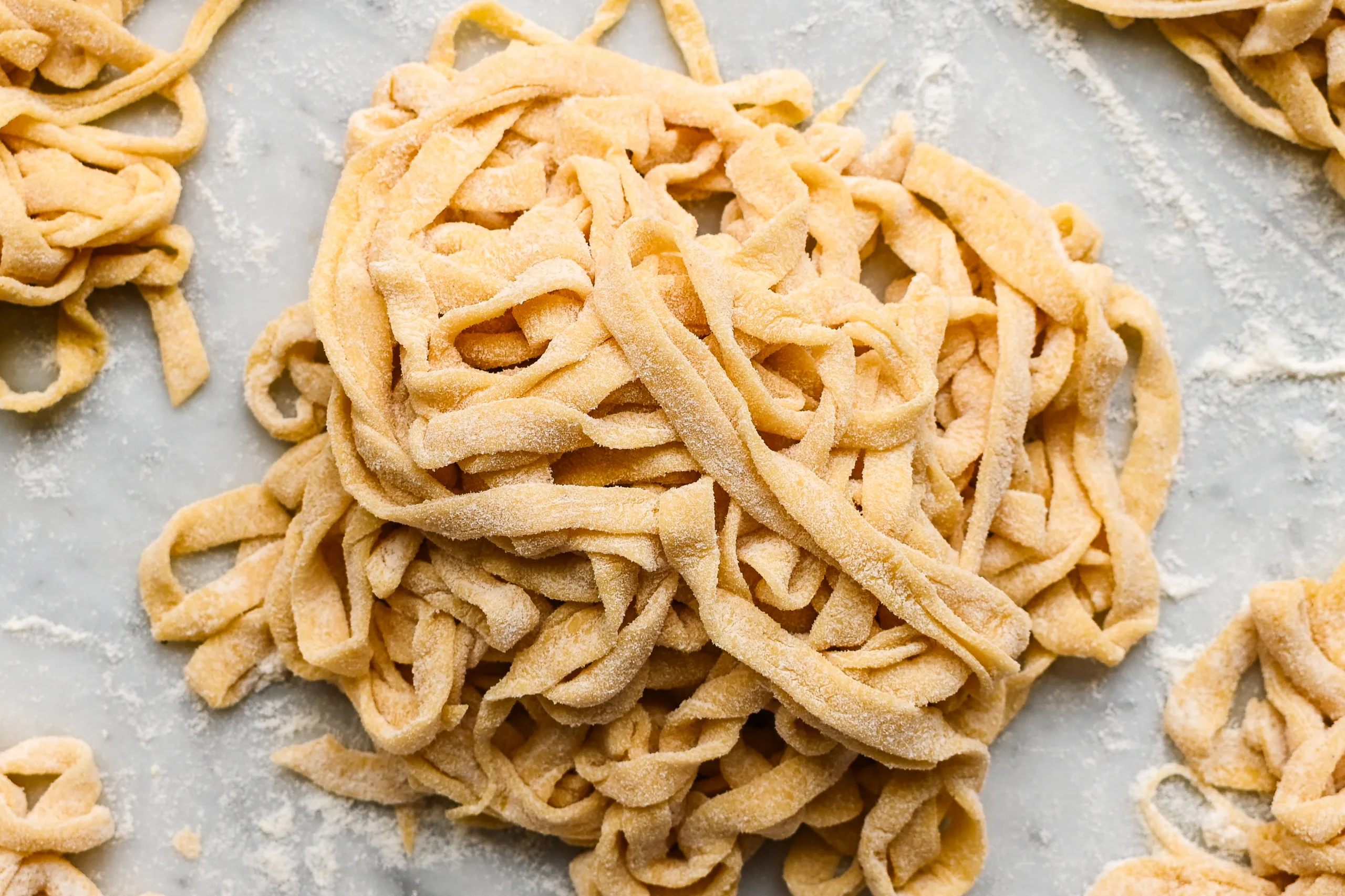
- If you can see your hand’s outline faintly through the dough, it’s about right for most noodles.
- For stuffed pasta, you should almost be able to see the shadow of your fingers clearly — that’s thin enough to fold without bulk.
- For heartier noodles or lasagna, keep it slightly thicker to handle moisture and sauce.
Pro Tips
- Always start rolling on the widest setting and work down gradually to prevent tearing.
- You are going to want to pass the dough through the pasta maker 5–8 times.
- Dust lightly with semolina or all-purpose flour between passes so sheets don’t stick.
- Let sheets rest on a floured surface or drying rack for 5–10 minutes before cutting; this helps the texture set.
- If hand-rolling, aim for paper-thin but not translucent dough—when lifted, it should drape easily without breaking.
Tips for the Best Sourdough Pasta
- For best results, use a pasta roller or pasta attachment for even thickness.
- A long fermentation (resting overnight) adds flavor and improves digestibility.
- Always cook in boiling water — never simmer — for that perfect al dente bite.
- Dust generously with flour before cutting or drying to prevent clumping.
- Store dried noodles in an airtight container at room temperature or refrigerate fresh pasta to cook the next day.
Serving Suggestions
Serve this fresh homemade pasta with your favorite sauce — whether that’s a simple drizzle of olive oil, fresh basil and parmesan, or layered into lasagna noodles for a special occasion dinner.
It’s also a great way to showcase seasonal ingredients like garden herbs or roasted cherry tomatoes with garlic and thyme.
. Once you taste this, store-bought pasta just won’t compare!
FAQ: Homemade Sourdough Pasta
Can I use sourdough discard instead of active starter?
Yes! This recipe works beautifully with sourdough discard — just let it ferment longer for more flavor
How do I store leftover pasta dough?
Wrap tightly in plastic wrap and refrigerate up to 2 days, or freeze in a freezer safe bag for later.
Can I use a food processor or stand mixer to knead the dough?
Absolutely. A stand mixer with a dough hook attachment or a food processor makes it easier, especially for your first time making homemade pasta.
What type of flour should I use?
All-purpose flour gives softness, bread flour adds chew from its higher protein content, and semolina flour helps structure. You can mix to your liking!
Bring the Joy of Homemade Cooking
Making your own sourdough pasta dough recipe is one of those sourdough recipes that feels extra special — perfect for special occasions or cozy weeknights. It takes a little bit of patience, but the result is tender, flavorful noodles that cook quickly and pair beautifully with anything from pesto to browned butter and sage.
For a full homemade dinner, try serving it alongside oven-seared salmon cooked in a cast iron skillet and a simple salad — it’s a nourishing, farmhouse-style meal that comes together beautifully.
Once you’ve tried fresh sourdough pasta, you may never go back to dried pasta again!



Tried this recipe?
I would love to see it! Tag me on Instagram @idiesfarm and #idiesfarm so I can share your beautiful creation!

Easy Sourdough Pasta Recipe (Discard or Overnight)
Ingredients
Equipment
Method
- On a clean work surface, make a mound with the flour and a well in the center. Add the eggs, sourdough starter, salt, and olive oil into the well. Use a fork to whisk and slowly pull flour into the mixture until a shaggy dough forms.
- Knead the dough by hand or with a stand mixer and a dough hook attachment for about 8–10 minutes until smooth and elastic. If it feels sticky, dust with a little flour. If it’s dry, add a teaspoon of water at a time. The dough should feel firm and smooth, not sticky. If it becomes too wet, simply dust with a little flour until it comes together. Form into a dough ball, wrap tightly in plastic wrap, and let it rest for at least 30 minutes at room temperature (or refrigerate overnight for deeper flavor and longer fermentation). This rest period allows the gluten to relax and makes it easier to roll thin pasta sheets later.
- Cut the dough into 4 equal pieces. Flatten them into a rough rectangular shape.
- If using a pasta machine, set it to the widest setting and feed the dough through several times (about 5-8 times), re-rolling until smooth. (With my pasta machine, the Marcato Ampia Device, I start running the dough through setting #1, then run it though the #2 setting, followed by the #3 setting, then the #4 setting. Finally, I run it through the fettuccini setting. This is the thickness we like.) Gradually work down to your desired thickness.
- If rolling by hand, use a heavy rolling pin on a floured work surface, turning the dough often to prevent sticking.
- Once you’ve rolled out your fresh sourdough pasta sheets, use a pasta cutter, pizza cutter, or sharp knife to cut pasta into your desired pasta shapes, if you are not using a machine.
- Dust with flour to prevent sticking, and lay in a single layer on a cookie sheet or baking sheet. You can also hang the noodles on a pasta drying rack if you prefer.
- Bring a large pot of water to a rolling boil, then salt generously. Add the fresh pasta, stirring gently. It will cook fast — usually just 2–3 minutes until al dente. Reserve a bit of pasta water to toss with your favorite sauce, helping it cling perfectly. To dry for later, let the pasta air-dry until completely hard, then store in an airtight container or freezer safe bag.
Notes
- Always start rolling on the widest setting and work down gradually to prevent tearing.
- You are going to want to pass the dough through the pasta maker 5–8 times.
- Dust lightly with semolina or all-purpose flour between passes so sheets don’t stick.
- Let sheets rest on a floured surface or drying rack for 5–10 minutes before cutting; this helps the texture set.
- If hand-rolling, aim for paper-thin but not translucent dough—when lifted, it should drape easily without breaking.
- For best results, use a pasta roller or pasta attachment for even thickness.
- A long fermentation (resting overnight) adds flavor and improves digestibility.
- Always cook in boiling water — never simmer — for that perfect al dente bite.
- Dust generously with flour before cutting or drying to prevent clumping.
- Store dried noodles in an airtight container at room temperature or refrigerate fresh pasta to cook the next day.