Go Back
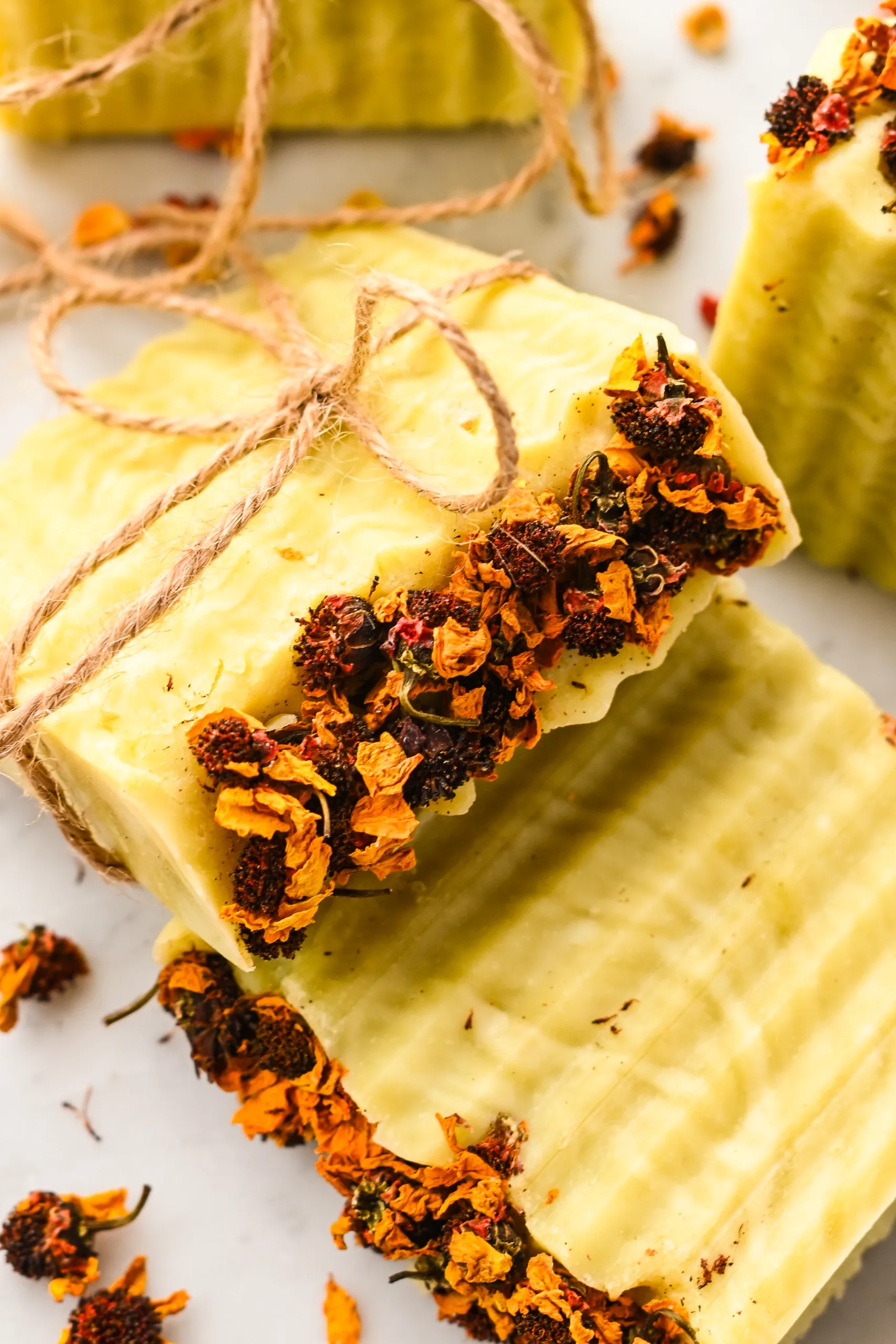
Beautiful finished bars of Bastille soap topped with dried flowers and tied with twine, ready for gifting.

Homemade Cold Process Bastille Soap Recipe for Beginners

This gentle Bastille soap recipe is perfect for beginners! Made with mostly olive oil and a touch of coconut oil, it creates a creamy, conditioning bar that’s ideal for sensitive skin. You’ll learn how to safely mix the lye solution, blend the soap batter to trace, and pour it into molds for a smooth, beautiful finish. Once cured, these bars are nourishing, long-lasting, and make wonderful handmade gifts.
Print Pin
Prep Time: 30 minutes
Total Time: 30 minutes
Servings: 0
Author: Stephanie

Equipment

  • Digital kitchen scale
  • Chemical Resistant Container
  • Infrared Thermometer Gun
  • Stainless steel pot
  • Immersion blender (stick blender)
  • Rubber gloves, long sleeves, safety goggles
  • Old towel
  • Soap molds
  • Parchment paper or silicone liner
  • Soap cutter
  • Open window or vented work area

Ingredients

  • 22 oz Olive oil (624 g)
  • 6 oz Coconut oil (170 g)
  • 8 oz Distilled water (227 g)
  • 3.9 oz Sodium hydroxide (Lye) (110 g)
  • 1 oz Orange essential oil (28 g)

Instructions

  • Prepare Your Work Area
  • Choose a safe place with good ventilation—an open window or a space near your kitchen sink is ideal. Put on rubber gloves, long sleeves, and safety goggles. Keep pets and children out of reach.
  • Slowly add sodium hydroxide (lye) to cold water (never add water to lye). Stir with a heat-resistant spoon until dissolved. The lye water will heat up—set it aside to cool to 100–110°F. Check with an infrared thermometer.
  • Using a double boiler, saucepan, or a crock pot over low heat, melt coconut oil until clear. Add olive oil and mix gently. Let cool slightly.
  • Pour your cooled lye solution into the melted oils. Use an immersion blender to combine, alternating between short bursts and gentle hand stirring until you reach light trace (the soap batter thickens like thin pudding).
  • Add the essential oil and stir by hand to incorporate evenly.
  • Pour your soap into prepared soap molds, tap to remove bubbles, and cover lightly with an old towel. If you are adding dried flowers, this is the time to press them into the soap. Allow to rest for 24–36 hours to complete the early gel phase.
  • Once firm, unmold the soap, slice into bars with a soap cutter, and place in a dry, ventilated space for 4–6 weeks. This soap cure time allows the chemical reaction to finish and excess moisture to evaporate, resulting in a hard, gentle handmade soap.
Notes

  • Use caution with lye—it’s a caustic substance until it reacts.
  • Always add lye to water, never water to lye.
  • Work at room temperature for slower trace.
  • If you want a harder bar, cure longer or add 1 teaspoon sodium lactate per pound of oils.
  • Clean equipment in the kitchen sink only after residue has turned to soap (about 24 hours).
  • Keep all supplies in a safe place, away from the reach of children.