Go Back
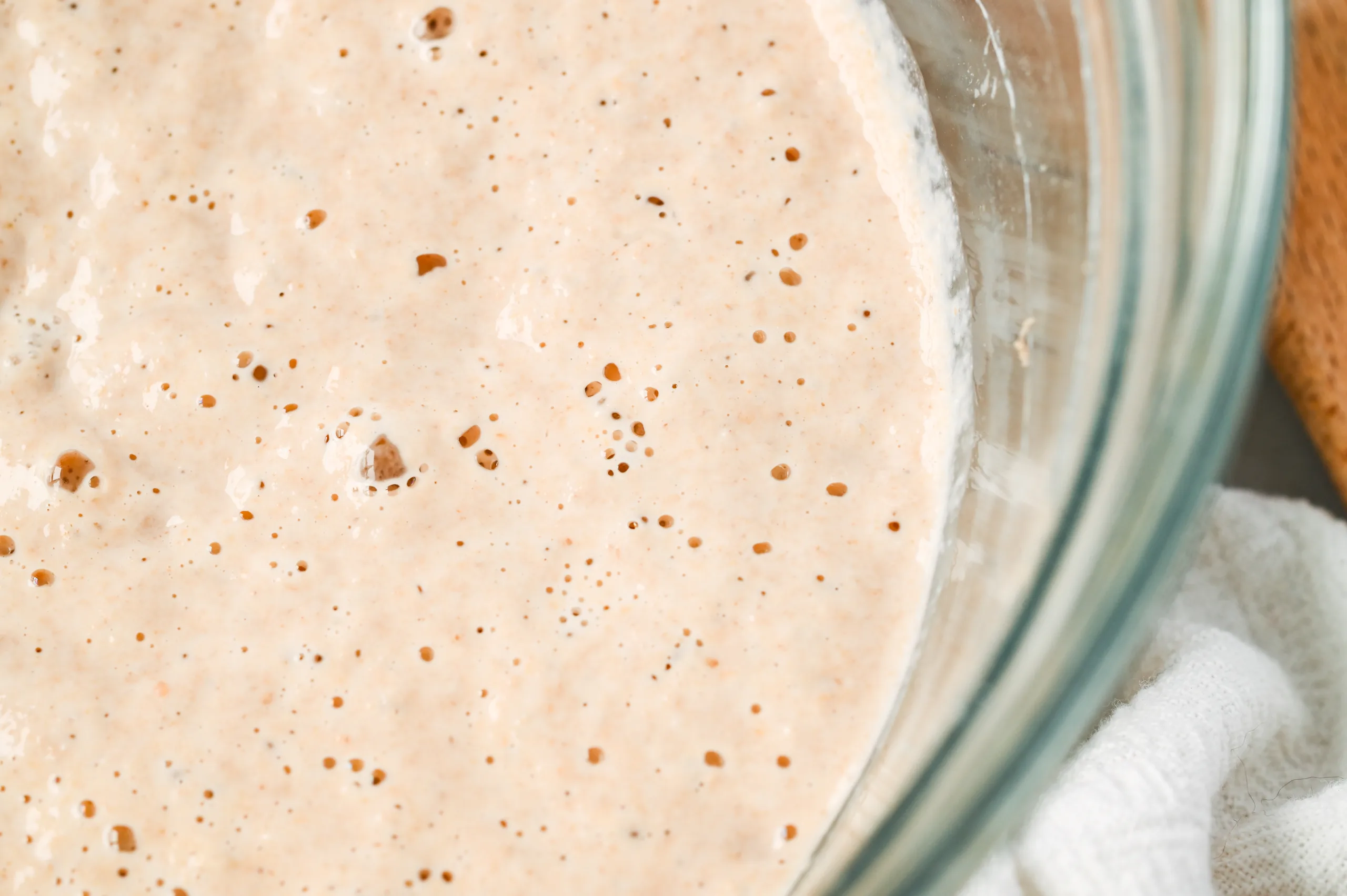
Active whole wheat sourdough starter showing small bubbles across the surface.

How to Make a Whole Wheat Sourdough Starter (The Old-Fashioned Way)

Learn how to make a whole wheat sourdough starter using a simple, old-fashioned method with just flour and water. This beginner-friendly recipe walks you through creating an active starter from scratch using whole wheat or freshly milled flour, perfect for baking naturally leavened bread at home.
Print Pin
Cuisine: American
Total Time: 7 days
Servings: 0
Author: Stephanie

Equipment

  • A clean glass jar or crock
  • Spoon for stirring

Ingredients

  • 1 cup whole wheat flour freshly milled if possible
  • ¾ cup water filtered or dechlorinated

Instructions

  • Day 1: In your jar, mix 1 cup of whole wheat flour with ¾ cup of water. Stir until no dry spots remain. Cover loosely with a lid or cloth and leave at room temperature (68–75°F).
  • Day 2: You may see small bubbles and smell a little tang, that’s a good sign. Discard half of the mixture and feed it with ½ cup flour and ½ cup water. Stir and cover again.
  • Days 3–5: Continue feeding every 24 hours. As the culture matures, it should double in size between feedings and smell pleasantly yeasty. If it’s cool in your kitchen, place the jar near a warm spot, like on top of the fridge or near the stove.
  • Day 6 and Beyond: When the starter consistently doubles within 4–6 hours of feeding, it’s ready to bake. You now have a strong, bubbly wheat sourdough starter ready for bread, rolls, or even pancakes.
Notes

Feeding and Maintaining Your Starter

Feed your starter regularly, ideally once a day if it lives at room temperature, or weekly if stored in the fridge.
To feed:
  1. Discard half the starter.
  2. Add equal weights (not volumes) of whole wheat flour and water.
  3. Stir, cover, and let it rise.
The discarded portion doesn’t have to be wasted! Use it in sourdough discard recipes like muffins, crackers, or pancakes, another frugal, old-fashioned habit that turns waste into nourishment.

Tips for Whole Wheat Sourdough Baking

  • Hydration: Whole wheat flour absorbs more water than bread flour or all-purpose flour, so you may need to increase your recipe’s hydration slightly.
  • Fermentation time: Whole-grain starters ferment faster. Keep an eye on your dough and reduce rise times as needed.
  • Texture: Expect a slightly denser crumb — full of flavor and fiber.
  • Temperature: Ideal sourdough baking temperature is around 75°F for consistent fermentation.