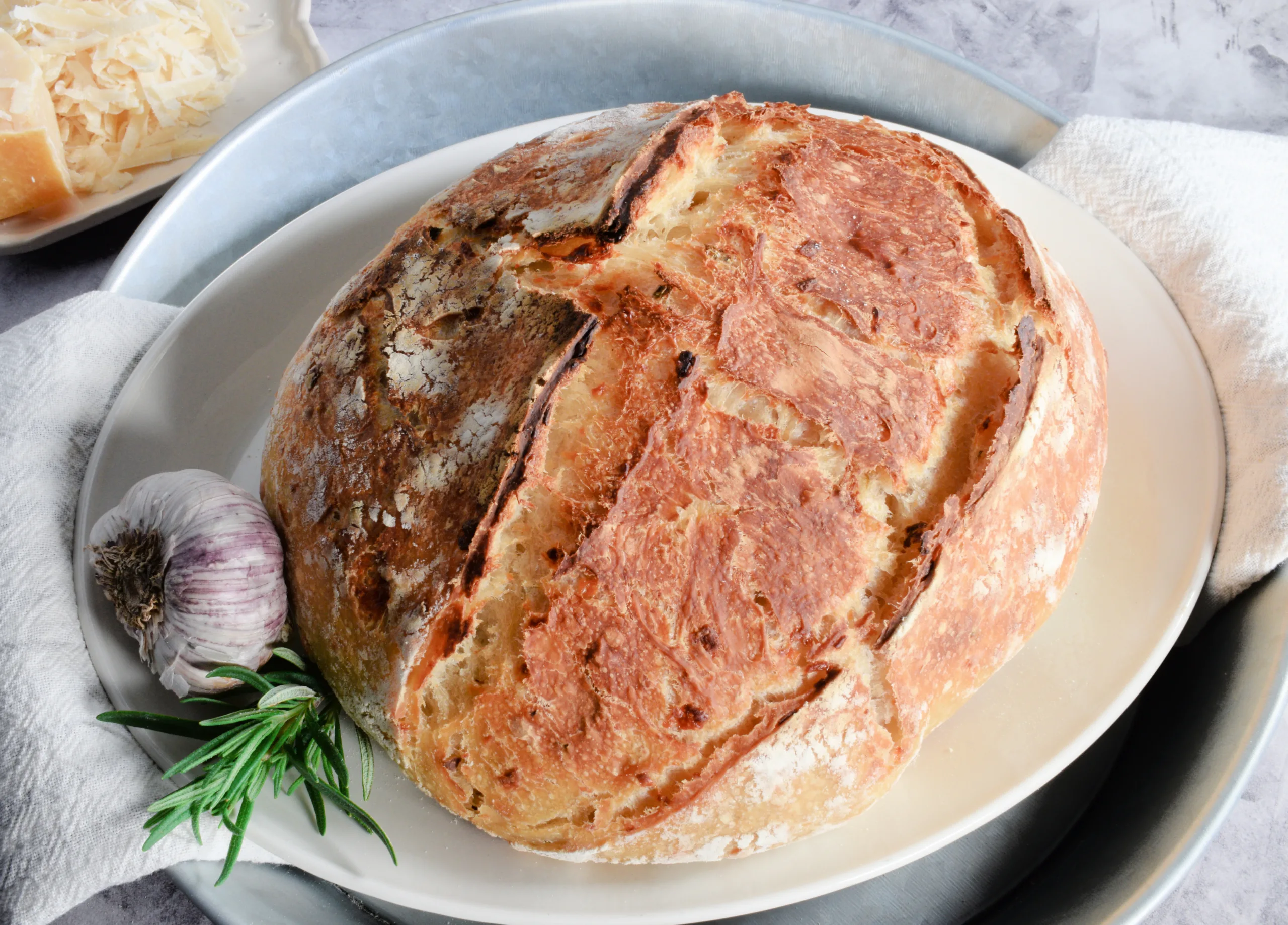
Roast the Garlic:
Preheat your oven to 400°F (200°C).
Cut ¼ to ½ inch from the top of the cloves, exposing the individual cloves of garlic.
Drizzle the olive oil over the garlic head, ensuring it’s well-coated.
Wrap the garlic head in aluminum foil and bake for 30-35 minutes, or until the cloves are soft.
Make the Dough:
In a large mixing bowl, combine the sourdough starter and water. Mix until the starter is dissolved.
Add the all purpose flour and sea salt to the bowl. Mix until a rough dough forms.
Squeeze the roasted garlic into the dough. Then add the chopped rosemary, and grated parmesan cheese. Mix until evenly distributed. Allow the dough to rest for 30 minutes.
First Stretch and Fold:
After the resting period, use a dough scraper, bench scraper, or wet hands to gather the dough from one edge of the bowl, gently stretch it out, and fold it back onto itself. Rotate the bowl a quarter turn and repeat the action. This will cause the dough take on a somewhat square shape. Cover the bowl with a damp tea towel and let the dough rest for another 30 minutes.
Repeat Stretch and Fold:
After the 30-minute rest, conduct another round of stretch and folds. Stretch the dough from opposite ends and fold them over each other. Rotate the bowl and repeat. Cover the bowl and let the dough rest for another 30 minutes. Repeat this sequence two more times, for a total of three sets of stretches and folds.
Bulk Fermentation:
Place the dough in a bowl, cover it with a damp towel or plastic wrap, and let it rise at room temperature for about 4-6 hours, or until it has roughly doubled in size. The exact time will depend on the temperature of your kitchen and the activity of your sourdough starter.
After the First Rise
Dough Preparation for Second Rise:
Shape the dough into a smooth ball or oval, similar to the shape of your banneton or proofing basket.
Place the dough into a floured banneton and cover it with plastic wrap or a damp tea towel. Refrigerate it overnight for the final rise. This should be at least 12 hours.
Bake the Dough:
Remove the banneton from the fridge and place the sourdough dough on a piece of parchment paper. Score the top of the dough.
Transfer the sourdough, with the parchment paper under it, to the Dutch oven.
Place the lid on the Dutch oven and put it into the oven.
Turn the oven on to 425°F and bake for 55 minutes.
After 55 minutes, remove the lid. If the loaf color is to your liking, remove the sourdough from the Dutch oven and place it on a cooling rack. If not, bake for another 5 minutes with the lid off until the desired color is achieved.
Cool and Serve:
Allow the sourdough loaf to cool for at least 1 hour before cutting into it to avoid a mushy crumb and to ensure that it is fully cooked.