
Ingredients
Equipment
Method
- Add the flour, sugar, salt, eggs and yolk, milk, and sourdough starter to the bowl of a stand mixer. Mix on low speed until a rough dough forms.
- Increase the speed slightly and knead until the dough begins to smooth out and pull together.
- With the mixer running on low, add the very soft butter a little at a time, allowing it to fully absorb before adding more.
- After adding the butter, mix for 10 to 15 minutes on low to medium speed, or until the dough becomes smooth, glossy, and elastic, and releases from the sides of the bowl. This step takes time and is key to proper brioche structure.
- Transfer the dough to a lightly greased bowl, cover, and allow it to bulk ferment at room temperature until noticeably puffy and lighter in texture. During bulk fermentation, the dough should rise about 60 to 80 percent in volume and feel noticeably lighter, rather than fully doubling.
- Gently turn out the dough, shape it, and place it into a standard 9×5-inch loaf pan.
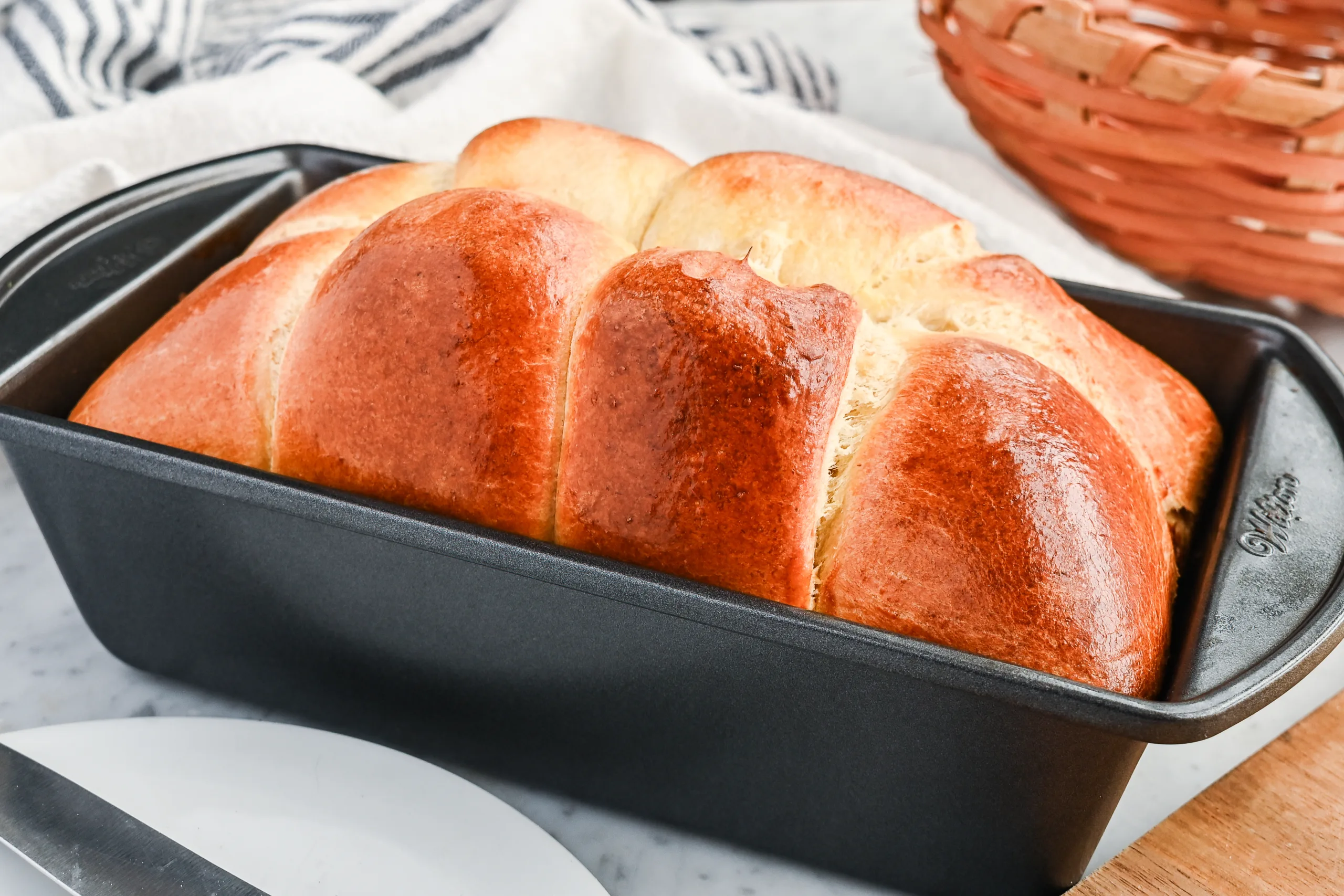
Pull-Apart Loaf Shaping (Optional):
- After bulk fermentation, turn the dough out onto a lightly floured surface. Divide into 6 to 8 equal pieces. Gently shape each piece into a smooth ball by tucking the edges underneath and rolling lightly between your hands. Arrange the dough balls side by side in a greased loaf pan. Cover and allow to rise until puffy and touching, then bake as directed.
- Cover and let rise until the dough is about 50 to 75 percent larger and feels airy when gently pressed.
Overnight Second Rise Option:
- After shaping, place the dough into the greased pan and cover well. Transfer to the refrigerator and let it rise overnight for 8 to 14 hours. The next day, remove the dough from the fridge and allow it to sit at room temperature for 1 to 3 hours, or until visibly puffy and soft when gently pressed. Then, proceed to the next step.
- Brush the top of the dough with an egg wash (1 egg beaten with a splash of milk), then bake in a preheated 375°F oven for 35 to 45 minutes, until deeply golden and fully baked through. Cool completely before slicing.
Notes
Bulk Fermentation and Proofing Tips
- Because this is an enriched sourdough bread recipe, fermentation moves more slowly than lean doughs. Butter, eggs, and milk all slow yeast activity, so patience matters more than timing.
- Watch the dough rather than the clock. During bulk fermentation, it should become smoother and noticeably lighter. During the final rise, the dough should feel soft and delicate, not dense.
- This recipe works best in a standard 9×5-inch loaf pan. An 8½×4½-inch pan can also be used for a taller loaf, but the dough may take slightly longer to bake through.
- Butter should be very soft, not melted. If the butter is too cold, it won’t incorporate properly and the dough can tear. If it’s melted, the dough will become greasy and harder to structure.
- Expect a longer mixing time than normal bread. Enriched doughs need more mixing to develop gluten before the butter fully absorbs. The dough should look glossy and elastic and begin pulling away from the bowl before moving on to bulk fermentation.