
This sourdough brioche bread is rich, buttery, and tender, made with an active sourdough starter instead of commercial yeast. The result is a soft, enriched loaf with depth of flavor and a delicate crumb that works beautifully for everyday slicing or special occasions.
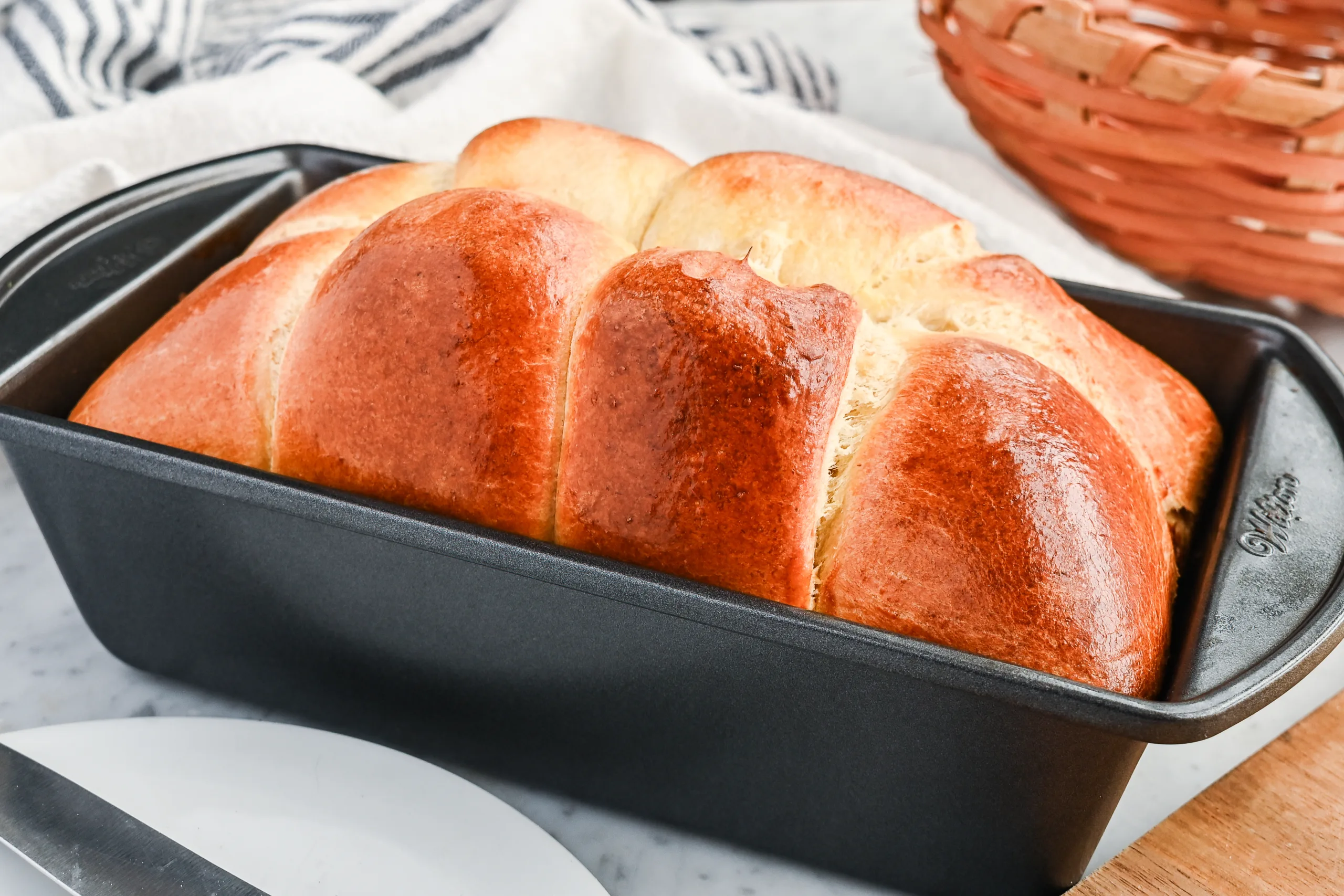
If you enjoy baking soft sourdough loaves like my Perfect Sourdough Sandwich Bread Recipe, this brioche is a natural next step. It uses a similar fermentation approach but leans into eggs, butter, and milk to create that classic brioche texture.
Table of Contents
This post contains affiliate links, which means I make a small commission at no extra cost to you. See my full disclosure policy here.
Why Make Brioche with Sourdough
Traditional brioche relies on yeast for structure, but sourdough adds both flavor and strength when given enough time. This sourdough brioche dough ferments slowly, allowing the butter and eggs to fully integrate while the starter develops structure.
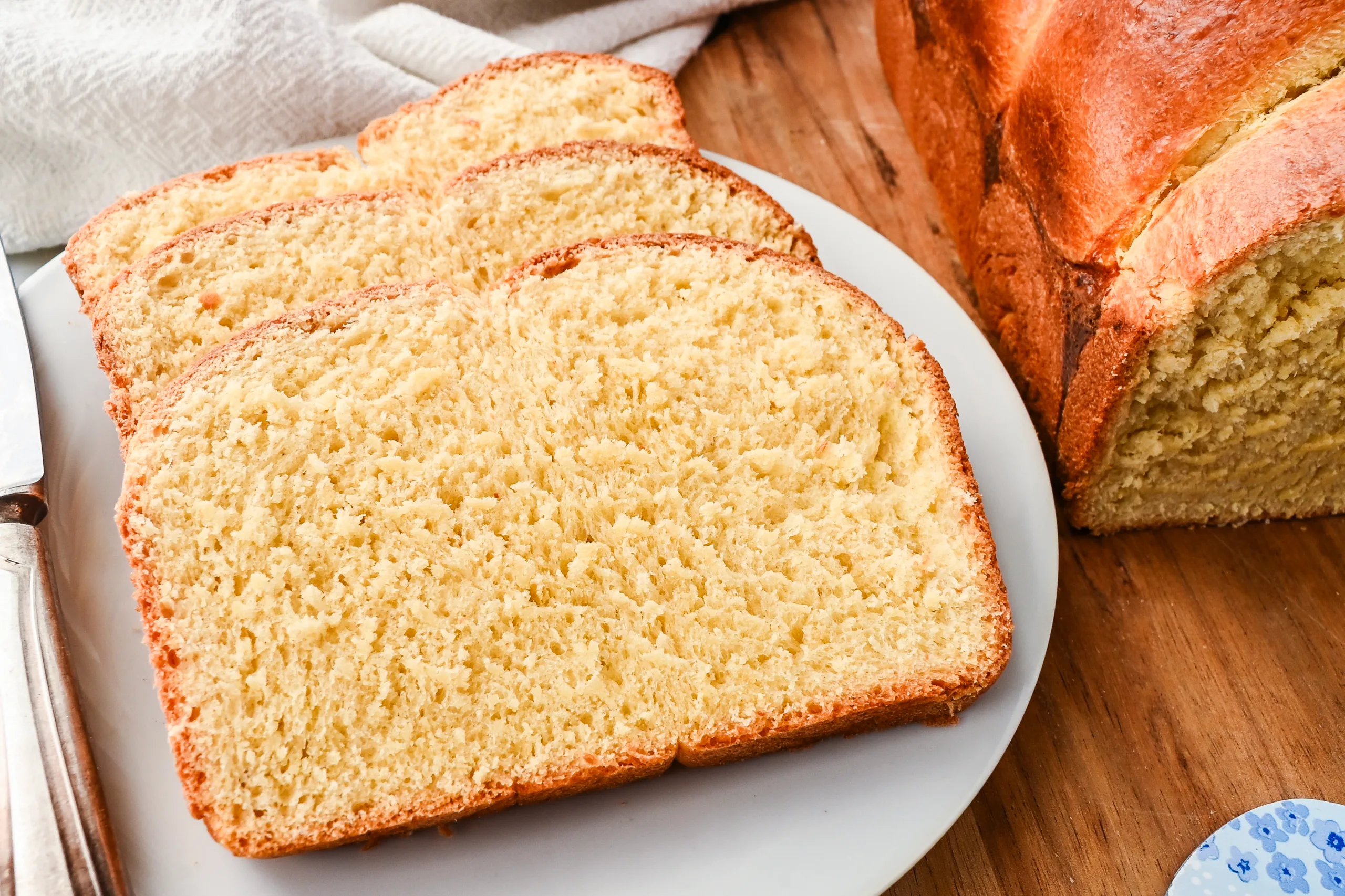
The end result is a loaf that feels indulgent but still rooted in old-fashioned methods. It is soft enough for sandwiches, sturdy enough to slice cleanly, and rich without being heavy.
Quick Look at This Recipe
- Recipe: Sourdough Brioche Bread
- Yield: 1 loaf
- Prep Time: 30 minutes (active time)
- Bulk Fermentation: 4–6 hours
- Second Rise: 2–4 hours
- Bake Time: 35–45 minutes
- Total Time: About 8–10 hours, mostly hands-off
- Skill Level: Intermediate
- Method: Stand mixer, loaf pan
- Texture: Soft, rich, and buttery with a tender crumb
- Flavor: Lightly sweet, egg-rich, classic brioche taste

Ingredients for Sourdough Brioche
500 g all-purpose flour (about 3½ cups)
150 g active sourdough starter (about ⅔ cup)
3 eggs + 1 yolk, room temperature
80 g sugar (⅓ cup)
10 g salt (1¾ tsp)
170 g butter, very soft (¾ cup / 12 tbsp)
60 g milk (¼ cup), room temperature
For the Egg Wash
1 egg beaten with
1 tablespoon of milk or water
Equipment Needed
- Stand mixer with dough hook
- Large mixing bowl
- Loaf pan
- Plastic wrap or clean kitchen towel
- Bench scraper
How to Make Sourdough Brioche Dough

Add the flour, sugar, salt, eggs and yolk, milk, and sourdough starter to the bowl of a stand mixer. Mix on low speed until a rough dough forms.

Increase the speed slightly and knead until the dough begins to smooth out and pull together.

With the mixer running on low, add the very soft butter a little at a time, allowing it to fully absorb before adding more.

After adding the butter, mix for 10 to 15 minutes on low to medium speed, or until the dough becomes smooth, glossy, and elastic, and releases from the sides of the bowl. This step takes time and is key to proper brioche structure.

Transfer the dough to a lightly greased bowl, cover, and allow it to bulk ferment at room temperature until noticeably puffy and lighter in texture. During bulk fermentation, the dough should rise about 60 to 80 percent in volume and feel noticeably lighter, rather than fully doubling.

Gently turn out the dough, shape it, and place it into a standard 9×5-inch loaf pan. Pull-Apart Loaf Shaping (Optional):
After bulk fermentation, turn the dough out onto a lightly floured surface. Divide into 6 to 8 equal pieces. Gently shape each piece into a smooth ball by tucking the edges underneath and rolling lightly between your hands. Arrange the dough balls side by side in a greased loaf pan. Cover and allow to rise until puffy and touching, then bake as directed.

Cover and let rise until the dough is about 50 to 75 percent larger and feels airy when gently pressed.
Overnight Second Rise Option:
After shaping, place the dough into the greased pan and cover well. Transfer to the refrigerator and let it rise overnight for 8 to 14 hours. The next day, remove the dough from the fridge and allow it to sit at room temperature for 1 to 3 hours, or until visibly puffy and soft when gently pressed. Then, proceed to the next step.

Brush the top of the dough with an egg wash (1 egg beaten with a splash of milk), then bake in a preheated 375°F oven for 35 to 45 minutes, until deeply golden and fully baked through. Cool completely before slicing.
Bulk Fermentation and Proofing Tips
- Because this is an enriched sourdough bread recipe, fermentation moves more slowly than lean doughs. Butter, eggs, and milk all slow yeast activity, so patience matters more than timing.
- Watch the dough rather than the clock. During bulk fermentation, it should become smoother and noticeably lighter. During the final rise, the dough should feel soft and delicate, not dense.
- This recipe works best in a standard 9×5-inch loaf pan. An 8½×4½-inch pan can also be used for a taller loaf, but the dough may take slightly longer to bake through.
- Butter should be very soft, not melted. If the butter is too cold, it won’t incorporate properly and the dough can tear. If it’s melted, the dough will become greasy and harder to structure.
- Expect a longer mixing time than normal bread. Enriched doughs need more mixing to develop gluten before the butter fully absorbs. The dough should look glossy and elastic and begin pulling away from the bowl before moving on to bulk fermentation.

How to Use Sourdough Brioche
This loaf is incredibly versatile. Slice it for toast or sandwiches, or use it as a base for French toast or bread pudding. The dough can also be adapted into rolls or buns.
If you love working with enriched sourdough doughs, this brioche pairs well with recipes like my personal favorite Quick Sourdough Discard Cinnamon Rolls Easy Recipe or Soft and Fluffy Sourdough Hamburger Buns Easy Recipe, which use similar techniques but different shaping and baking methods.
Storage
Store the cooled loaf at room temperature, tightly wrapped, for up to three days. For longer storage, slice and freeze. This bread reheats well and maintains its soft texture.
Frequently Asked Questions About Sourdough Brioche Bread
Can I use sourdough discard instead of active starter?
This recipe requires an active sourdough starter. Discard does not provide enough lift for brioche dough.
Do I need a stand mixer?
A stand mixer is strongly recommended. The high butter content makes hand mixing very difficult.
Is this dough suitable for rolls?
Yes. This sourdough brioche dough can be shaped into rolls or buns with adjusted baking times.
Why is my dough so soft?
That is expected. Brioche dough is enriched and intentionally soft and will firm slightly as it rests and bakes.

Tried this recipe?
I would love to see it! Tag me on Instagram @idiesfarm and #idiesfarm so I can share your beautiful creation!

Sourdough Brioche Bread (Rich, Soft, and Naturally Leavened)
Ingredients
Equipment
Method
- Add the flour, sugar, salt, eggs and yolk, milk, and sourdough starter to the bowl of a stand mixer. Mix on low speed until a rough dough forms.
- Increase the speed slightly and knead until the dough begins to smooth out and pull together.
- With the mixer running on low, add the very soft butter a little at a time, allowing it to fully absorb before adding more.
- After adding the butter, mix for 10 to 15 minutes on low to medium speed, or until the dough becomes smooth, glossy, and elastic, and releases from the sides of the bowl. This step takes time and is key to proper brioche structure.
- Transfer the dough to a lightly greased bowl, cover, and allow it to bulk ferment at room temperature until noticeably puffy and lighter in texture. During bulk fermentation, the dough should rise about 60 to 80 percent in volume and feel noticeably lighter, rather than fully doubling.
- Gently turn out the dough, shape it, and place it into a standard 9×5-inch loaf pan.
- After bulk fermentation, turn the dough out onto a lightly floured surface. Divide into 6 to 8 equal pieces. Gently shape each piece into a smooth ball by tucking the edges underneath and rolling lightly between your hands. Arrange the dough balls side by side in a greased loaf pan. Cover and allow to rise until puffy and touching, then bake as directed.
- Cover and let rise until the dough is about 50 to 75 percent larger and feels airy when gently pressed.
- After shaping, place the dough into the greased pan and cover well. Transfer to the refrigerator and let it rise overnight for 8 to 14 hours. The next day, remove the dough from the fridge and allow it to sit at room temperature for 1 to 3 hours, or until visibly puffy and soft when gently pressed. Then, proceed to the next step.
- Brush the top of the dough with an egg wash (1 egg beaten with a splash of milk), then bake in a preheated 375°F oven for 35 to 45 minutes, until deeply golden and fully baked through. Cool completely before slicing.
Notes
Bulk Fermentation and Proofing Tips
- Because this is an enriched sourdough bread recipe, fermentation moves more slowly than lean doughs. Butter, eggs, and milk all slow yeast activity, so patience matters more than timing.
- Watch the dough rather than the clock. During bulk fermentation, it should become smoother and noticeably lighter. During the final rise, the dough should feel soft and delicate, not dense.
- This recipe works best in a standard 9×5-inch loaf pan. An 8½×4½-inch pan can also be used for a taller loaf, but the dough may take slightly longer to bake through.
- Butter should be very soft, not melted. If the butter is too cold, it won’t incorporate properly and the dough can tear. If it’s melted, the dough will become greasy and harder to structure.
- Expect a longer mixing time than normal bread. Enriched doughs need more mixing to develop gluten before the butter fully absorbs. The dough should look glossy and elastic and begin pulling away from the bowl before moving on to bulk fermentation.

Welcome!
Hi! I’m Stephanie, also known as Idie. Follow me as I tap into the methods of the past and learn how to make my world a little smaller.


Marian Evans says
I've done this twice. First time was a total flop. It was my fault because I did not have a loaf pan large enough and the bake time was not correct. The second time was great. I divided the dough in about 12 pieces and layered in my smaller bundt cake pan. I let it rise a few hours before bed and refrigerated overnight and took it out this morning and let it come to room temperature. It was delicious. Thus will be on repeat.
Stephanie says
Thank you so much for sharing this. Pan size really can make a big difference, so I appreciate you mentioning that for others trying it too. I love the idea of using a bundt pan, and I’m so glad the second bake turned out well for you. Hearing that it will be on repeat makes me so happy. 😊 Thank you for baking it!