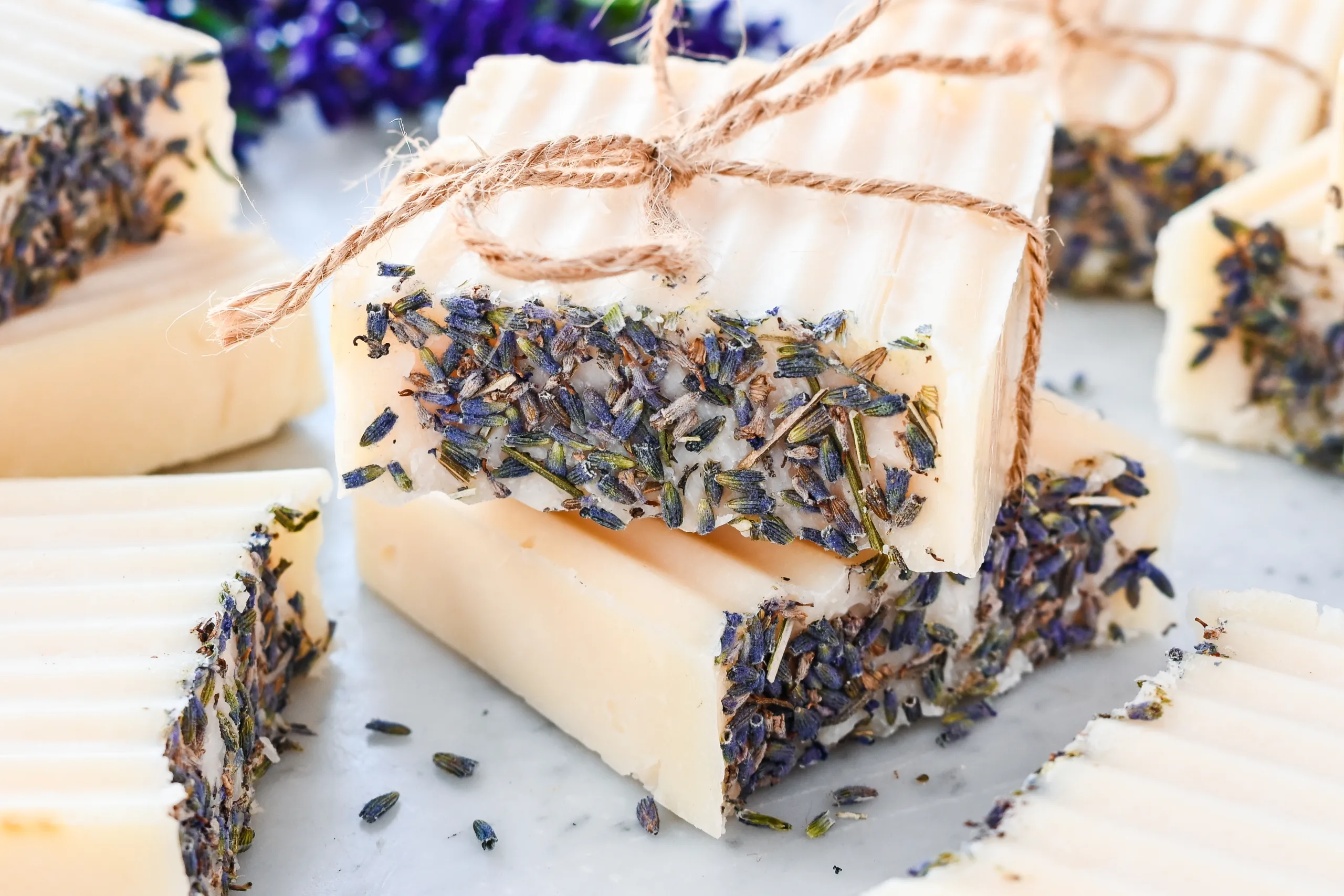
Tallow Soap Bar Recipe (Nourishing, Creamy & Moisturizing!)
This old-fashioned tallow soap bar recipe creates a rich, creamy lather that leaves skin feeling soft and moisturized — without any synthetic ingredients. Made from pure rendered beef tallow, lye, and water, it’s a traditional soap that’s both nourishing and long-lasting. You can customize it with essential oils like lavender for a soothing scent or keep it unscented for a gentle, everyday bar. It’s a simple, timeless recipe that brings back the charm of homemade skincare — the way our grandmothers made it.
Print
Pin
Servings: 0
Equipment
- Digital kitchen scale For weighing tallow, lye, and water accurately — precision matters in every soap recipe.
- Stainless Steel Pot or Crockpot Used to melt your grass-fed beef tallow and combine oils safely. Avoid aluminum, as it reacts with lye.
- Heat-Resistant Mixing Bowl Ideal for preparing your lye solution with distilled water.
- Immersion blender (stick blender) Speeds up trace and ensures the fats and lye form a uniform emulsion.
- Silicone Spatula For scraping the sides of bowls and mixing in essential oils evenly.
- Infrared Thermometer To check that your melted tallow and lye mixture are within 100–110°F before blending.
- Soap Mold (Silicone or Wood-Lined) Shapes your tallow soap bars; silicone molds make unmolding easier.
- Safety Gear (Gloves, Goggles, Long Sleeves) Always wear protective gear when handling sodium hydroxide (lye) — safety first.
- Parchment or Freezer paper Line wooden molds to prevent sticking and make cleanup simple.
- Old Towels or Blanket Used to insulate the mold for even saponification during the first 24 hours.
Ingredients
- 794 g Beef Tallow grass-fed Main fat – provides creamy lather, deep hydration
- 248 g Distilled Water Liquid base for dissolving lye
- 105 g Sodium Hydroxide (lye) Reacts with fats for saponification
- 25 g 1 tablespoon +2 teaspoon Lavender Essential Oil Adds a calm, mild fragrance (optional)
Instructions
- Slowly melt your grass-fed beef tallow in a stainless-steel pot or slow cooker until fully liquid. Avoid overheating.
- In a well-ventilated area (I did this outside), carefully add lye (sodium hydroxide) to your distilled water (never the other way around). Stir until dissolved. The mixture will heat up — set aside to cool.
- When both the melted tallow and lye solution are around 100–110°F, slowly pour the lye into the tallow.
- Use an immersion blender to bring the mixture to a light trace (a pudding-like consistency).
- Stir in lavender oil or your preferred essential oil blend (juniper, mandarin, or citrus oils work beautifully).
- Pour the soap into a lined mold, tap gently to remove bubbles. Place dried flowers if desired, then press down with parchment paper.
- Wrap with a towel and allow to sit for 24–48 hours.
- Unmold and slice into bars. Allow to cure for 4–6 weeks in a cool, airy spot so the soap can dry, firm up, and yield a mild bar with a rich, creamy lather.
Notes
- Always wear gloves and goggles when working with lye, and add lye to water, never water to lye.
- Work in a well-ventilated space and allow the soap to cure for 4–6 weeks before use.
- For a soft, calming scent, use lavender essential oil — or try juniper or mandarin for something different.
- Once cured, these bars are firm, long-lasting, and deeply moisturizing — a wonderful way to use your grass-fed beef tallow.
- Keep soap stored in a cool, dry place between uses to help it last longer.