Making kombucha at home is one of those old-fashioned kitchen projects that feels both practical and satisfying. I love being able to turn a simple batch of sweet tea into a fizzy, tangy drink with just a few basic ingredients and a little patience. Once I learned the process, homemade kombucha became something I actually looked forward to brewing again and again.
If you enjoy learning simple fermentation projects from scratch, you may also like my fermented ginger bug from scratch recipe, lacto fermented lemonade, lacto fermented strawberry lemonade, and fermented garlic and honey. They all have that same from-scratch feel that makes old-fashioned food preservation so rewarding.
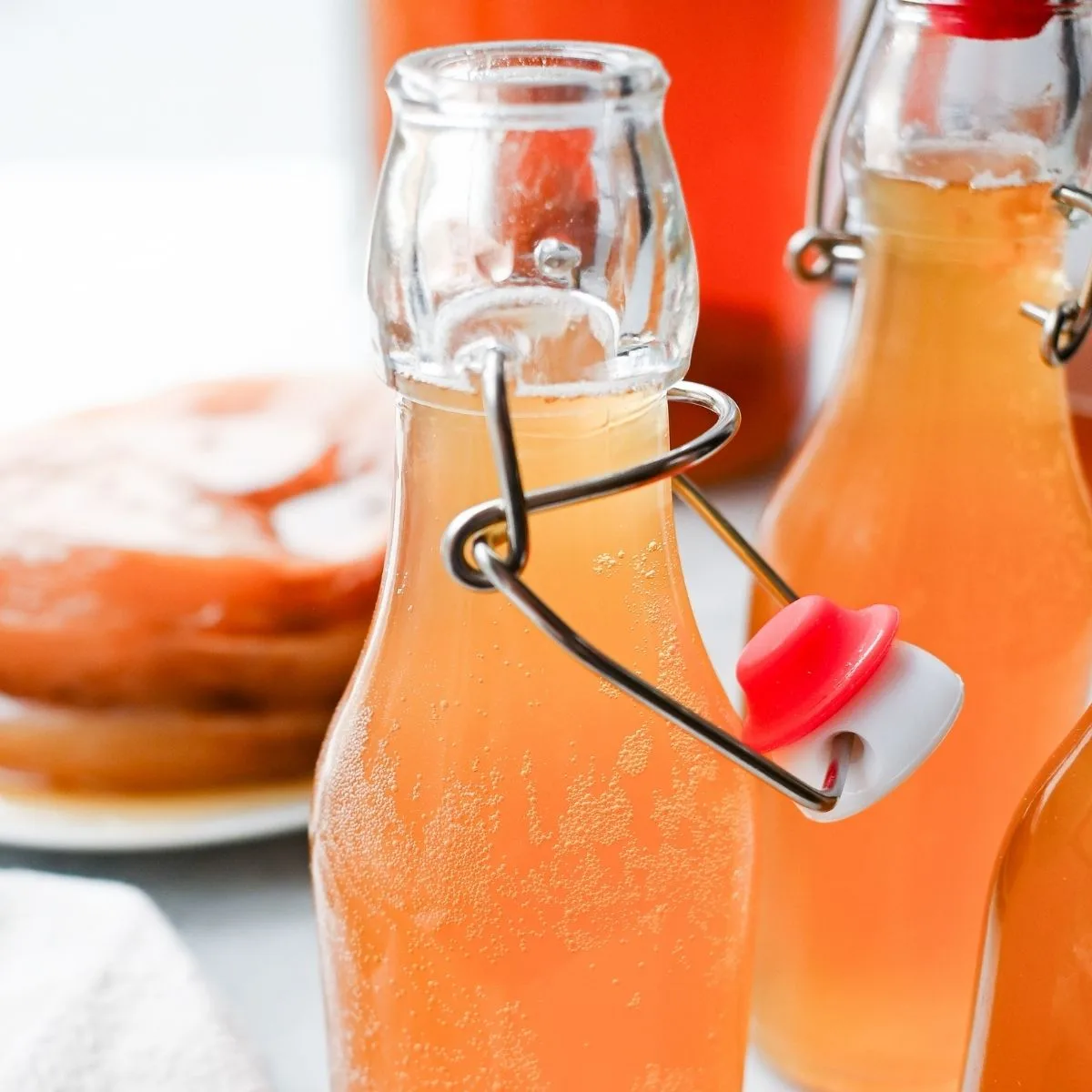
Kombucha tea starts with sweetened tea, a kombucha scoby, and starter tea. Over the course of the first fermentation, the scoby transforms the sweet tea into a lightly sour, refreshing drink. From there, I can either enjoy it as-is or move on to a second fermentation in bottles with fruit juice or fruit for even more flavor and fizz.
Table of Contents
This post contains affiliate links, which means I make a small commission at no extra cost to you. See my full disclosure here.
Quick Look at This Recipe
Prep time: 20 minutes
Fermenting time: 7 to 14 days
Total time: 7 to 14 days
Servings: 8 cups
Texture: Light, tangy, fizzy
Best served: Chilled after fermentation
Why I Like Making Kombucha
I like making kombucha because it turns a few pantry staples into something that feels special. All I need is water, sugar, tea leaves, a scoby, and a little starter. After that, time does most of the work.
It also gives me a simple way to keep a homemade fermented drink on hand without constantly buying bought kombucha from the store. Store-bought bottles can get expensive, especially if you enjoy drinking kombucha regularly. Brewing my own batch at room temperature saves money and lets me control the flavor, sweetness, and strength.
Another thing I enjoy is how flexible it is. I can leave my kombucha plain after the first fermentation, or I can do a second ferment with fruit juice, mashed fruit, or herbs in bottles for a more flavorful finish.

What Is Kombucha?
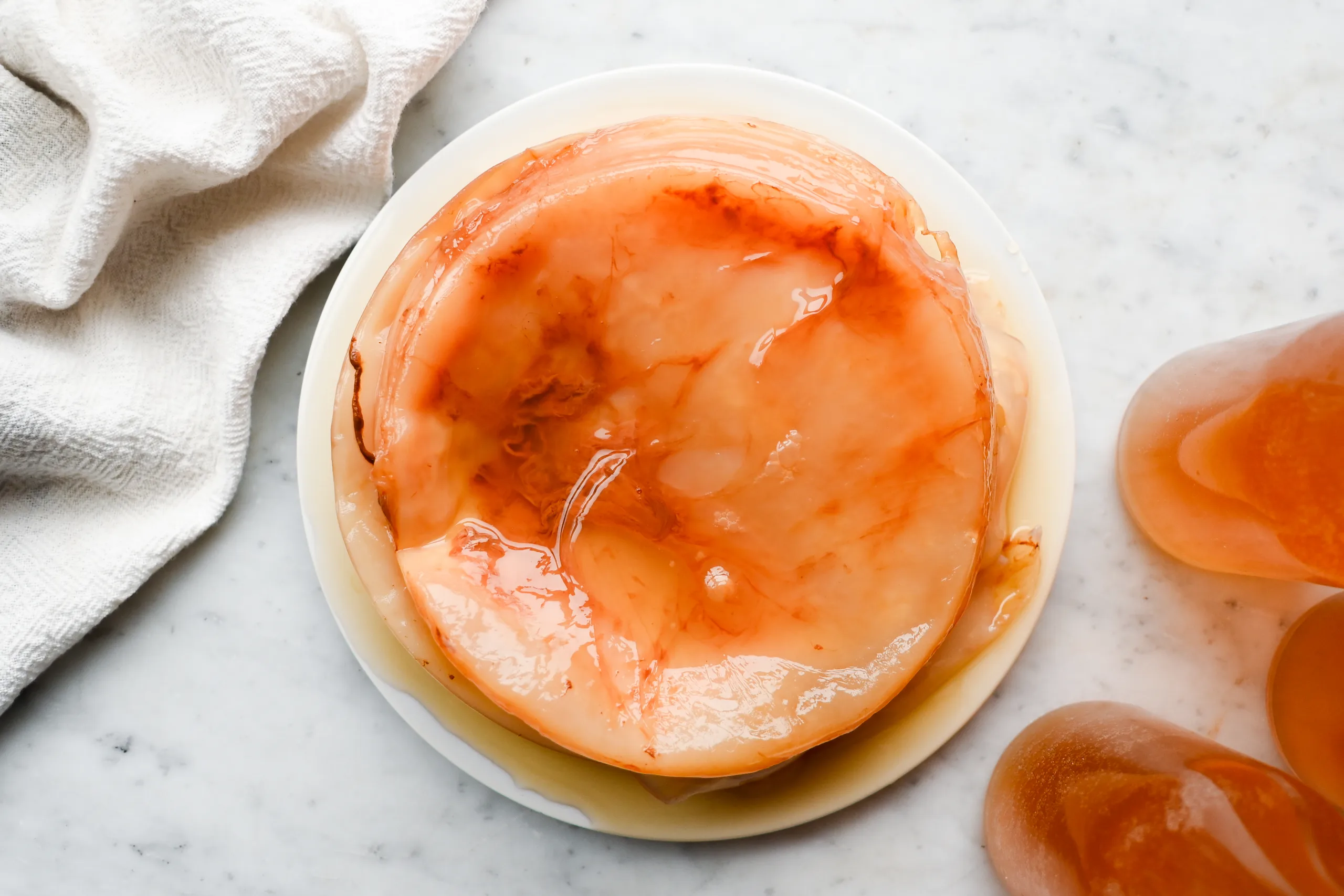
Kombucha is a fermented tea drink made by combining sweet tea with a kombucha scoby and starter tea. The scoby is a culture of yeast and bacteria that helps ferment the sweetened tea over several days at room temp.
During the first fermentation, the sugar feeds the culture, and the tea gradually changes from sweet to tart. The finished kombucha tea has a bright, slightly vinegary flavor that can range from mild to bold depending on how long I let the batch ferment.
After the first ferment, I can bottle the kombucha and do a second fermentation if I want it to become more fizzy. This second step is optional, but it is what gives homemade kombucha that bubbly finish many people love.
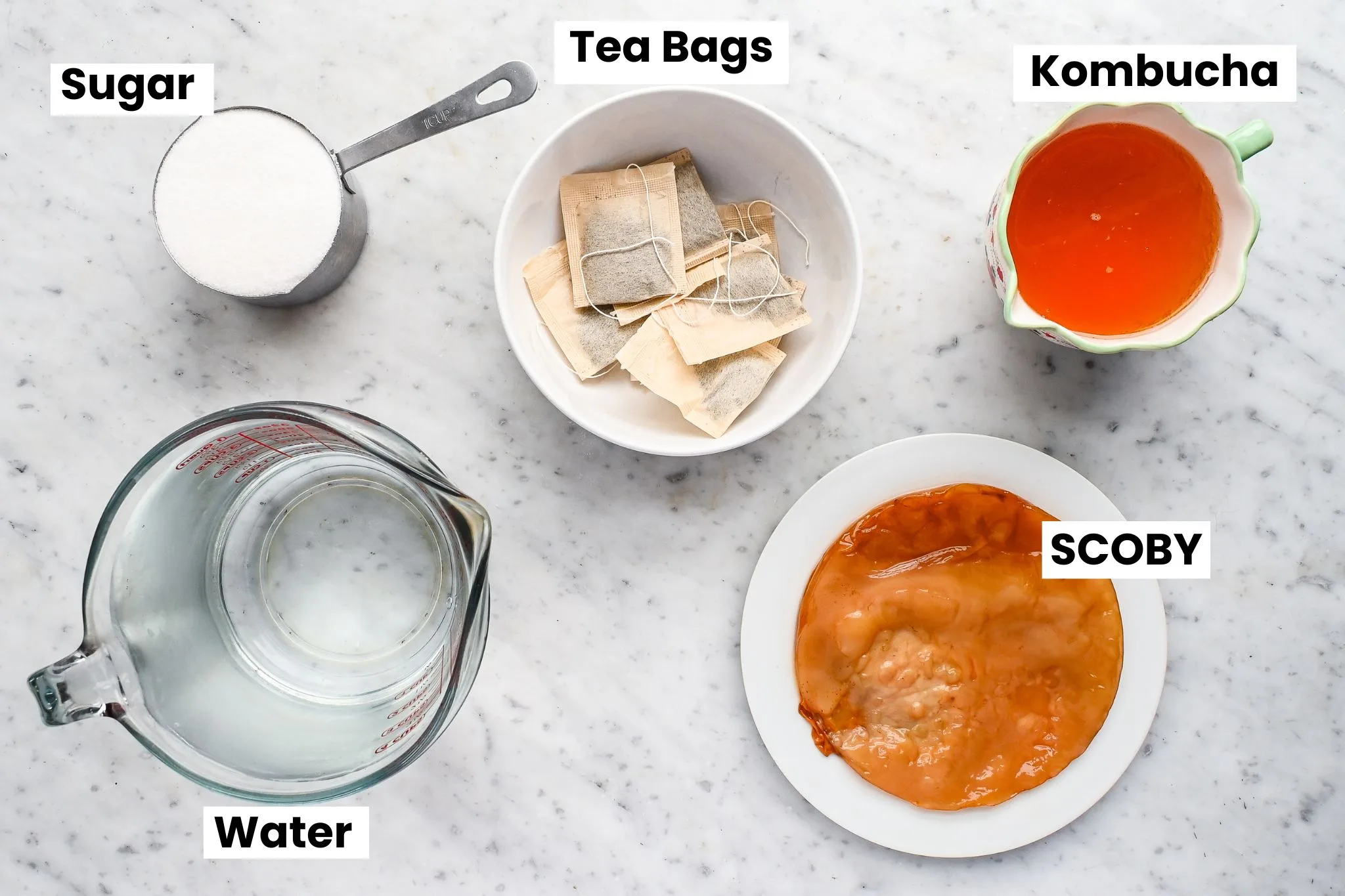
Ingredients for Homemade Kombucha
- 16 cups water
- 1 cup sugar
- 8 tea bags organic black tea
- 1 kombucha scoby
- 1 cup starter tea from a previous batch or plain raw kombucha (store-bought will work)
Optional for Second Fermentation
These are simply starting points, and you can adjust the amounts in future batches based on how strong, sweet, or fizzy you want your kombucha to be.
- fruit juice (1 to 2 tablespoons per 16-ounce bottle)
- mashed fruit (1 to 3 tablespoons per 16-ounce bottle)
- ginger (about ½ teaspoon to 1 teaspoon grated ginger or 2 to 4 thin slices)
- herbs (1 teaspoon fresh herbs or ¼ to ½ teaspoon dried herbs)
- sugar or honey (½ to 1 teaspoon per 16-ounce bottle)
Supplies You Will Need
- gallon jar
- rubber band
- coffee filter or clean tightly woven cloth
- pot for heating water
- wooden or non-reactive spoon
- bottles for second fermentation
- funnel, if needed for bottling
Best Tea for Brewing Kombucha
When I brew kombucha, I usually use organic black tea because it gives reliable results and makes a strong, balanced kombucha tea.
I avoid flavored tea, herbal tea, and tea with oils added, especially when I am building up a new kombucha scoby. Plain organic black tea is the best choice for a healthy ferment.
How to Make Kombucha

In a pot, bring the water to a boil. Remove it from the heat and stir in the sugar until fully dissolved. Add the tea bags or tea leaves and let the tea steep until strong.

Once the tea has steeped, remove the tea bags or strain out the tea leaves. Let the sweet tea cool completely to room temperature. This part matters because adding a scoby to hot tea can damage the culture.
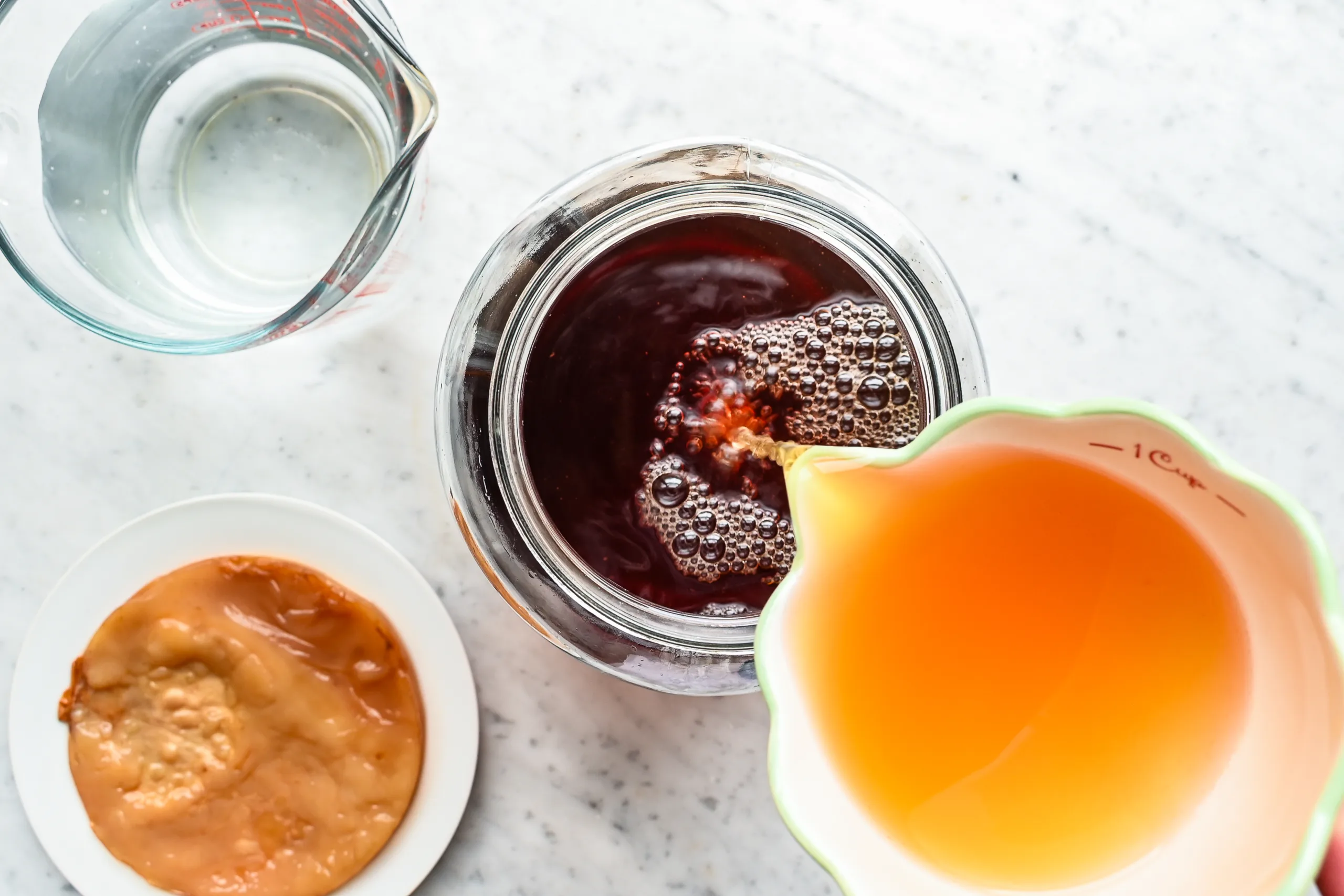
Pour the cooled sweetened tea into a clean glass jar. Add the starter tea, then gently place the kombucha scoby into the jar.
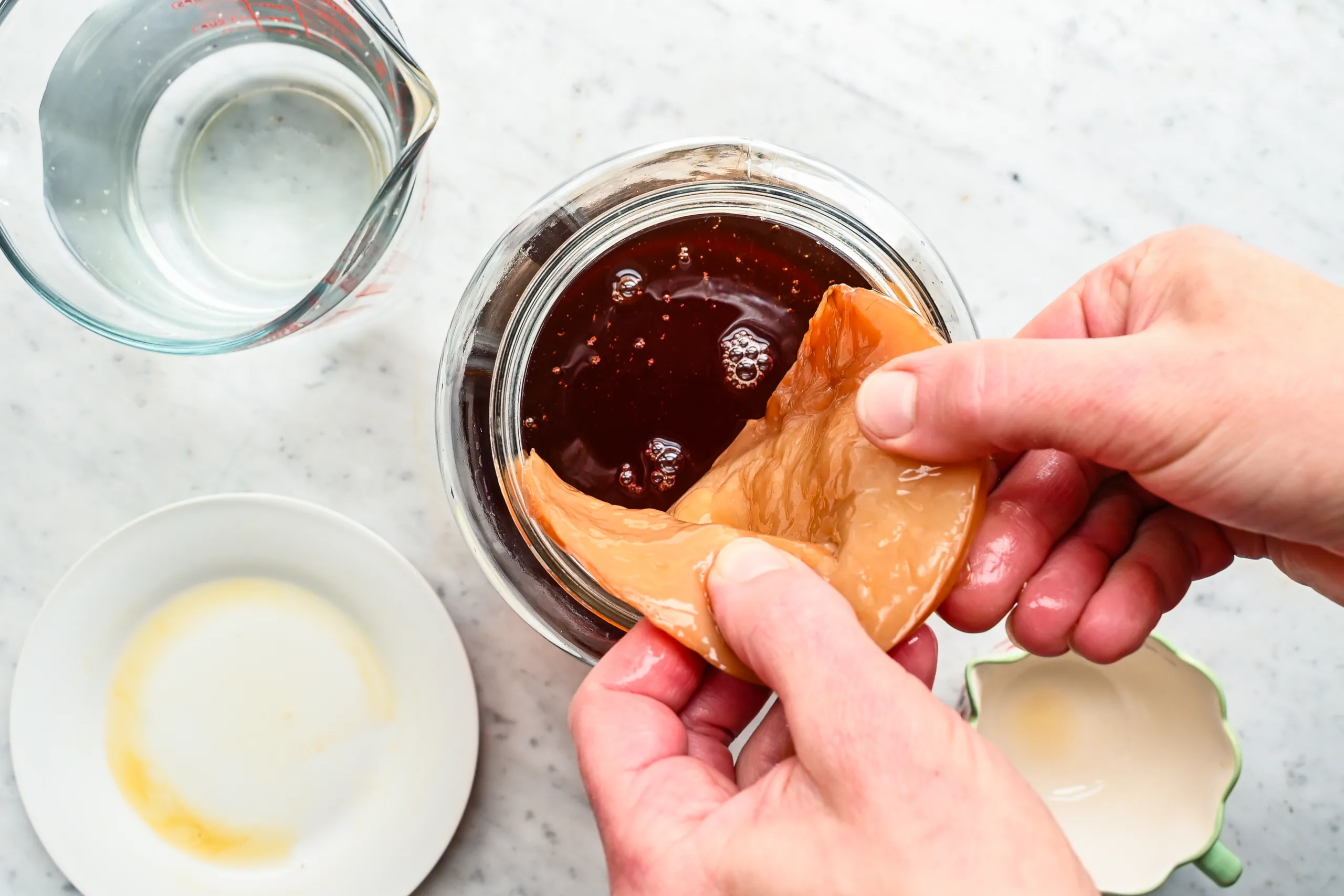
The starter helps lower the pH and gives the batch a good beginning for fermentation. If the scoby floats, sinks, or sits sideways, that is all normal.
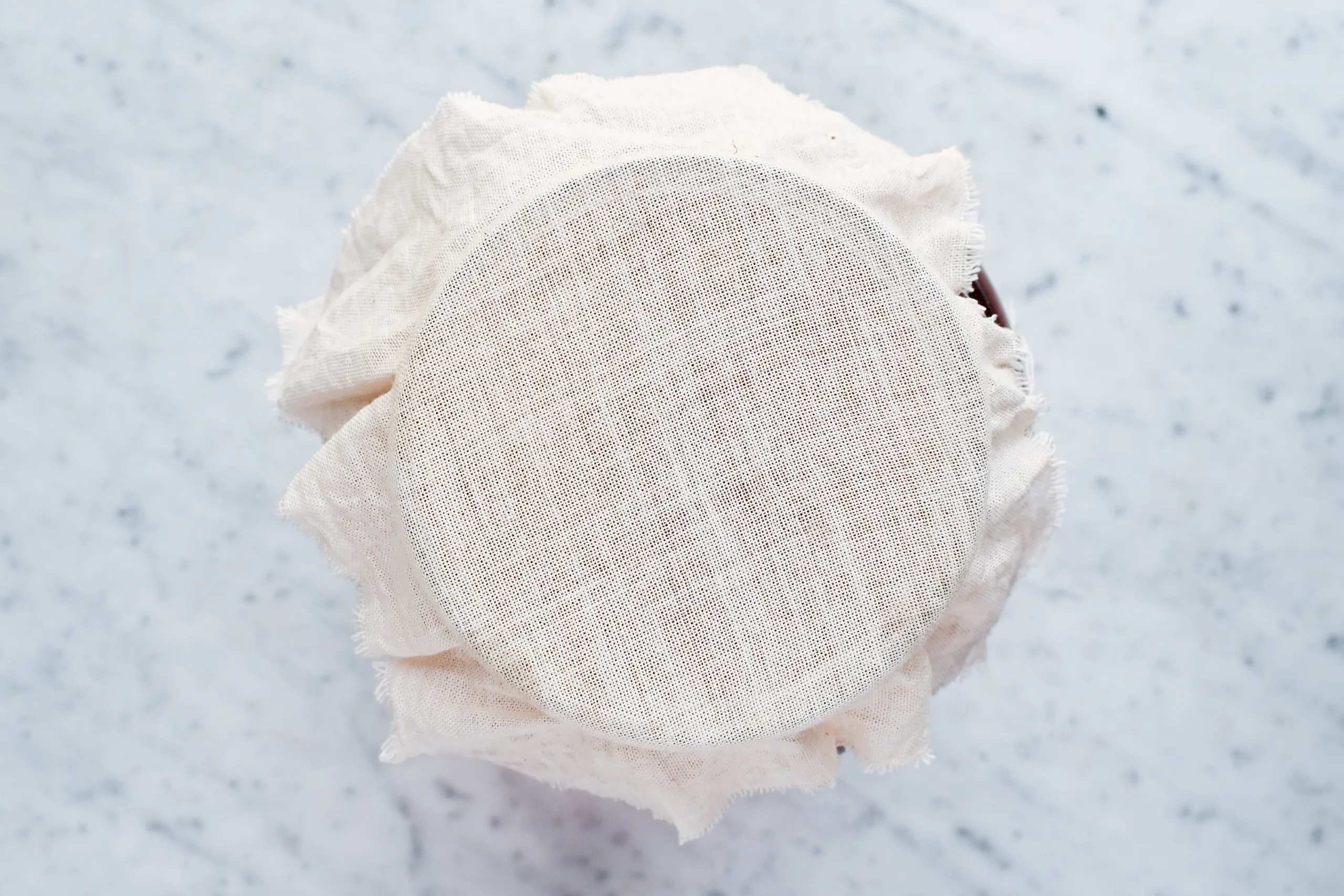
Place a coffee filter or clean cloth over the top of the jar and secure it with a rubber band. This keeps dust and insects out while still allowing airflow.

Set the jar in a warm room temperature area out of direct sunlight. Place it in a room temp spot that stays around 70 to 78 degrees. Temperature makes a big difference in how quickly kombucha will ferment. Let the first fermentation continue for 7 to 14 days. I start tasting around day 7. If I want a sweeter brew, I stop earlier. If I want a more tangy homemade kombucha, I let it go longer.
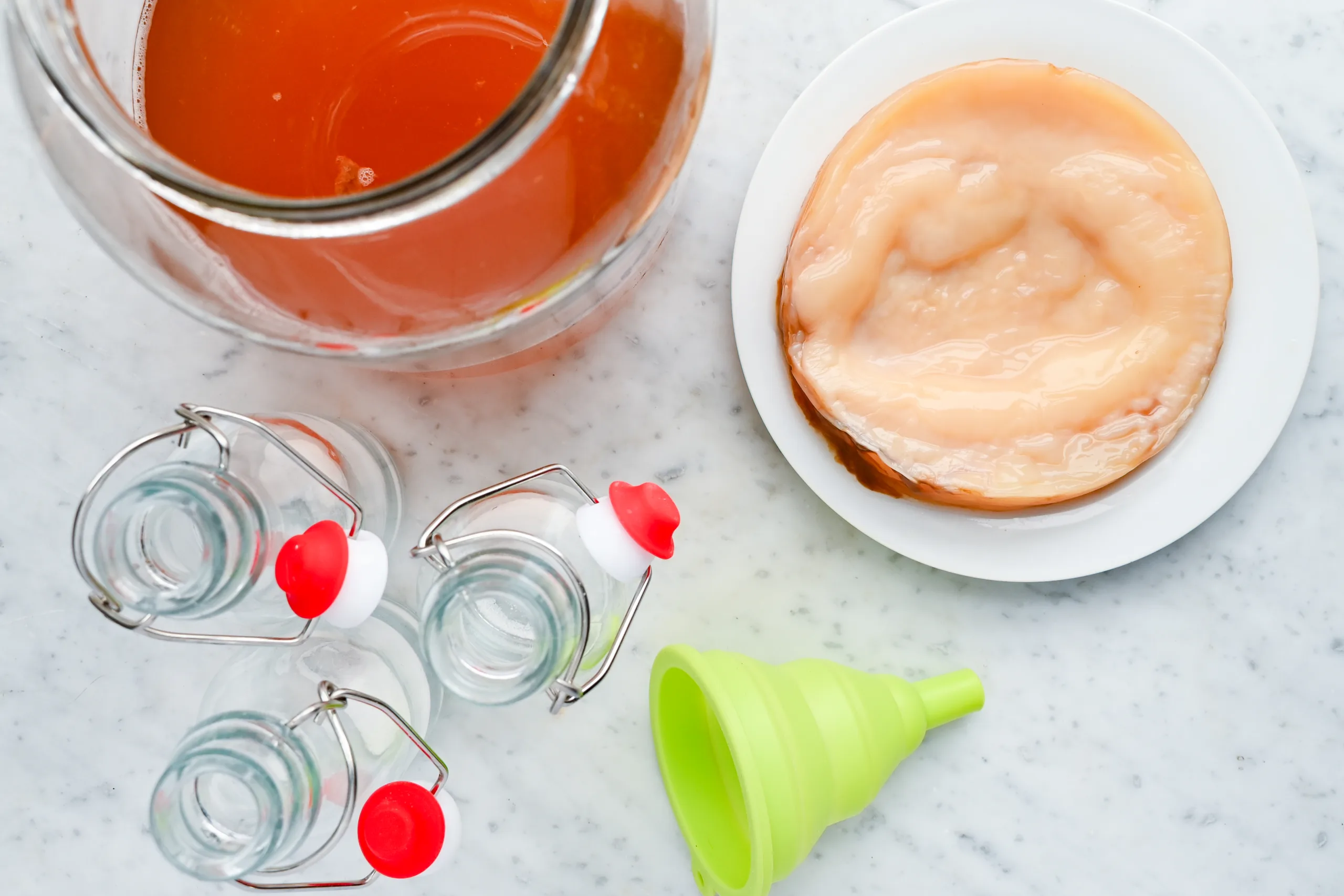
Once the first ferment tastes the way I like it, I remove the scoby and set aside 1 cup of kombucha as starter tea for the next batch.
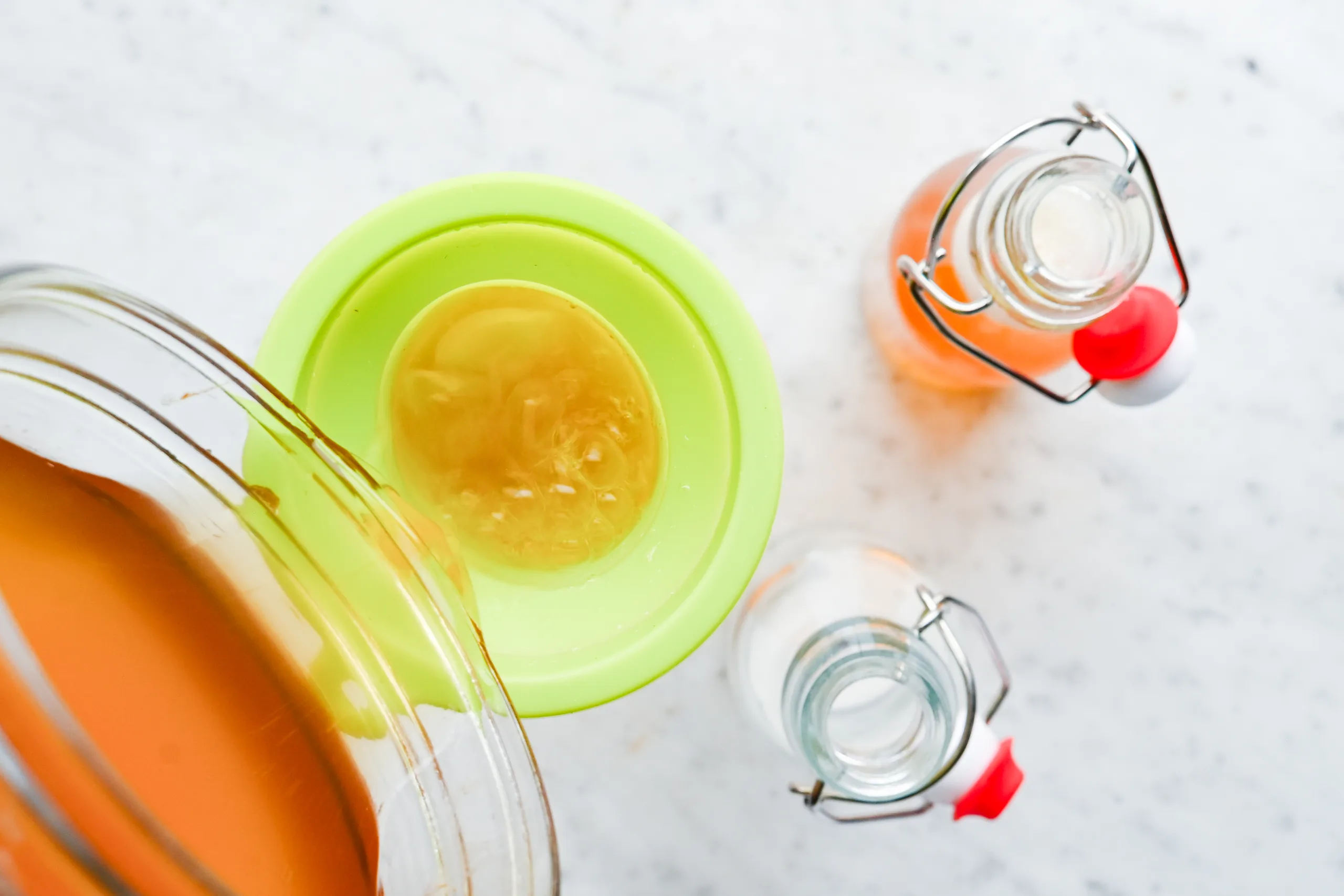
At this point, you can drink the kombucha as-is, or you can pour it into bottles for a second fermentation. If I am doing a second ferment, I like to add a small amount of fruit juice or sugar to each bottle before filling it with kombucha.
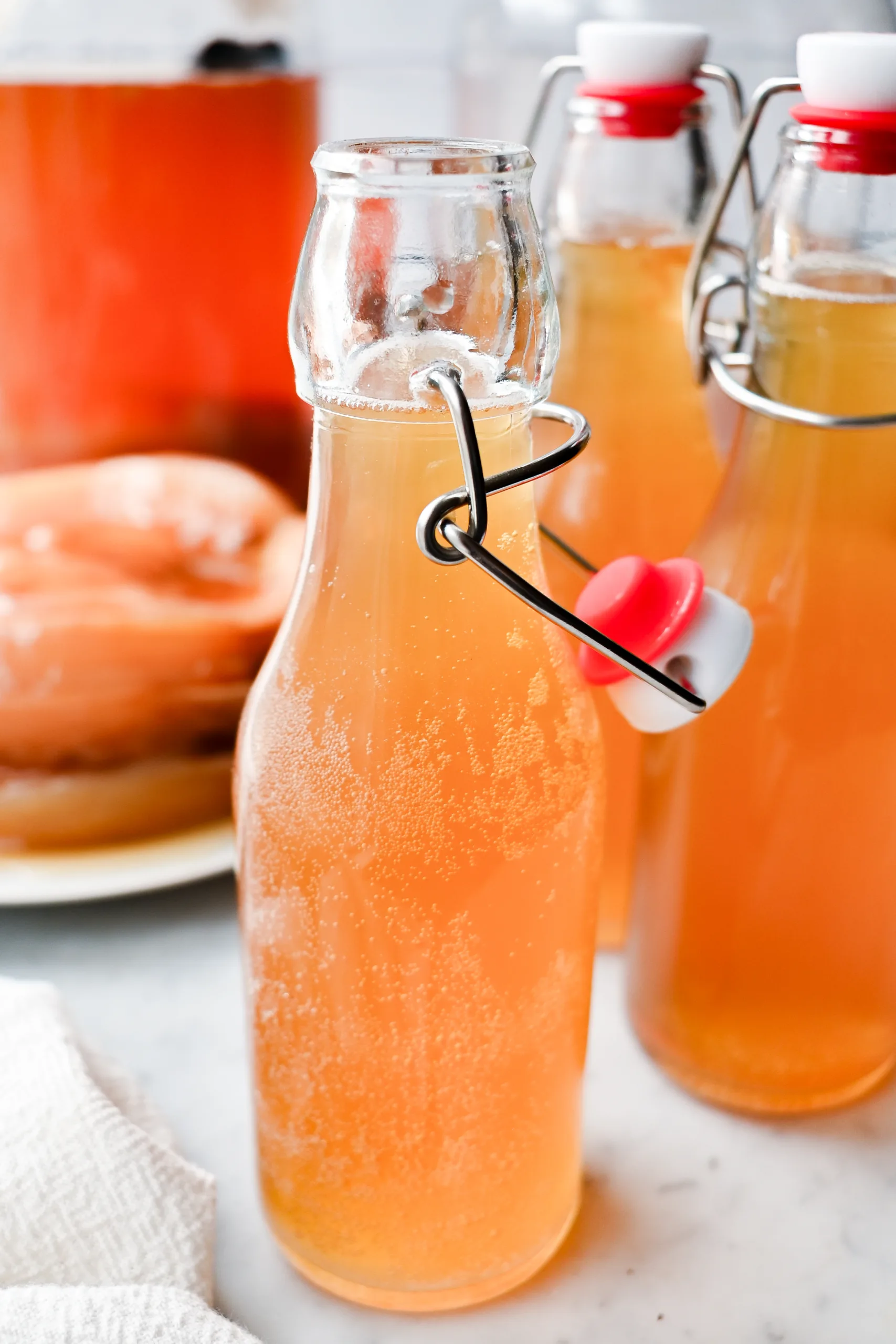
Seal the bottles and let them sit at room temperature for 1 to 3 days. This second fermentation helps build carbonation and deepen the flavor.
How Long Does Kombucha Take to Ferment?
The total days for brewing kombucha can vary depending on temperature and taste preference. In a warmer room, the first fermentation often moves faster. In a cooler room, it may take a few extra days.
For me, the sweet spot is usually around 7 to 10 days for the first fermentation, then another 1 to 3 days for the second ferment if I want bubbles.
Best Temperature for Kombucha
Temperature matters a lot when making kombucha. If the room is too cool, the fermentation can move very slowly. If the temperature is too warm, the kombucha may become too sour too quickly.
I try to keep my brew kombucha setup somewhere around 70 to 78 degrees. A steady room temp is much better than constantly moving the jar around the house.
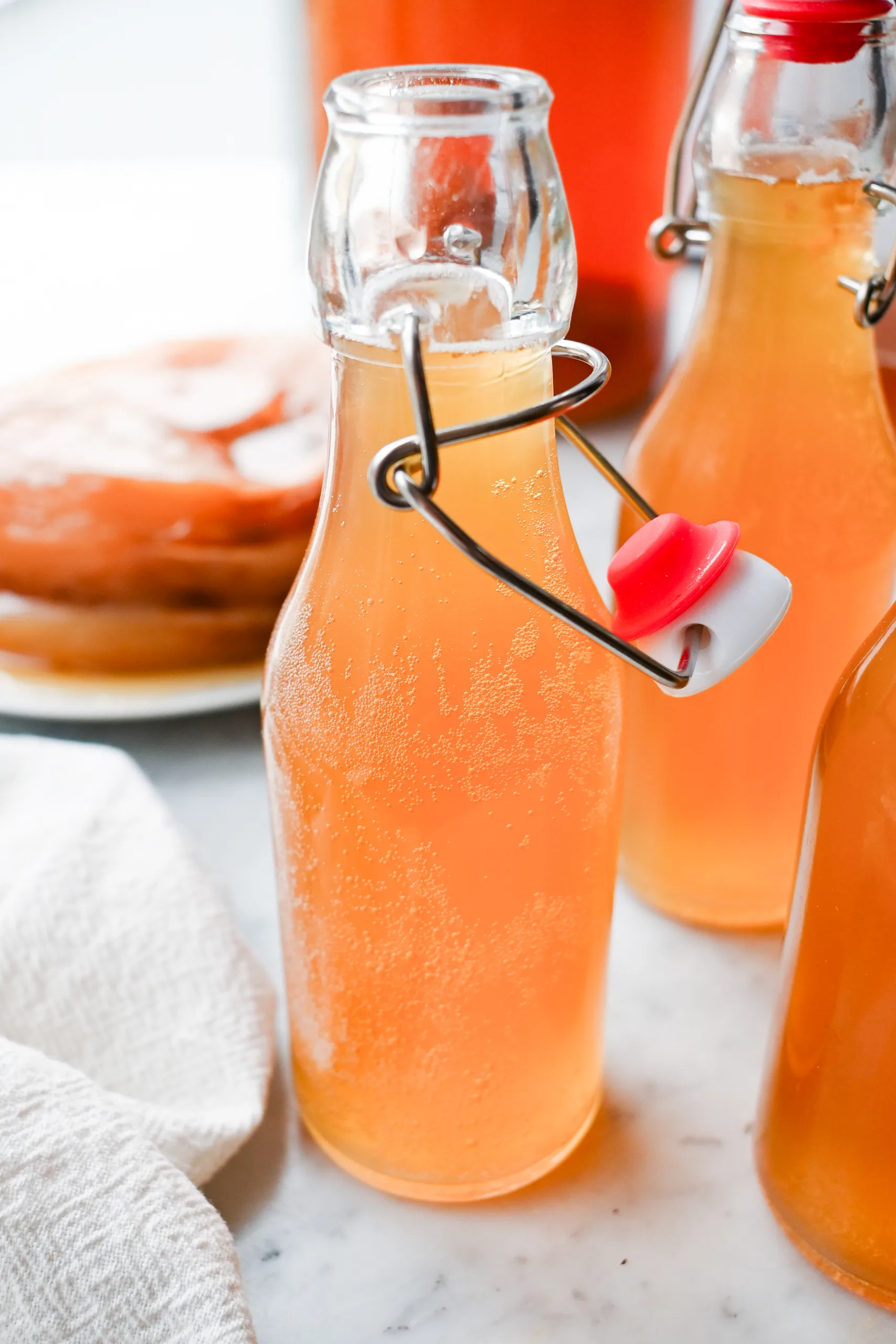
Flavor Ideas for Second Fermentation
The second fermentation is where kombucha gets especially fun. Once the first batch is done, I like using simple flavors that fit the season.
A few easy ideas are:
- fruit juice like apple, grape, or berry
- fresh fruit such as strawberries, peaches, or blueberries
- ginger for a sharper flavor
- herbs for a lighter finish
- a little plain sugar or honey
Tips for Making Kombucha at Home
- Always let the sweet tea cool to room temperature before adding the scoby.
- Use plain black tea or green tea for the most dependable results.
- Save enough starter tea from each batch for the next one.
- Keep the jar covered with a coffee filter and secured with a rubber band.
- Start tasting after about 7 days so the kombucha does not become more sour than you like.
- Use sturdy bottles for second fermentation.
- Refrigerate after the second ferment if you want to slow the process down.
Troubleshooting Homemade Kombucha
My kombucha is too sweet
It likely needs more days in the first fermentation. Let it ferment a bit longer and taste again.
My kombucha is too sour
It fermented too long. You can shorten the fermentation next time, or use extra-sour kombucha as starter tea for a new batch. Don’t throw it out. If it keeps fermenting, it can turn into kombucha vinegar, which can be used for household cleaning!
My scoby sank to the bottom
That is completely normal. A kombucha scoby can float, sink, or stay sideways and still work just fine.
I do not see fizz after bottling
Some second ferments take longer than others. Adding a little fruit juice can help, and warmer room temperature often encourages carbonation.
Frequently Asked Questions About How to Make Kombucha
What is starter tea in kombucha?
Starter tea is finished kombucha from a previous batch or plain raw kombucha from the store. It helps begin the fermentation and protects the sweet tea while the scoby gets to work.
Can I use bought kombucha as starter?
Yes, as long as it is plain, raw, and unflavored. It should not contain added fruit juice or other flavorings.
How many cups does this batch make?
This recipe makes about 8 cups of kombucha, depending on how much liquid you reserve as starter for the next batch.
How do I know when the first fermentation is done?
I go by taste. The kombucha should no longer taste like plain sweet tea. It should taste lightly tart, balanced, and refreshing.
Do I have to do a second fermentation?
No, the second fermentation is optional. After the first ferment, kombucha is already ready to drink. The second fermentation simply adds fizz and extra flavor.
What can I do with extra scobys?
Extra scobys can be shared, composted, or stored in a scoby hotel for future batches. I usually have all the kombucha I need fermenting, so when I end up with extra scoby on hand, I chop it up and give a little here and there to my dogs and chickens.

Tried this recipe?
I would love to see it! Tag me on Instagram @idiesfarm and #idiesfarm so I can share your beautiful creation!

How to Make Kombucha at Home (Homemade Kombucha Recipe)
Ingredients
Equipment
Method
- In a pot, bring the water to a boil. Remove it from the heat and stir in the sugar until fully dissolved. Add the tea bags or tea leaves and let the tea steep until strong.
- Once the tea has steeped, remove the tea bags or strain out the tea leaves. Let the sweet tea cool completely to room temperature. This part matters because adding a scoby to hot tea can damage the culture.
- Pour the cooled sweetened tea into a clean glass jar. Add the starter tea, then gently place the kombucha scoby into the jar.
- The starter helps lower the pH and gives the batch a good beginning for fermentation. If the scoby floats, sinks, or sits sideways, that is all normal.
- Place a coffee filter or clean cloth over the top of the jar and secure it with a rubber band. This keeps dust and insects out while still allowing airflow.
- Set the jar in a warm room temperature area out of direct sunlight. Place it in a room temp spot that stays around 70 to 78 degrees. Temperature makes a big difference in how quickly kombucha will ferment. Let the first fermentation continue for 7 to 14 days. I start tasting around day 7. If I want a sweeter brew, I stop earlier. If I want a more tangy homemade kombucha, I let it go longer.
- Once the first ferment tastes the way I like it, I remove the scoby and set aside 1 cup of kombucha as starter tea for the next batch.
- At this point, you can drink the kombucha as-is, or you can pour it into bottles for a second fermentation. If I am doing a second ferment, I like to add a small amount of fruit juice or sugar to each bottle before filling it with kombucha.
- Seal the bottles and let them sit at room temperature for 1 to 3 days. This second fermentation helps build carbonation and deepen the flavor.
Notes
- Always let the sweet tea cool to room temperature before adding the scoby.
- Use plain black tea for the most dependable results.
- Save enough starter tea from each batch for the next one.
- Keep the jar covered with a coffee filter and secured with a rubber band.
- Start tasting after about 7 days so the kombucha does not become more sour than you like.
- Use sturdy bottles for second fermentation.
- Refrigerate after the second ferment if you want to slow the process down.

Welcome!
Hi! I’m Stephanie, also known as Idie. Follow me as I tap into the methods of the past and learn how to make my world a little smaller.