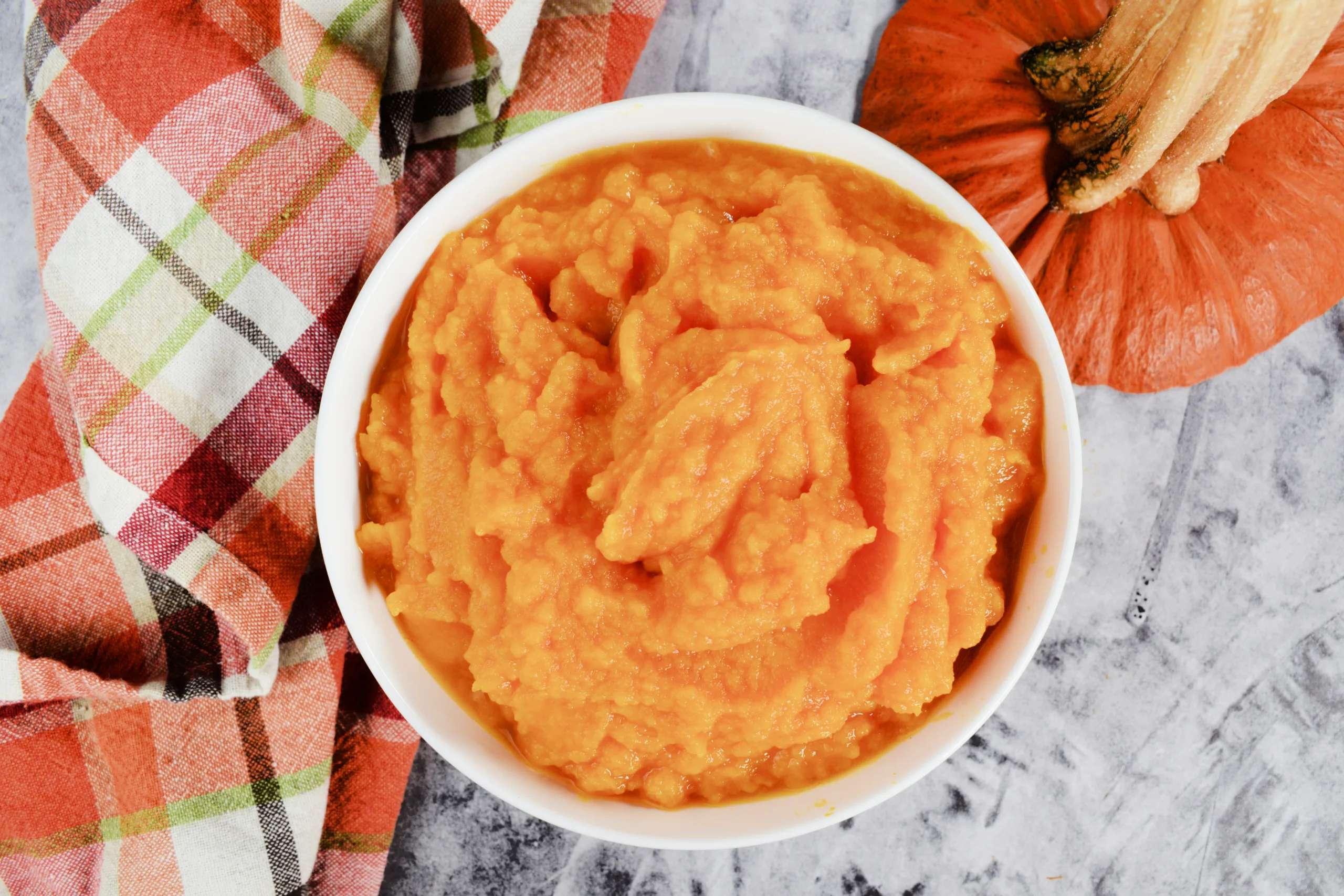
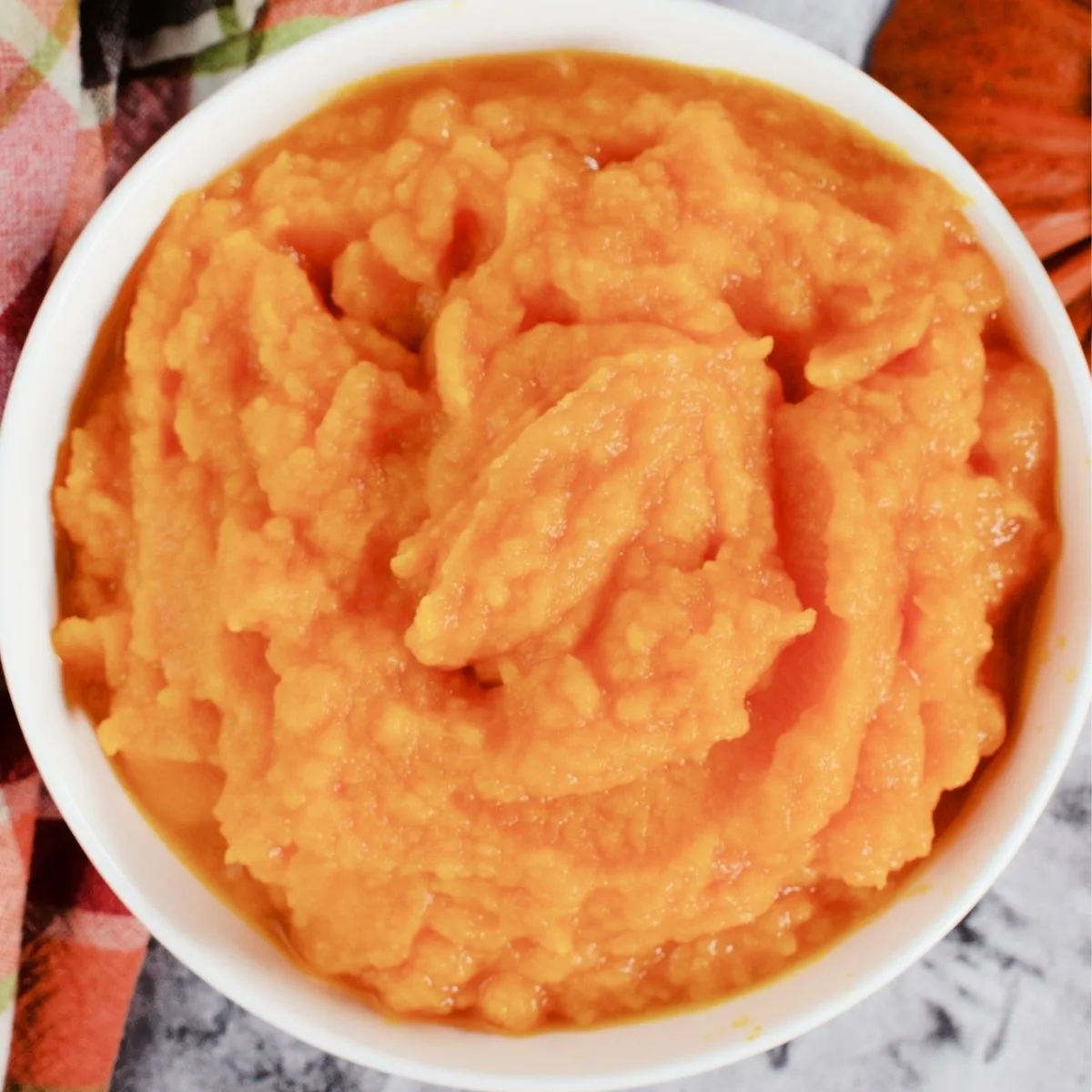
Every fall, I like to set aside an afternoon to roast pumpkins and make homemade pumpkin purée. It is one of those simple kitchen projects that makes the whole house smell like fall, and it gives me fresh pumpkin purée for pies, breads, muffins, soups, and other pumpkin recipes.
If you are starting with a whole pumpkin, do not throw away the seeds. You can clean them and make my Perfect Recipe for How to Roast Pumpkin Seeds while your pumpkin purée cools. Once your purée is ready, you can use it in fall baking recipes like Easy Sourdough Pumpkin Cranberry Quick Bread Recipe, sourdough pumpkin bread, muffins, pies, and soups.
Roasting a pumpkin is easier than it sounds. You do not need to peel the raw pumpkin or cut it into small pieces first. I simply cut the pumpkin in half, scoop out the seeds, roast it cut side down, and then scoop the soft pumpkin flesh away from the skin after baking.
The result is smooth, fresh, homemade pumpkin purée that can be used in place of canned pumpkin in many fall baking recipes.
Table of Contents
This post contains affiliate links, which means I make a small commission at no extra cost to you. See my full disclosure here.
Quick Look
Prep Time: 10 minutes
Cook Time: 45 to 60 minutes
Cooling Time: 15 to 20 minutes
Total Time: About 1 hour 15 minutes
Yield: About 2 to 4 cups pumpkin purée, depending on pumpkin size
Best Pumpkin to Use: Sugar pumpkin or pie pumpkin
Best For: Pumpkin pie, pumpkin bread, muffins, soups, pancakes, pumpkin bars, and fall baking
Why Roast a Pumpkin for Homemade Pumpkin Purée?
Roasting a pumpkin gives you soft, flavorful pumpkin flesh that can be blended into a smooth purée. Homemade pumpkin purée has a fresh, mild pumpkin flavor and works well in many sweet and savory recipes.
I like making my own pumpkin purée when sugar pumpkins are in season because it lets me use the whole pumpkin. The flesh becomes purée, and the seeds can be roasted for a simple snack.
You can use homemade pumpkin purée in pumpkin pie, pumpkin bread, pumpkin muffins, pumpkin pancakes, pumpkin soup, pumpkin rolls, pumpkin bars, and other fall recipes that call for canned pumpkin.
Best Pumpkins for Roasting
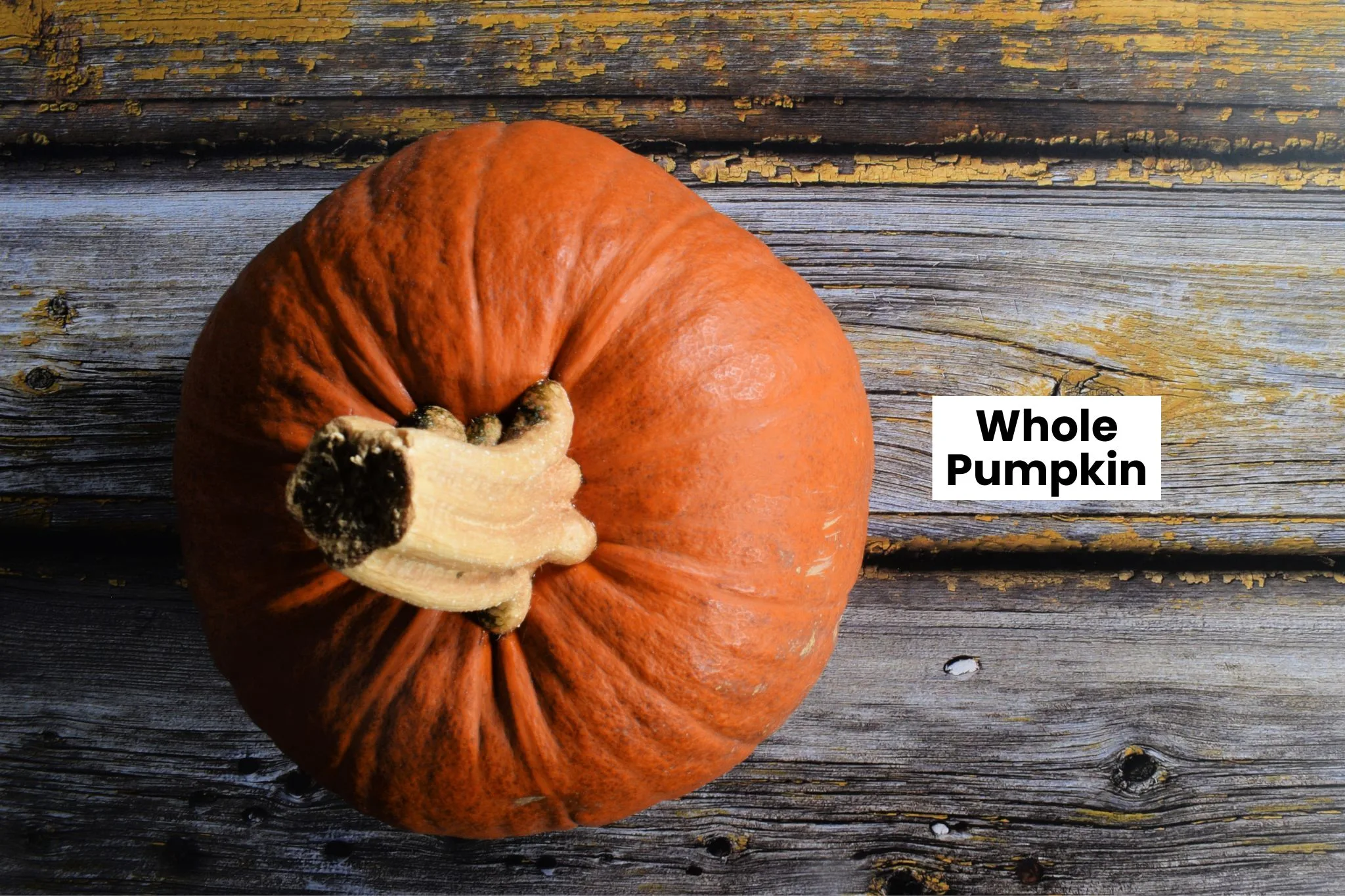
The best pumpkins for roasting are small sugar pumpkins or pie pumpkins. These pumpkins have a sweeter flavor, denser flesh, and smoother texture than large carving pumpkins.
Large carving pumpkins are edible, but they tend to be more watery and stringy. They are better for decorating than baking.
Look for a pumpkin that feels heavy for its size, has firm skin, and does not have soft spots or mold. A 3 to 5 pound sugar pumpkin is a good size for homemade pumpkin purée.
Ingredients for Homemade Pumpkin Purée
1 small sugar pumpkin or pie pumpkin, about 3 to 5 pounds
Coconut oil or olive oil, optional
How to Roast a Whole Pumpkin to Make Pumpkin Purée
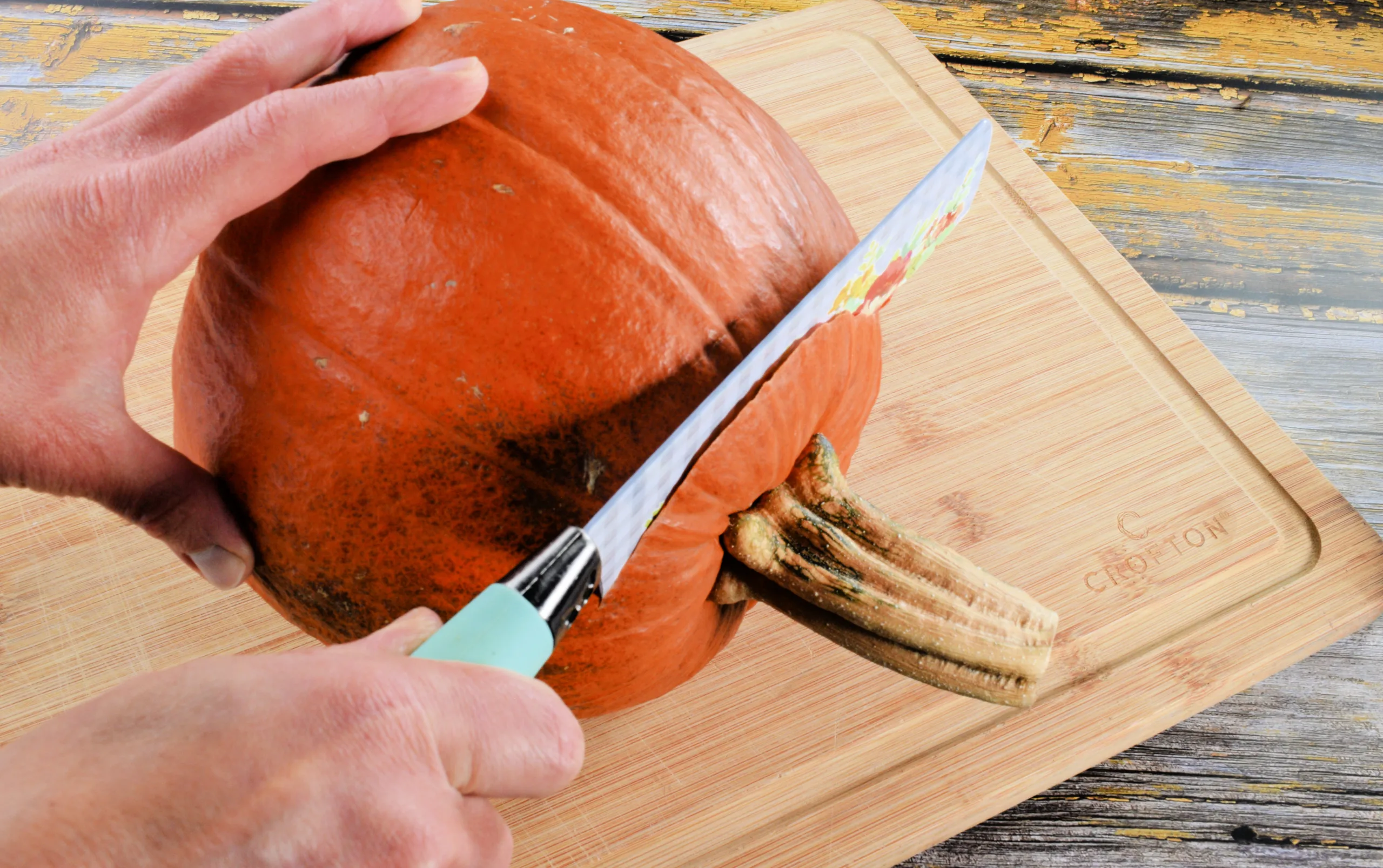
Step 1: Preheat the oven to 400°F. Line a rimmed baking sheet with parchment paper for easy cleanup. Rinse the outside of the pumpkin well to remove any dirt. Dry it with a clean towel. Use a sharp knife to carefully cut the pumpkin in half from top to bottom.
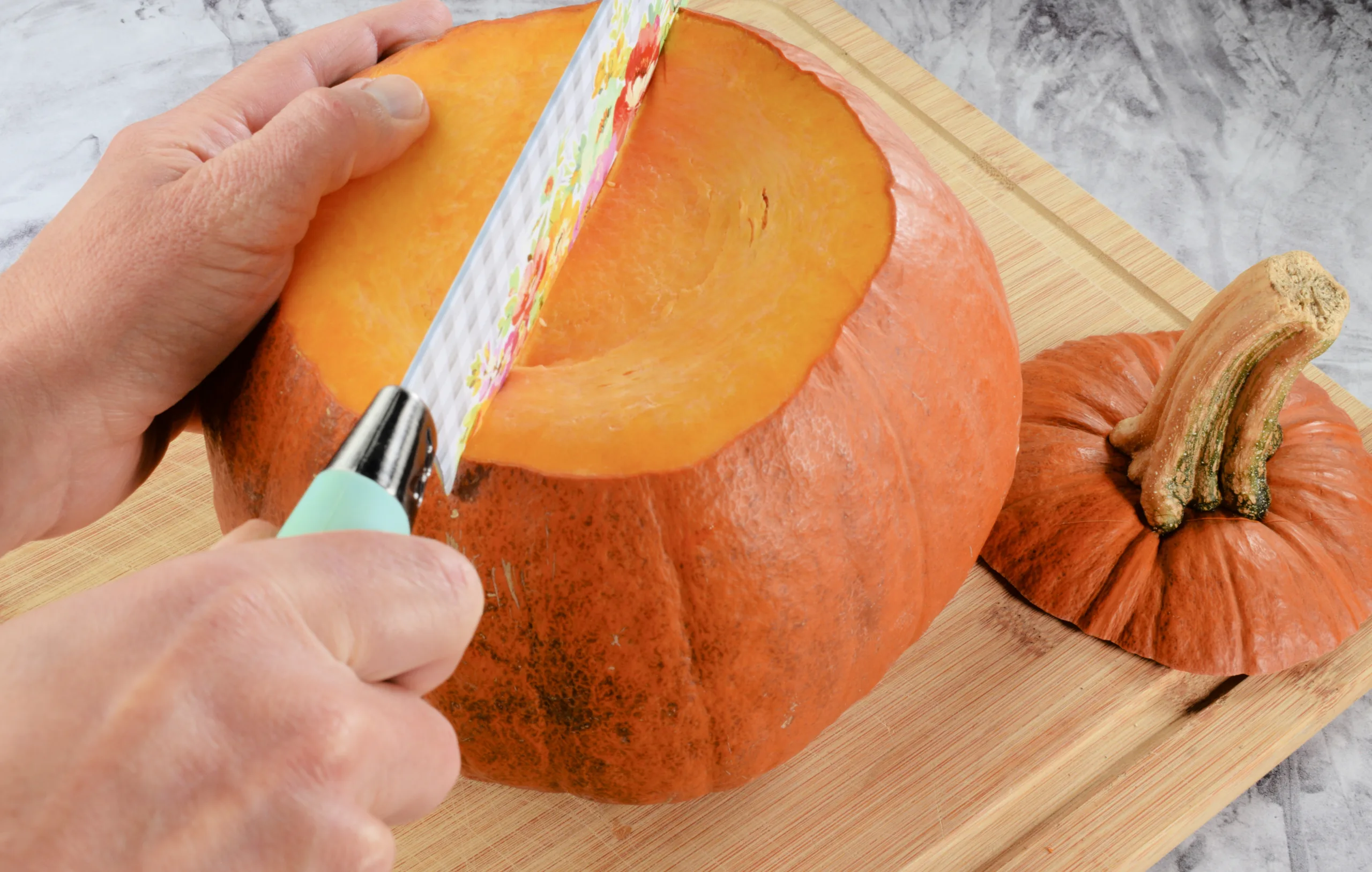
Step 2: Pumpkins can be firm, so take your time and keep your hands clear of the knife.
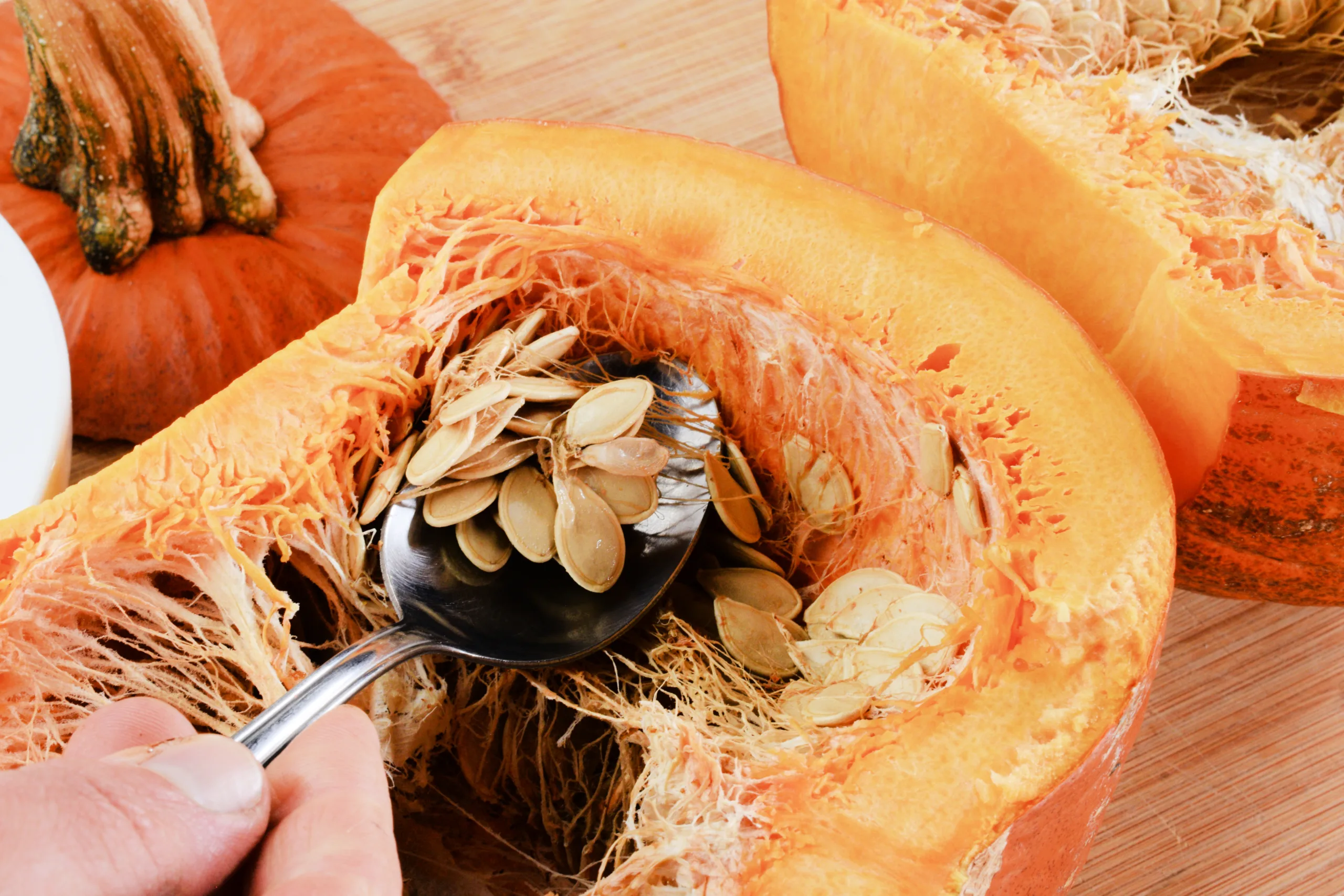
Step 3: Use a large spoon to scoop out the seeds and stringy pulp. Set the seeds aside if you want to make roasted pumpkin seeds.
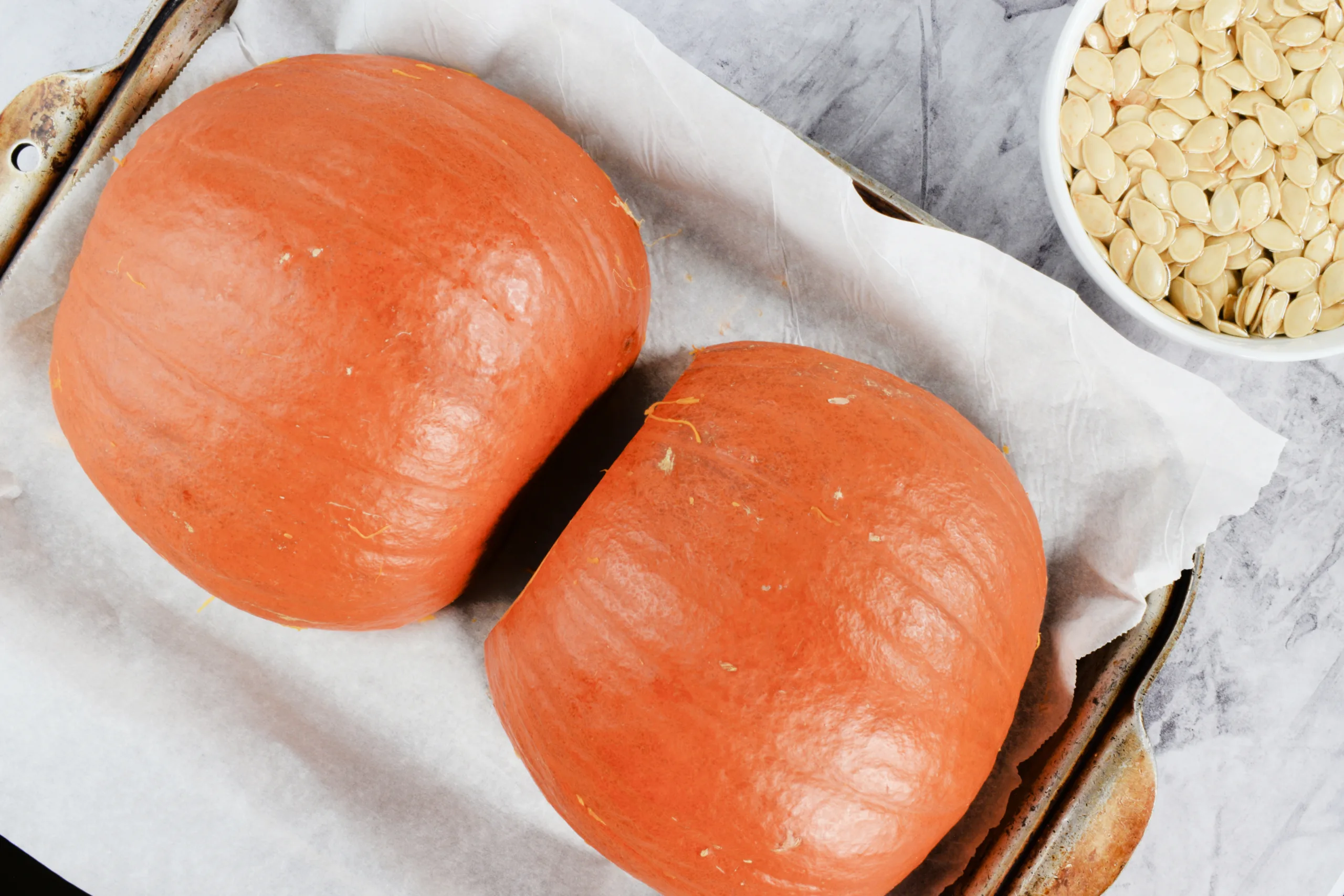
Step 4: Place the pumpkin halves cut side down on the prepared baking sheet. You can brush the cut sides lightly with oil if you want a little extra roasted flavor, but it is not required.
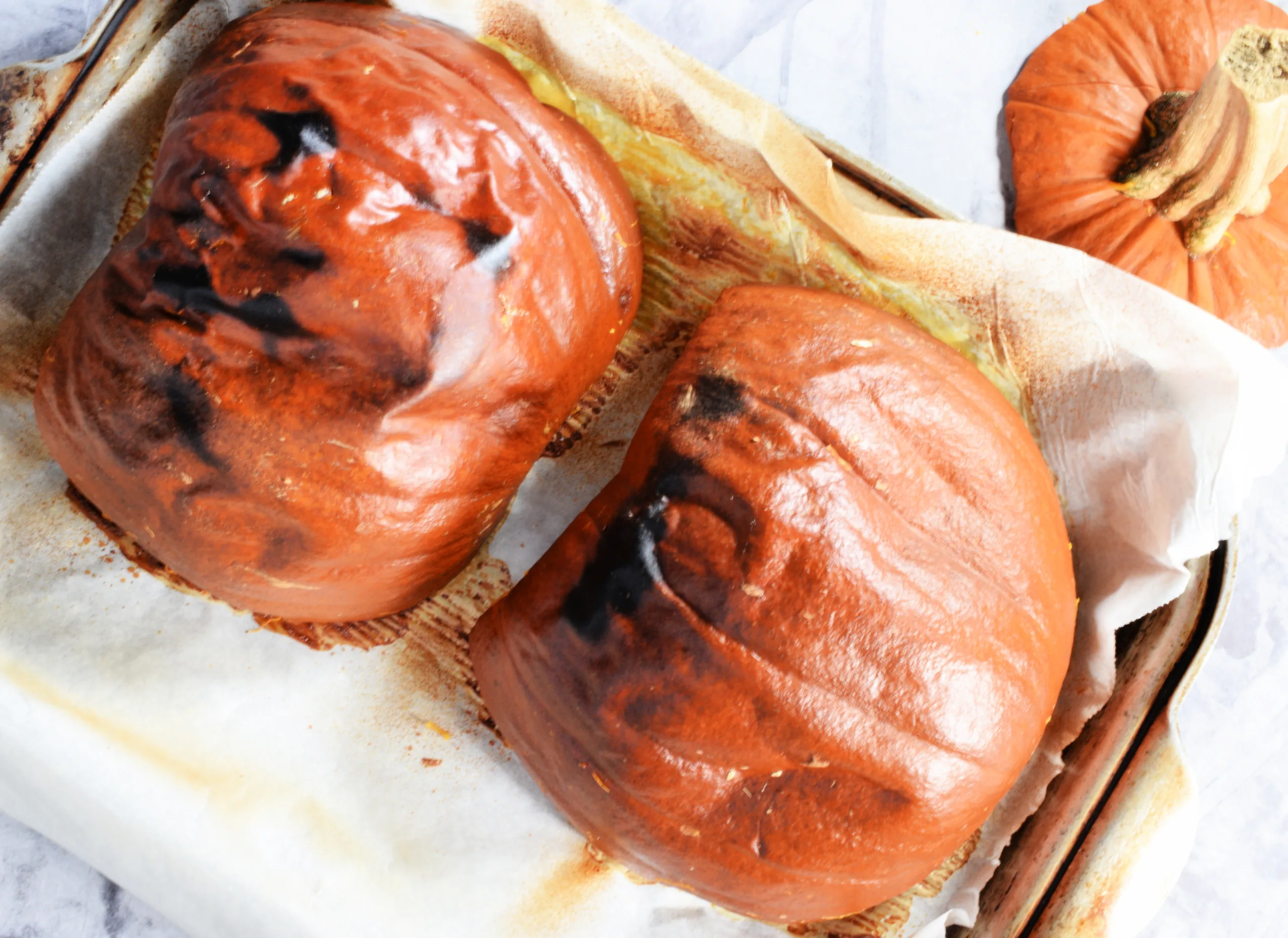
Step 5: Roast the pumpkin for 45 to 60 minutes, or until the skin looks slightly wrinkled and a fork slides easily into the flesh. Smaller pumpkins may be done closer to 45 minutes. Larger pumpkins may need closer to 60 minutes or a little longer. Remove the pumpkin from the oven and let it cool for 15 to 20 minutes, or until it is safe to handle.
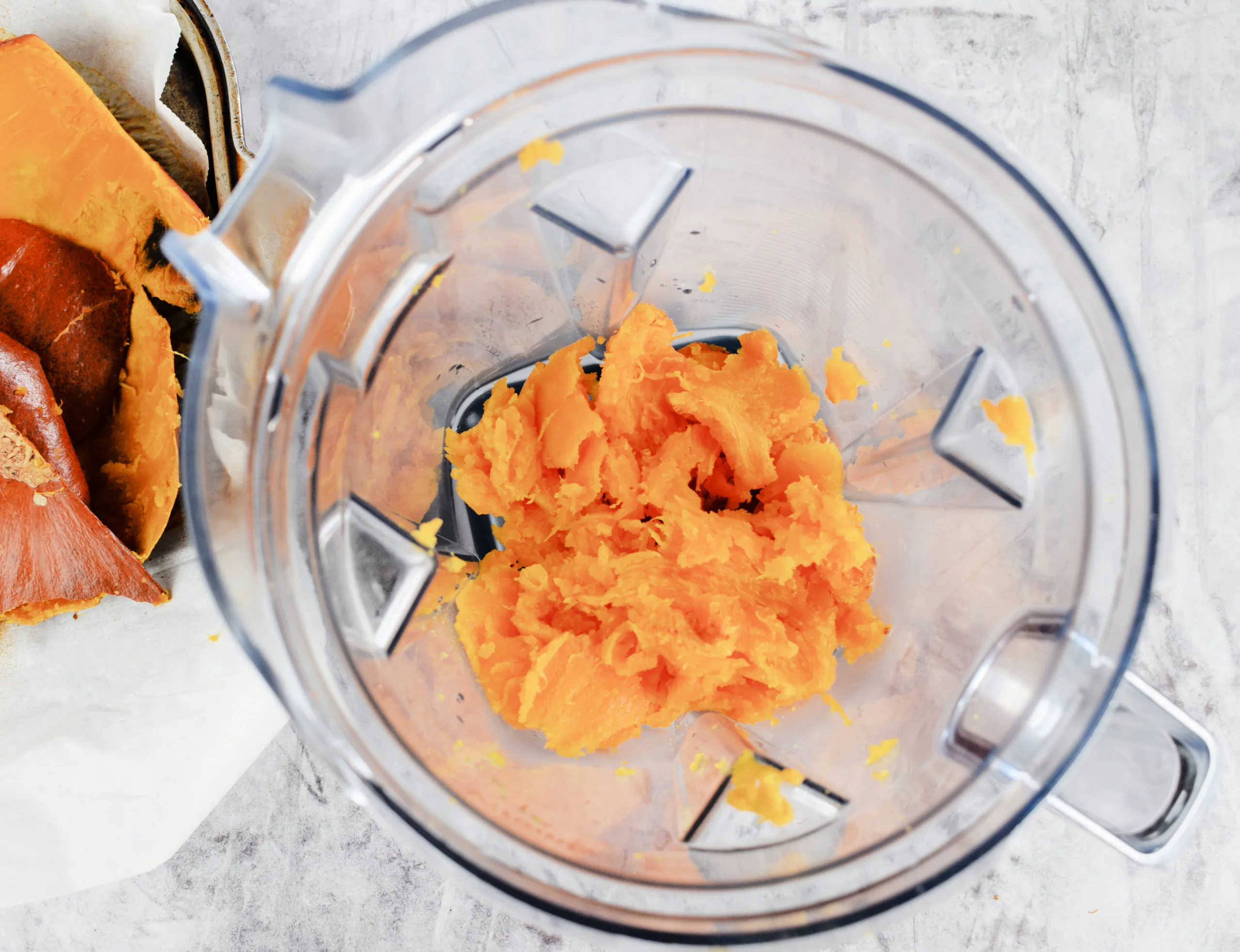
Step 6: Turn the pumpkin halves over and scoop the soft pumpkin flesh into a bowl. The skin should pull away easily once the pumpkin is fully roasted. Add the roasted pumpkin flesh to a food processor or blender and blend until smooth. You can also mash it by hand for a more rustic texture. If the pumpkin purée looks watery, place it in a fine mesh strainer or cheesecloth for 10 to 15 minutes. This helps remove extra liquid and makes the purée thicker for baking.
Step 7: Let the pumpkin purée cool completely before storing. Store it in the refrigerator for up to 1 week, or freeze it for up to 6 months.
Helpful Tips for the Best Pumpkin Purée
Use sugar pumpkins or pie pumpkins for the best flavor and texture.
Do not use large carving pumpkins if you want smooth purée for baking. They are usually stringier and more watery.
Roast the pumpkin cut side down so the flesh stays tender and moist.
Let the pumpkin cool before scooping. This makes it easier to handle and helps the texture settle.
Drain the purée if it looks watery. This is especially helpful if you plan to use it in pumpkin pie, pumpkin bread, or pumpkin bars.
Freeze the purée in ½ cup or 1 cup portions so it is easy to measure later.
How Much Purée Does One Pumpkin Make?
The amount of purée depends on the size and variety of the pumpkin.
A small 3 pound sugar pumpkin usually makes about 2 to 3 cups of purée.
A larger 5 pound pie pumpkin may make closer to 4 to 6 cups.
Since homemade pumpkin purée can vary in moisture, I like to measure it after blending and draining.
How to Use Homemade Pumpkin Purée
Homemade pumpkin purée can be used in many fall recipes, including:
Pumpkin pie
Pumpkin bread
Pumpkin muffins
Pumpkin pancakes
Pumpkin bars
Pumpkin roll
Pumpkin soup
Pumpkin butter
Pumpkin pasta sauce
Pumpkin oatmeal
If you are using homemade pumpkin purée in baking, make sure it is not too watery. If it is thinner than canned pumpkin, drain it before adding it to your recipe.
How to Store Homemade Pumpkin Purée
Let the purée cool completely.
Store it in an airtight container in the refrigerator for up to 1 week.
For longer storage, freeze it in freezer-safe bags or containers for up to 6 months.
I like freezing it in 1 cup portions because many pumpkin recipes call for measured amounts.
Frequently Asked Questions About How to Roast a Whole Pumpkin to Make Pumpkin Purée
Can homemade pumpkin purée replace canned pumpkin?
Yes, homemade pumpkin purée can usually be used in place of canned pumpkin. The main difference is moisture. Homemade purée can sometimes be thinner than canned pumpkin, depending on the pumpkin, so drain it before using it in baked goods if it looks watery.
Can you roast a pumpkin with the skin on?
Yes, you can roast a pumpkin with the skin on. The skin helps hold the pumpkin together while it roasts. Once the pumpkin is soft and cool enough to handle, the flesh scoops away from the skin easily.
Do you need to peel a pumpkin before roasting?
No, you do not need to peel a pumpkin before roasting. It is much easier to roast the pumpkin first and remove the flesh after it softens.
What kind of pumpkin is best for homemade pumpkin purée?
Sugar pumpkins and pie pumpkins are best for homemade pumpkin purée. They are smaller, sweeter, and less watery than carving pumpkins.
Do you need oil to roast pumpkin?
No, oil is not required. Roasting the pumpkin cut side down without oil gives you soft, tender pumpkin flesh. You can brush the cut side with a little oil if you want more roasted flavor.
Can you use a carving pumpkin for pumpkin purée?
You can, but I do not recommend it for baking. Carving pumpkins are often stringy and watery, so the purée will not be as smooth or flavorful.
Why is my pumpkin purée watery?
Pumpkin purée can be watery if the pumpkin has a high moisture content. To fix it, place the purée in a fine mesh strainer or cheesecloth and let the extra liquid drain off for 10 to 15 minutes.
Can you freeze homemade pumpkin purée?
Yes, homemade pumpkin purée freezes well. Let it cool completely, portion it into freezer-safe bags or containers, and freeze it for up to 6 months.
How long does homemade pumpkin purée last in the refrigerator?
Homemade pumpkin purée lasts up to 1 week in the refrigerator when stored in an airtight container.
How much pumpkin purée equals one can of pumpkin?
One 15 ounce can of pumpkin is about 1 ¾ cups of pumpkin purée. If you are replacing canned pumpkin with homemade purée, measure it the same way and drain it first if it is watery.

Tried this recipe?
I would love to see it! Tag me on Instagram @idiesfarm and #idiesfarm so I can share your beautiful creation!

How to Roast a Whole Pumpkin to Make Pumpkin Purée
Ingredients
Equipment
Method
- Preheat the oven to 400°F.
- Line a rimmed baking sheet with parchment paper.
- Wash and dry the outside of the pumpkin.
- Carefully cut the pumpkin in half from top to bottom.
- Use a large spoon to scoop out the seeds and stringy pulp.
- Set the seeds aside if you want to roast them.
- Place the pumpkin halves cut side down on the prepared baking sheet.
- Roast for 45 to 60 minutes, or until the skin looks wrinkled and a fork slides easily into the flesh.
- Remove the pumpkin from the oven and let it cool for 15 to 20 minutes.
- Scoop the soft pumpkin flesh away from the skin.
- Add the pumpkin flesh to a food processor or blender.
- Blend until smooth.
- If the purée is watery, drain it in a fine mesh strainer or cheesecloth for 10 to 15 minutes.
- Use right away, refrigerate for up to 1 week, or freeze for up to 6 months.
Notes
-
Helpful Tips for the Best Pumpkin Purée
Use sugar pumpkins or pie pumpkins for the best flavor and texture. Do not use large carving pumpkins if you want smooth purée for baking. They are usually stringier and more watery. Roast the pumpkin cut side down so the flesh stays tender and moist. Let the pumpkin cool before scooping. This makes it easier to handle and helps the texture settle. Drain the purée if it looks watery. This is especially helpful if you plan to use it in pumpkin pie, pumpkin bread, or pumpkin bars. Freeze the purée in ½ cup or 1 cup portions so it is easy to measure later. .

Welcome!
Hi! I’m Stephanie, also known as Idie. Follow me as I tap into the methods of the past and learn how to make my world a little smaller.