This Delicious Sourdough Ciabatta Bread Recipe is made with a high hydration dough, resulting in a beautifully open crumb, signature chewy texture, and a golden crisp crust. Perfect for sandwiches or dipping in olive oil, this artisan-style sourdough bread is naturally leavened and packed with flavor. If you're looking for a bakery-quality loaf at home, this ciabatta delivers a rustic finish and the satisfying bite that makes it a true favorite.
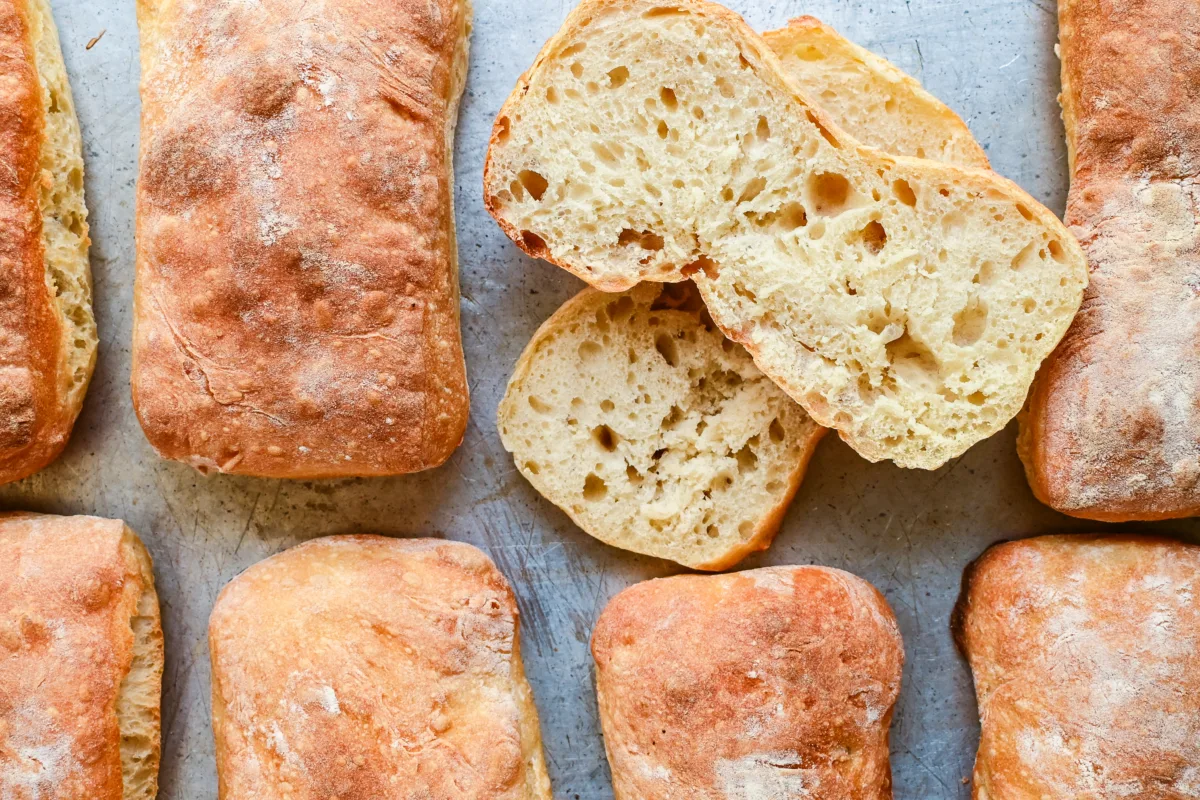
Table of Contents
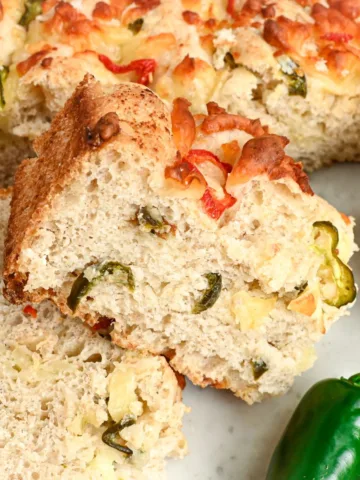
While my Simple Sourdough Discard Focaccia Bread Recipe is light, fluffy, and rich with olive oil flavor, this ciabatta brings a heartier, more rustic character to the table. Its chewy bite and crisp crust make it perfect for dipping, toasting, or layering with your favorite toppings. Try it warm with a smear of my homemade butter for a comforting, simple treat—or elevate it with a swipe of my whipped honey butter for a sweet and savory combo that’s hard to resist. Both options complement the tang and depth of this naturally leavened sourdough bread beautifully.
Now for a couple of questions answered, then we'll get cookin'!
This post contains affiliate links, which means I make a small commission at no extra cost to you. See my full disclosure policy here.

What is Ciabatta?
Ciabatta is a type of Italian bread that is loved for its crispy crust and airy inside. The name "ciabatta" actually means "slipper" in Italian, which refers to its distinctive shape. This bread originated in the Lake Como region of Italy in the 1980s. It was created as a response to the French baguette, aiming to make a bread that was easier to slice and use for sandwiches.

Can I Freeze Sourdough Ciabatta?
Yes, you can freeze sourdough ciabatta! To do this properly, first let the bread cool completely after baking. Then, wrap it tightly in plastic wrap or aluminum foil to prevent freezer burn. You can also place it in a freezer-safe bag for extra protection. When you’re ready to enjoy it, simply remove the ciabatta from the freezer and let it thaw at room temperature. For an added touch, you can warm it in the oven for a few minutes to restore its crusty exterior.
Ingredients
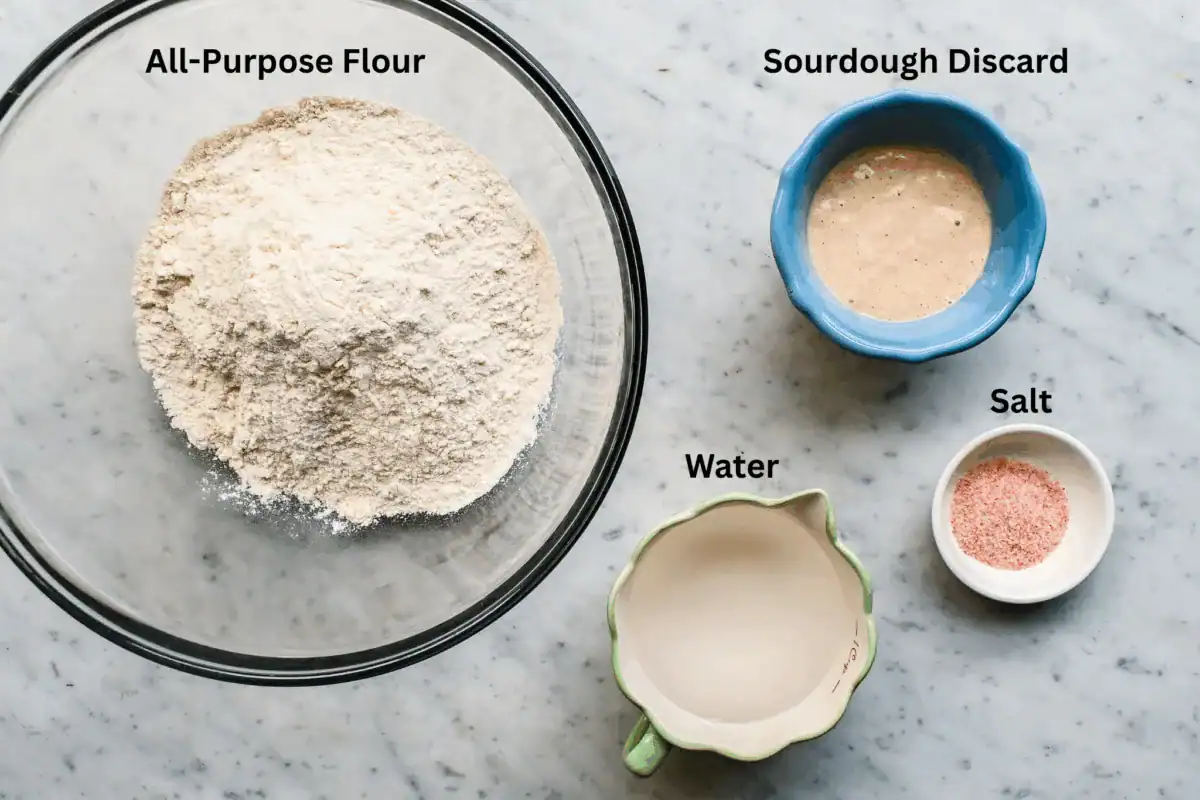
- 4 cups (500g) bread flour
- 1 ⅔ cups (400g) warm water (lukewarm)
- 1 cup (100g) active sourdough starter (100% hydration)
- 1 ½ teaspoons (10g) salt
Easy Sourdough Ciabatta Recipe

STEP 1: In a large bowl, mix flour, water, salt, and sourdough starter. Stir until just combined. Cover and let rest for 30 minutes.
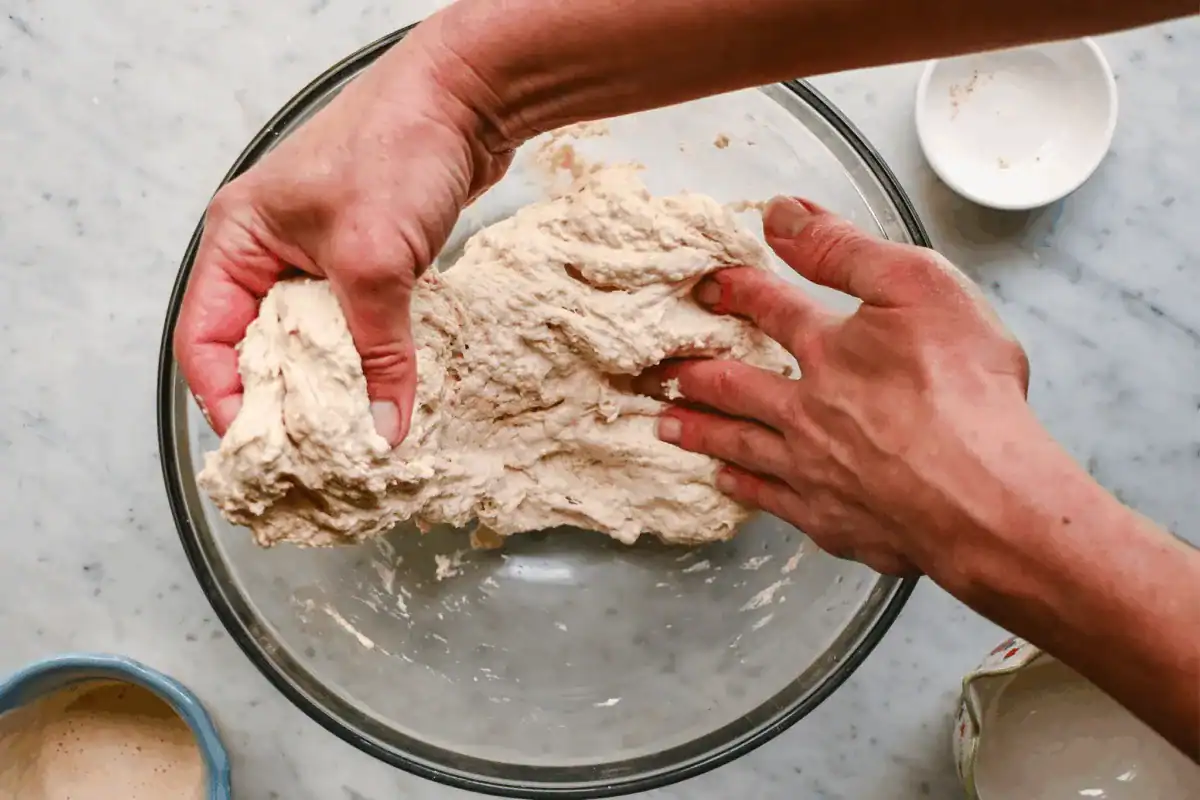
STEP 2: After the 30 minutes is up, perform 4 sets of stretch and folds every 30 minutes, making sure to cover the bowl with a bowl cover or damp cloth. To perform stretch and folds, wet your hands then grab one side of the dough and stretch it up and over to the opposite side. Rotate the bowl a quarter turn and repeat this process for all four sides. (SEE TIPS)

STEP 3: After you’ve completed the stretch and folds, it’s time for bulk fermentation. Cover the bowl again and let the dough rise at room temperature until it has increased in size by about 75%. This usually takes about 4 to 6 hours, depending on the temperature of your kitchen. For best results, you can also refrigerate the dough for 12 to 24 hours after the initial rise. This slow fermentation enhances the flavor and texture of your sourdough ciabatta dough.

STEP 4: When your dough has finished fermenting, it’s time to shape it. Turn the dough onto a lightly floured surface. Be careful not to deflate it too much. Gently shape the dough into a rectangle.
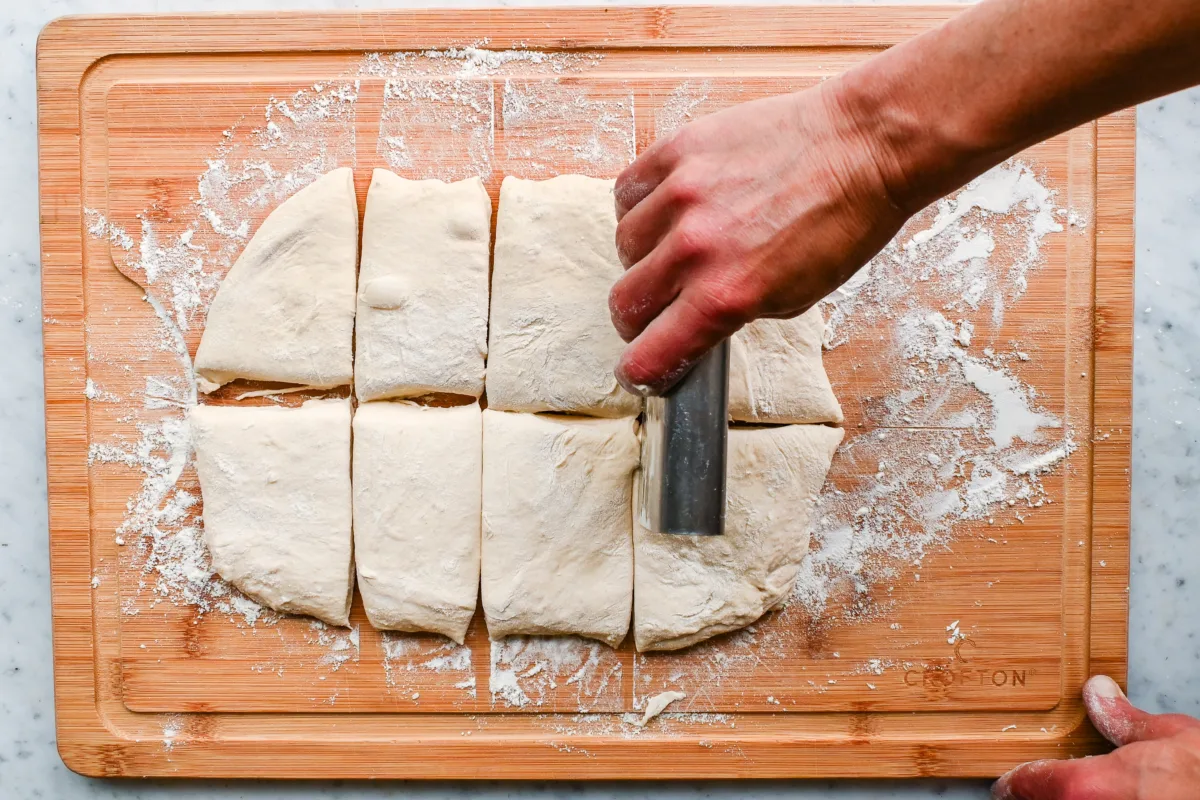
STEP 5: Using a bench scraper, divide the dough into two, then divide each half into four equal pieces to form 8 small rectangles. Then, lightly shape each piece into a rectangle.

STEP 7: Place the shaped dough on a sheet pan lined with a piece of parchment paper, cover it with a tea towel or plastic wrap, and let it rise for 1 to 2 hours in a warm place, while the oven preheats.
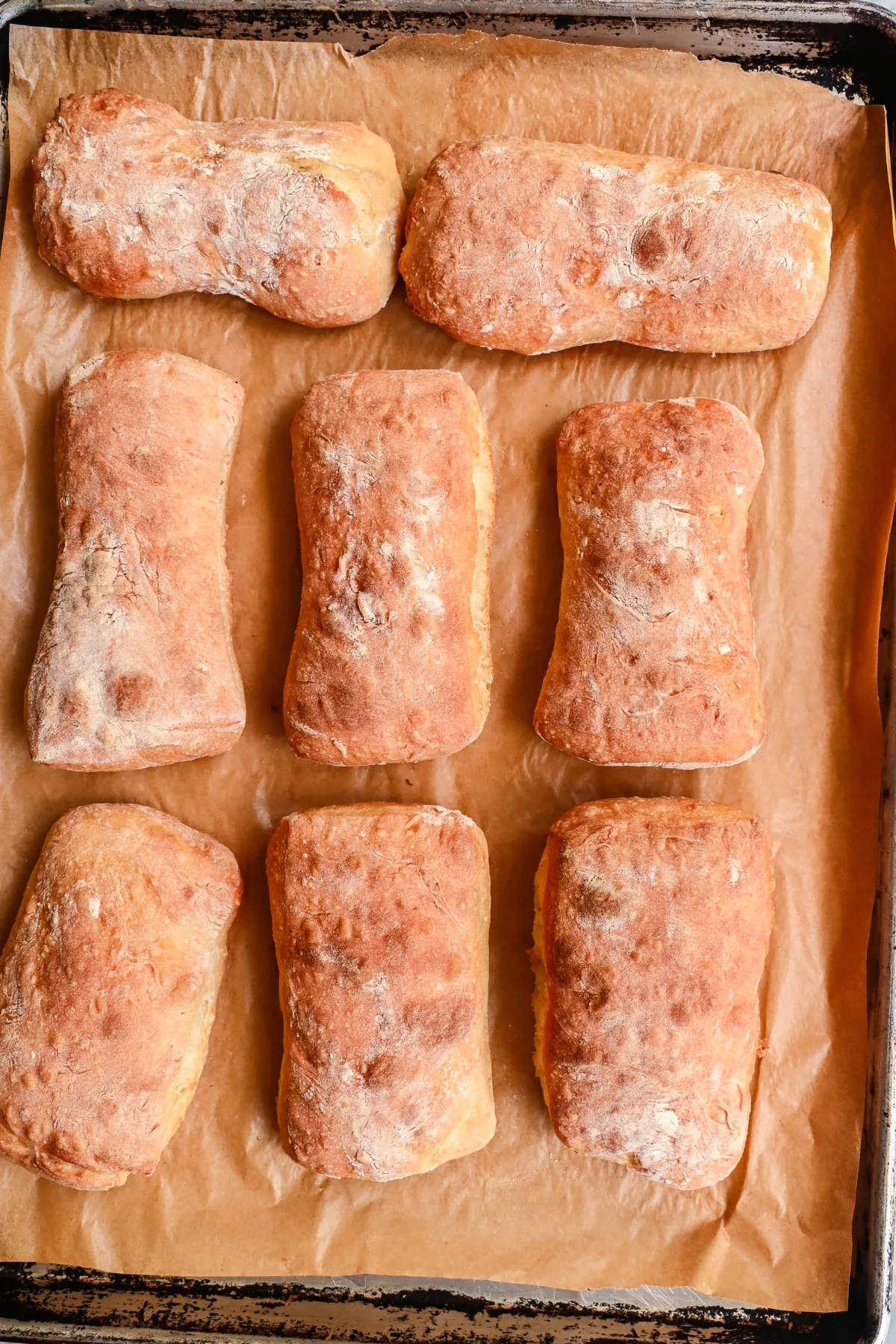
STEP 8: Preheat to 450 degrees. Bake for 20–25 minutes, or until golden brown and crusty.
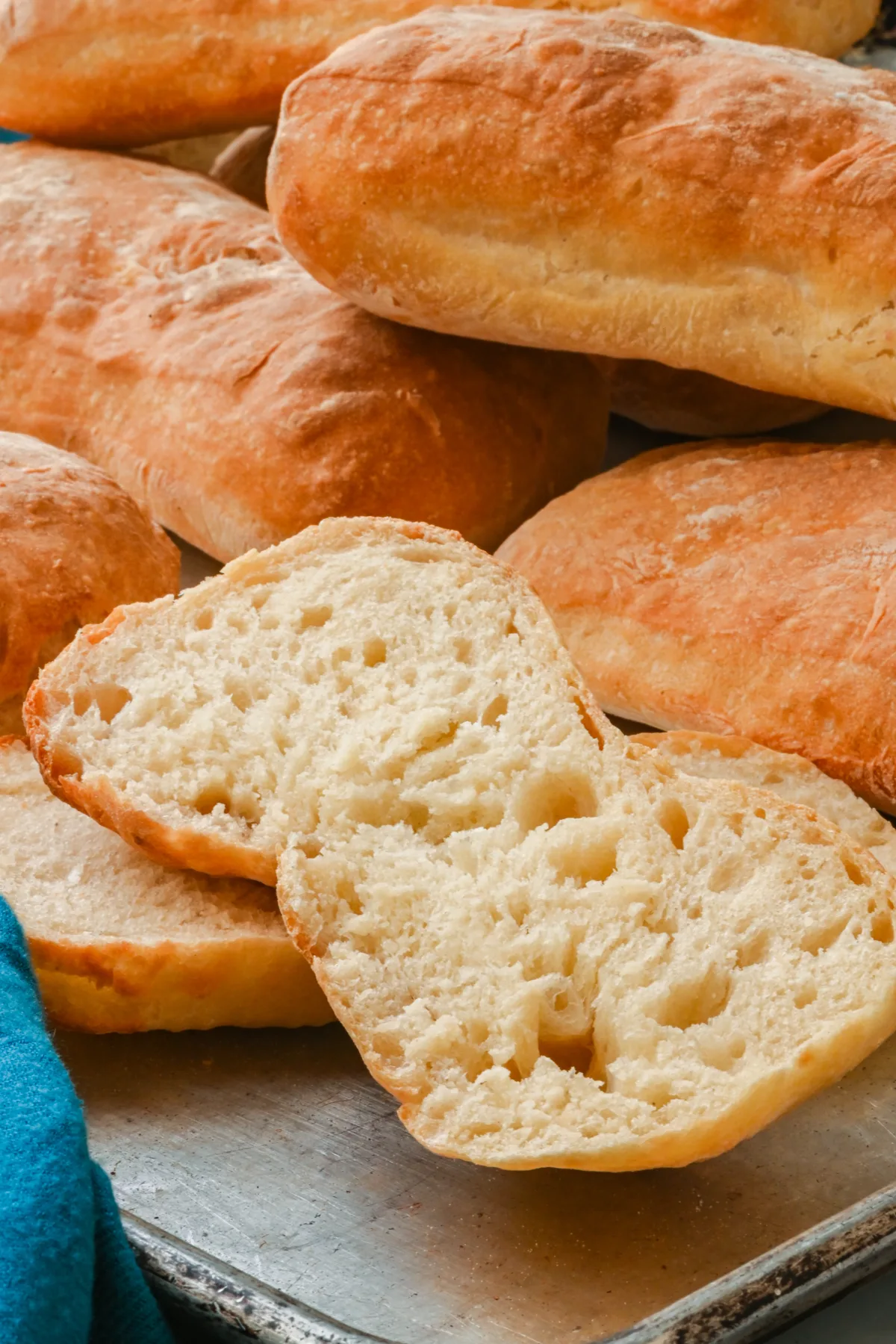
STEP 9: Let cool on a wire rack at least 1 hour before slicing.
Tips:
- This is a high-hydration dough which means you will get and open airy crumb. Refrain from adding extra flour during the stretch and folds. Use wet hands when handling the dough—it’s sticky but manageable.
- For best results, you can also refrigerate the dough for 12 to 24 hours after the initial rise. This slow fermentation enhances the flavor and texture of your ciabatta. Refrigeration deepens flavor and helps with structure.
- Make sure that you have a ripe sourdough starter, which means you want to use it within 4-6 hours of feeding.
- To store your sourdough ciabatta, keep it in a paper bag or wrapped in a thin tea towel. If you've cut into it, store the remaining bread in an airtight container to keep it fresh. You can also freeze ciabatta for longer storage; just make sure to wrap it well to prevent freezer burn.



Tried this recipe?
I would love to see it! Tag me on Instagram @idiesfarm and #idiesfarm so I can share your beautiful creation!

Delicious Sourdough Ciabatta Bread Recipe
Ingredients
Method
- In a large bowl, mix flour, water, salt, and sourdough starter. Stir until just combined. Cover and let rest for 30 minutes
- After the 30 minutes is up, perform 4 sets of stretch and folds every 30 minutes, making sure to cover the bowl with a bowl cover or damp cloth. To perform stretch and folds, wet hands then grab one side of the dough and stretch it up and over to the opposite side. Rotate the bowl a quarter turn and repeat this process for all four sides. (SEE TIPS)
- After you’ve completed the stretch and folds, it’s time for bulk fermentation. Cover the bowl again and let the dough rise at room temperature until it has increased in size by about 75%. This usually takes about 4 to 6 hours, depending on the temperature of your kitchen. For best results, you can also refrigerate the dough for 12 to 24 hours after the initial rise. This slow fermentation enhances the flavor and texture of your sourdough ciabatta dough.
- When your dough has finished fermenting, it’s time to shape it. Turn the dough onto a lightly floured surface. Be careful not to deflate it too much. Gently shape the dough into a rectangle. Using a bench scraper, divide the dough into two, then divide each half into four equal pieces to form 8 small rectangles. Then, lightly shape each piece into a rectangle.
- Place the shaped dough on a sheet pan lined with a piece of parchment paper, cover it with a tea towel or plastic wrap, and let it rise for 1 to 2 hours in a warm place, while the oven preheats.
- Preheat to 450 degrees. Bake for 20–25 minutes, or until golden brown and crusty.
- Let cool on a wire rack at least 1 hour before slicing.
Notes
-
- This is a high-hydration dough which means you will get and open airy crumb. Refrain from adding extra flour during the stretch and folds. Use wet hands when handling the dough—it’s sticky but manageable.
-
- For best results, you can also refrigerate the dough for 12 to 24 hours after the initial rise. This slow fermentation enhances the flavor and texture of your ciabatta. Refrigeration deepens flavor and helps with structure.
-
- Make sure that you have a ripe sourdough starter, which means you want to use it within 4-6 hours of feeding.
-
- To store your sourdough ciabatta, keep it in a paper bag or wrapped in a thin tea towel. If you've cut into it, store the remaining bread in an airtight container to keep it fresh. You can also freeze ciabatta for longer storage; just make sure to wrap it well to prevent freezer burn.