
One of the most exciting things about bringing home my dairy cow, besides milking her for the first time, was learning how to make homemade butter from raw milk in my own kitchen. Years before that, the boys and I “churned” store-bought cream in a mason jar as a little science experiment. After what felt like forever shaking that jar, we finally heard the thump of butter hitting the bottom. It felt like magic to us at the time and was one of those little moments that made me realize how disconnected most of us are from our food.
The truth is, you do not need a cow or raw milk to make incredible butter at home. Store-bought heavy cream works beautifully too, and you can still make rich, fresh butter in just a few minutes. If you are working through extra raw milk in your kitchen, you may also enjoy learning how to make Homemade Clabber From Raw Milk or How to Make Homemade Yogurt Without a Yogurt Maker.

Table of Contents
This post contains affiliate links, which means I make a small commission at no extra cost to you. See my full disclosure here.
What Is Homemade Butter From Raw Milk?
Homemade butter from raw milk is made by skimming the cream from the top of raw, non-homogenized milk and whipping it until the butterfat separates from the buttermilk. The butter is then rinsed, pressed, salted if desired, and stored in the refrigerator or freezer. You can also make homemade butter with store-bought heavy cream using the same method, so raw milk is helpful but not required.
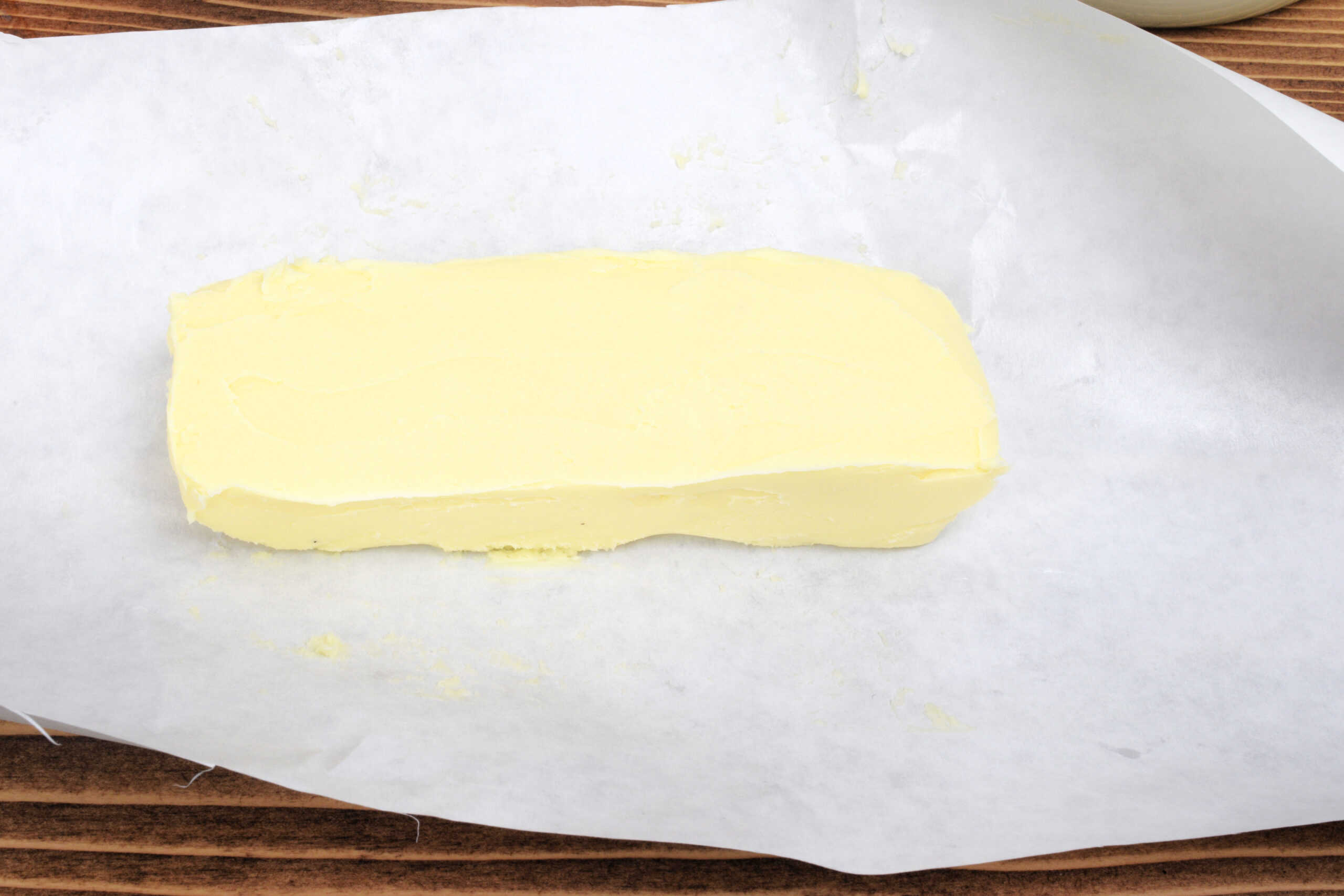
Quick Look at This Recipe
Prep time: 10 minutes
Cook time: None
Total time: About 10 minutes
Servings: Varies, about 1 to 1 ½ cups butter per gallon of raw milk
Texture: Rich, creamy, spreadable, and fresh
Best served: On warm bread, pancakes, biscuits, vegetables, or used in everyday cooking and baking
Why You’ll Love This Homemade Butter
Making butter at home is one of those simple kitchen skills that feels much harder than it actually is. Once you see cream turn into whipped cream, then suddenly break into butter and buttermilk, it makes the whole process feel very real and rewarding.
I love that this recipe works with raw milk cream or store-bought heavy whipping cream. Raw cream makes a beautiful, rich butter, but heavy cream from the grocery store will still make delicious homemade butter.
This butter is wonderful spread over Perfect Sourdough Sandwich Bread, Easy Sourdough Bread Without a Dutch Oven, or a warm slice of The Best Cinnamon Raisin Sweet Sourdough Bread Recipe.

A Quick Raw Milk Safety Note
Raw milk has not been pasteurized, which means it has not gone through the heating process used to reduce harmful germs. The CDC and FDA state that raw milk can carry bacteria such as Salmonella, E. coli, Listeria, Campylobacter, and other pathogens that can cause foodborne illness. Use your own judgment, know your source, follow your local laws, and choose pasteurized heavy cream if that is the safest or most accessible option for your family.
Why Raw Butter Is Hard to Find
Raw butter can be hard to find because raw milk products are not sold everywhere, and availability depends on your local laws and nearby farms. I was lucky to find a small local farm that sold raw milk and raw butter from Jersey cows before we had our own cow.
Jersey cows naturally produce milk with a higher butterfat content than many common dairy breeds, which is why the cream rises so beautifully. That thick cream line is exactly what you want when making homemade butter from raw milk.
Even if you cannot find raw butter, you can still make fresh butter at home. All you need is cream, a mixer, and a few minutes!
How To Source Raw Milk
If you want homemade butter with a deep golden color and rich flavor, raw milk or raw cream from a small local farm can be a good option if it is legal and available where you live.
When sourcing raw milk, I like to know the farm, ask questions, and understand how the animals are cared for and how the milk is handled. Some families use local farm directories to find raw milk in their area, but availability varies a lot by state.
If raw milk is not available where you live, store-bought heavy cream is still a wonderful option. You can make homemade butter with heavy whipping cream using the same steps in this recipe.
How To Get Cream From Raw Milk
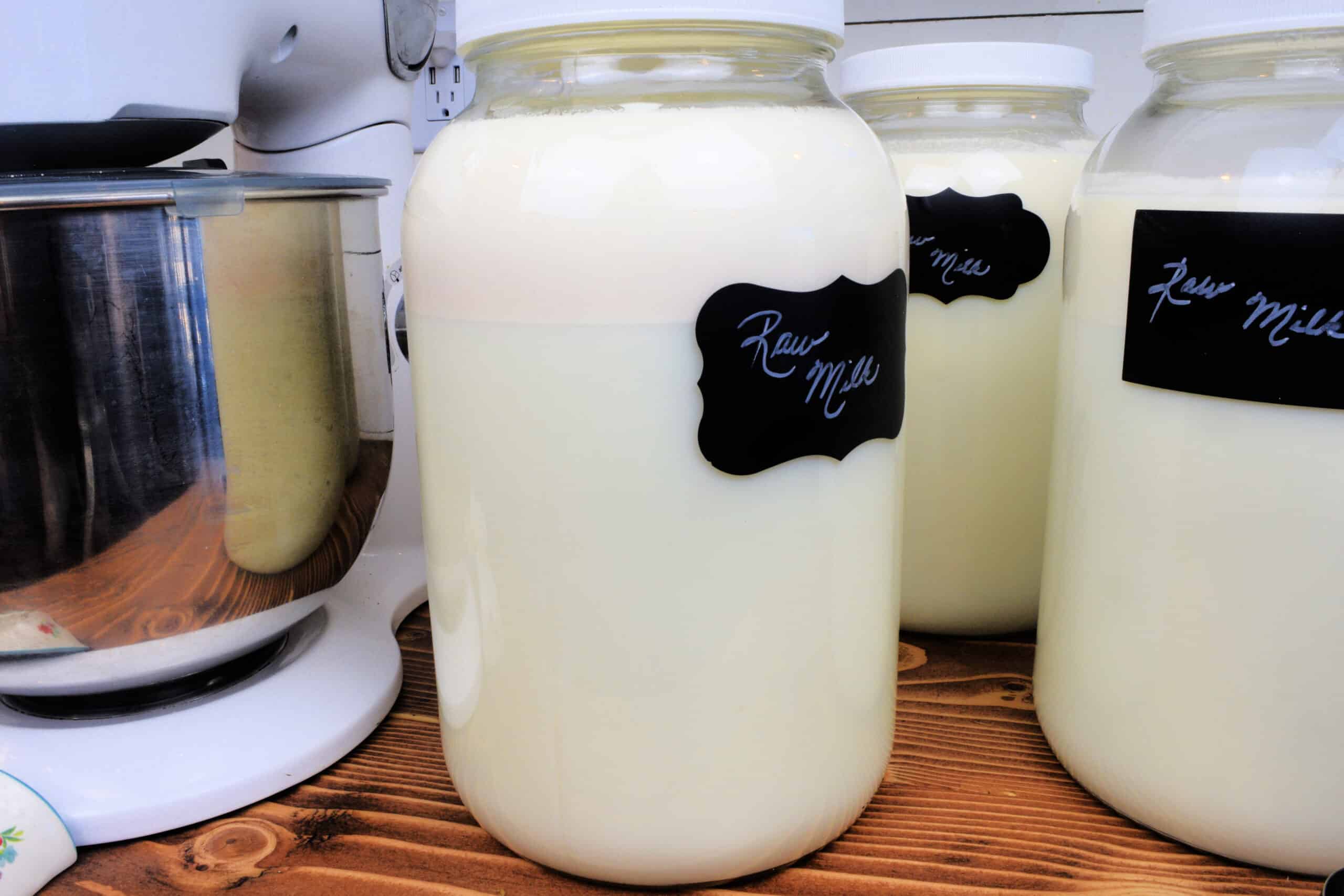
If the farm you buy raw milk from does not sell raw cream separately, you can skim the cream at home.
Pour a gallon of raw, non-homogenized milk into a clear glass jar and let it rest in the refrigerator for 24 to 48 hours. As it sits, the cream will rise to the top and form a visible cream line.
Once the cream line is easy to see, gently skim the cream off the top using a ladle, turkey baster, or measuring cup. The remaining milk will be skim milk. I usually save it for baking, cooking, or recipes where a lighter milk works fine.
Equipment
Stand mixer with whisk attachment
Splash shield or clean kitchen towel
Rubber spatula
Wooden spoon
Clean bowl
Fine mesh strainer, optional
Storage container for buttermilk
Freezer paper or airtight container for storing butter
Ingredients
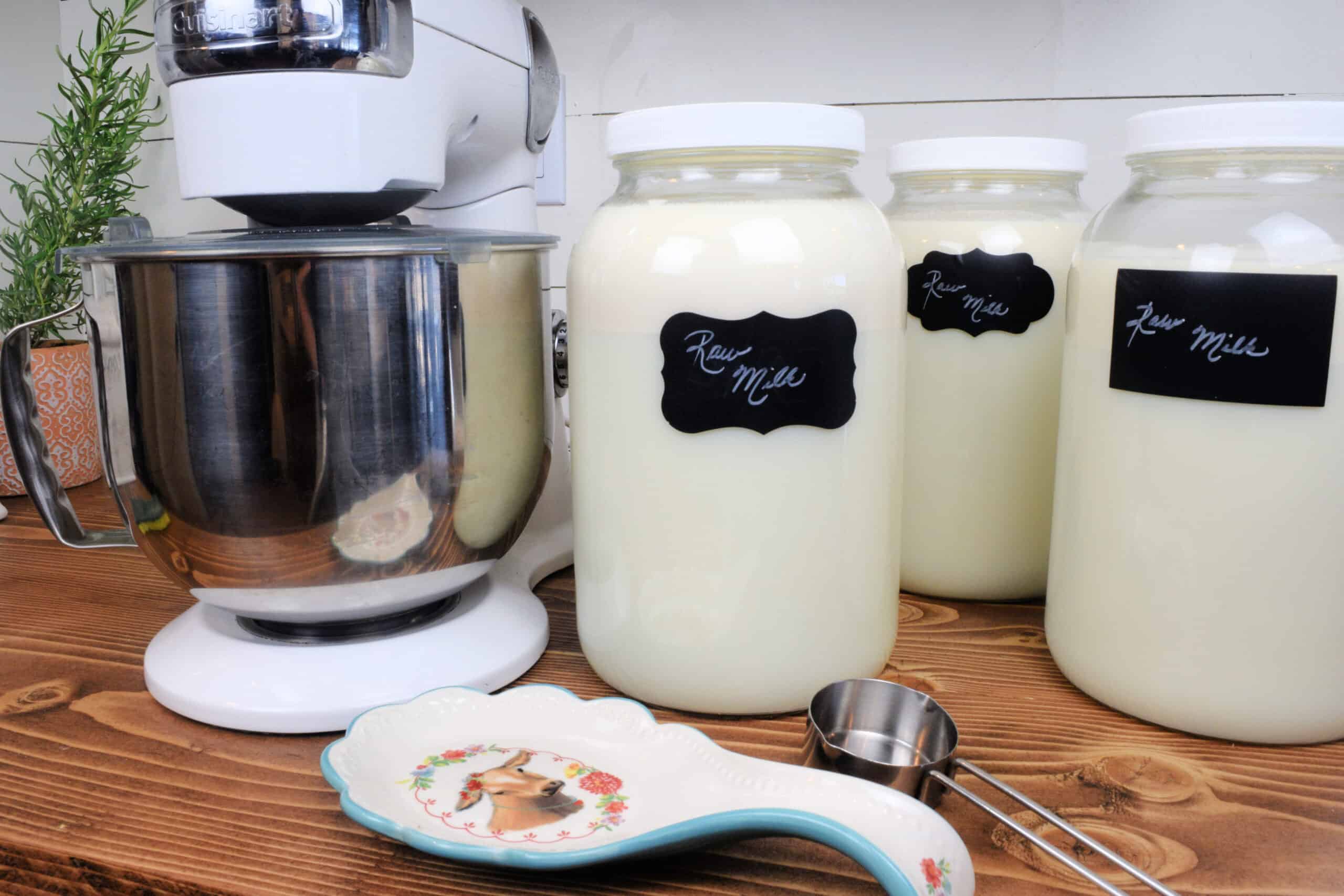
Raw milk cream or store-bought heavy cream
Salt, optional
How To Make Easy Homemade Butter From Raw Milk
Step 1: Skim the cream
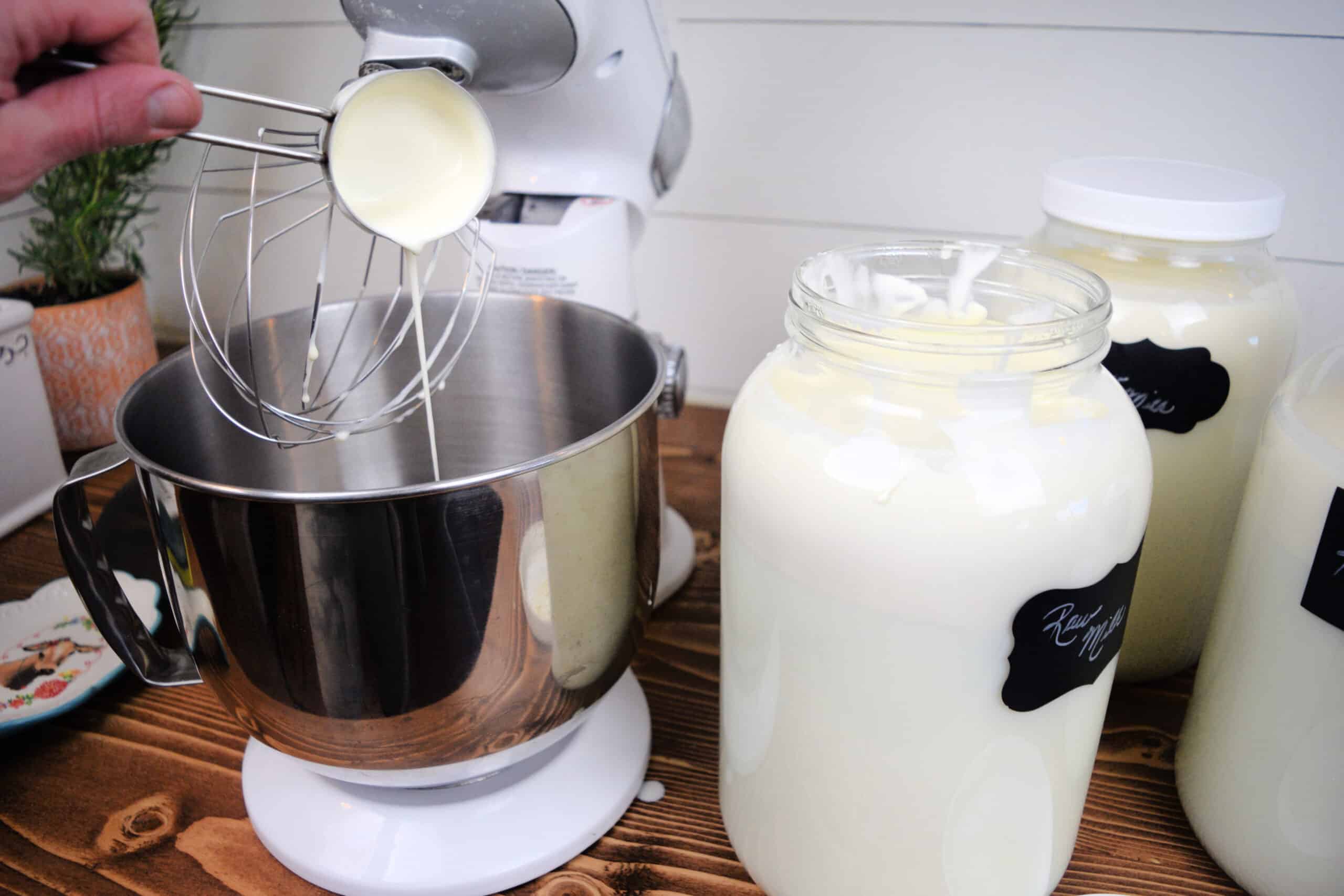
Carefully skim the cream from the top of your raw milk using a ladle, turkey baster, or measuring cup. Let the cream sit at room temperature for a little while so it is not ice cold.
If you are using store-bought heavy cream, pour it directly into the mixer bowl.
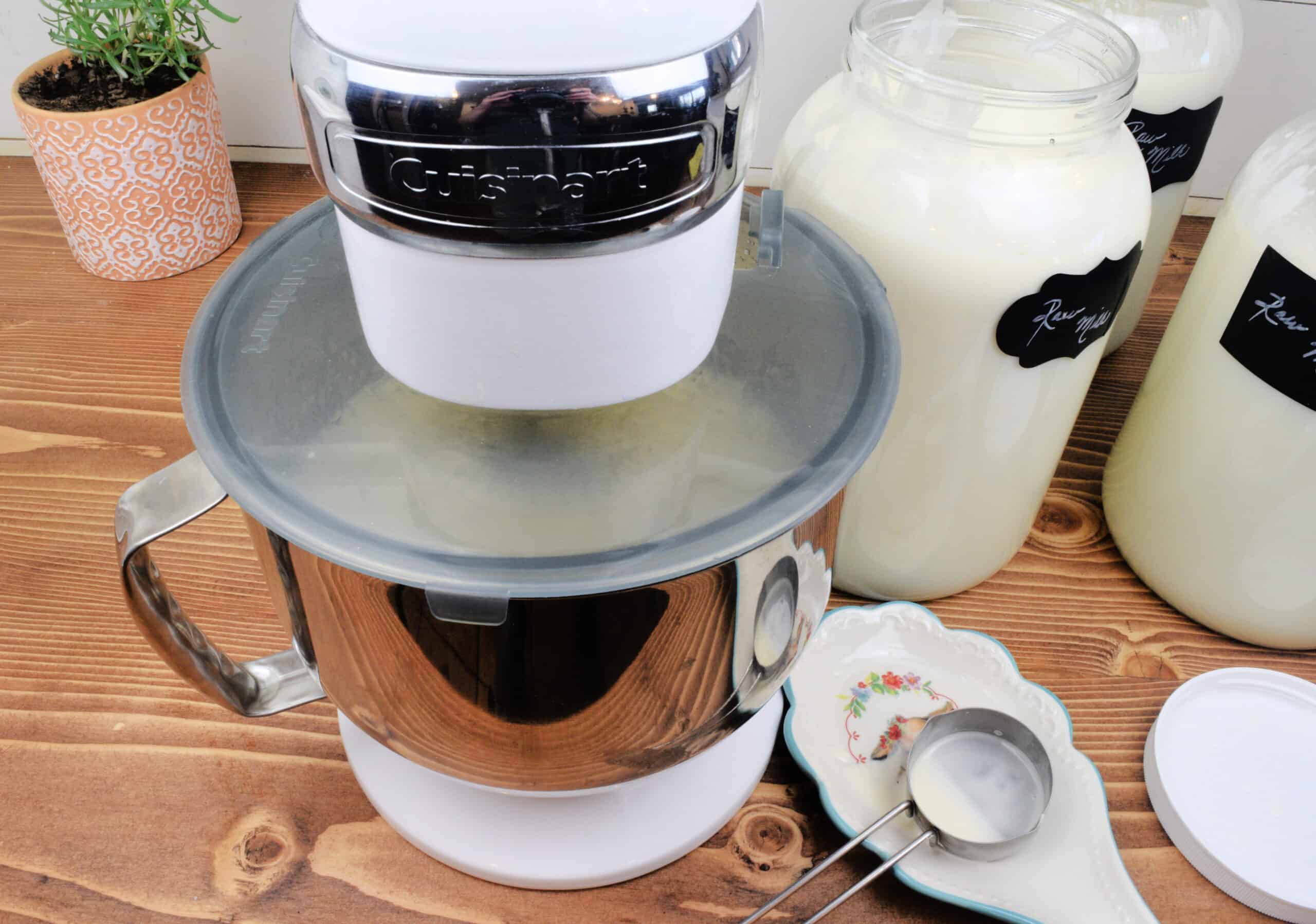
Step 2: Whip the cream
Pour the cream into the bowl of a stand mixer fitted with the whisk attachment. Place a splash shield or clean towel over the mixer.
Start on low speed, then gradually increase to high. The cream will first turn into whipped cream.
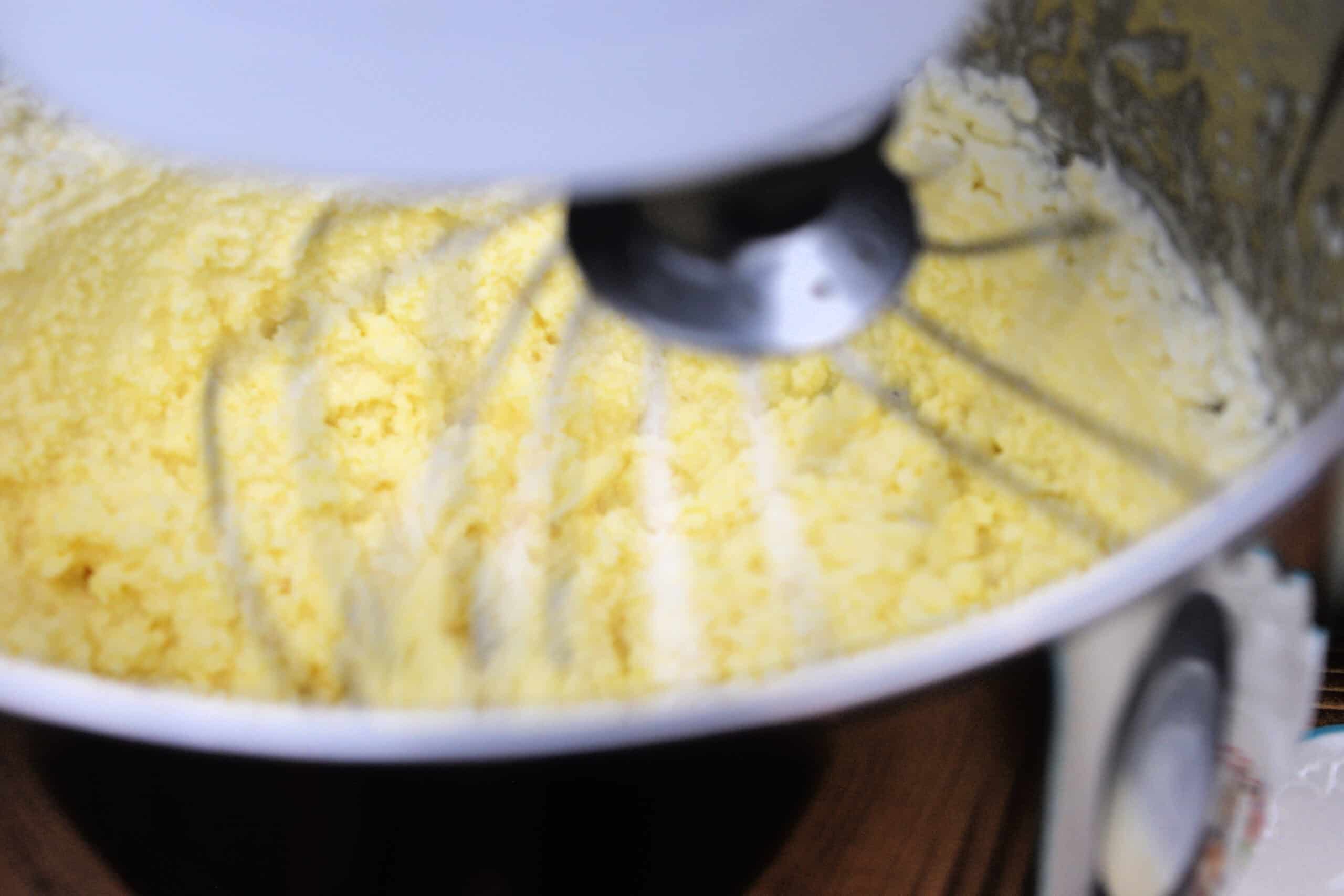
Step 3: Keep mixing until the cream separates
Continue mixing past the whipped cream stage. The cream will begin to look grainy, then it will suddenly separate into yellow butter solids and liquid buttermilk.
You may hear a splashing sound when this happens. That means the butter has separated.
Pause the mixer and scrape down the sides of the bowl with a rubber spatula. Continue mixing until the butter fully clumps together and separates from the buttermilk.
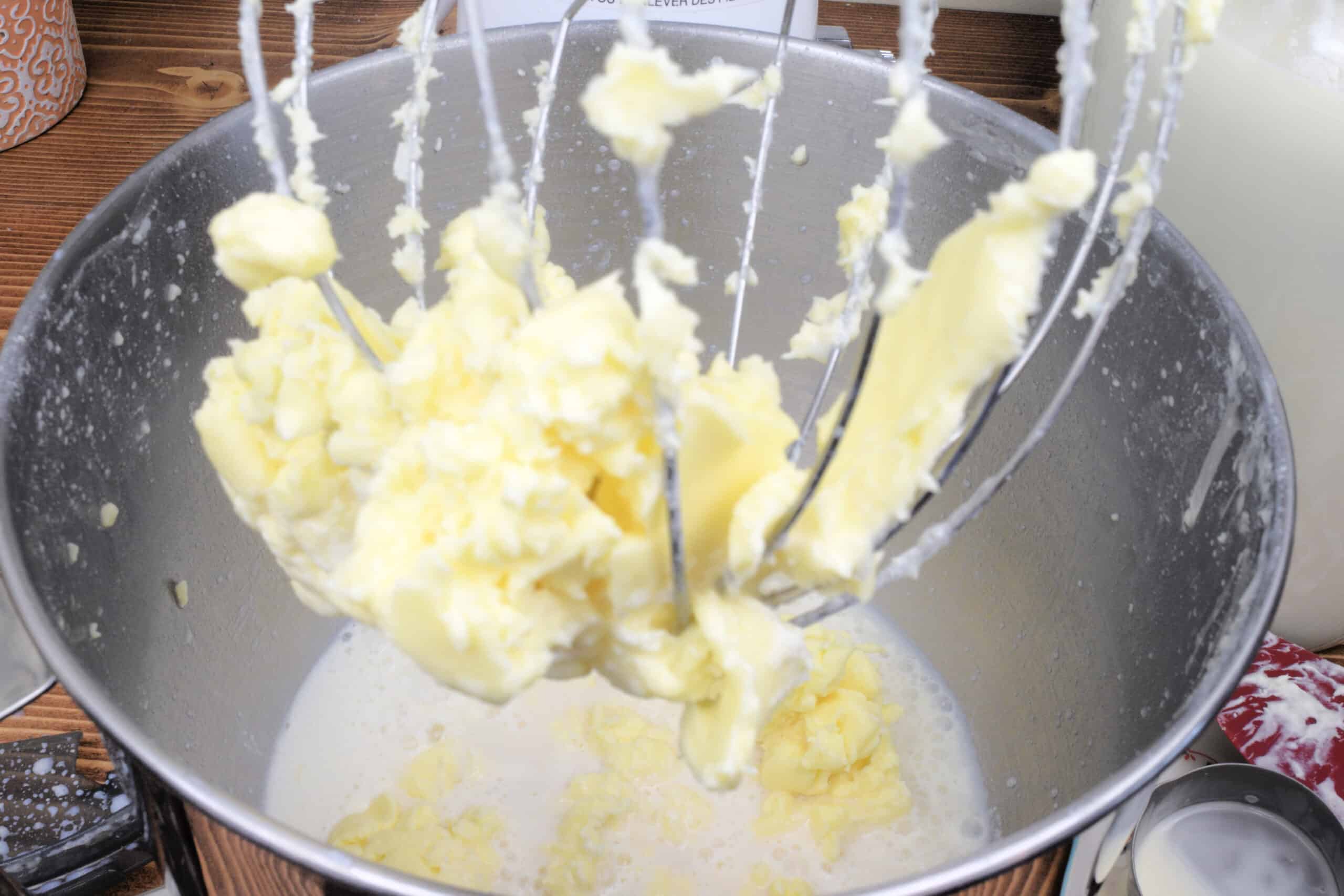
Step 4: Strain and save the buttermilk
Remove the butter from the whisk and pour the buttermilk into a clean storage container.
Do not throw it away. Fresh buttermilk can be used in baking and cooking, especially in pancakes, biscuits, and other homemade recipes.
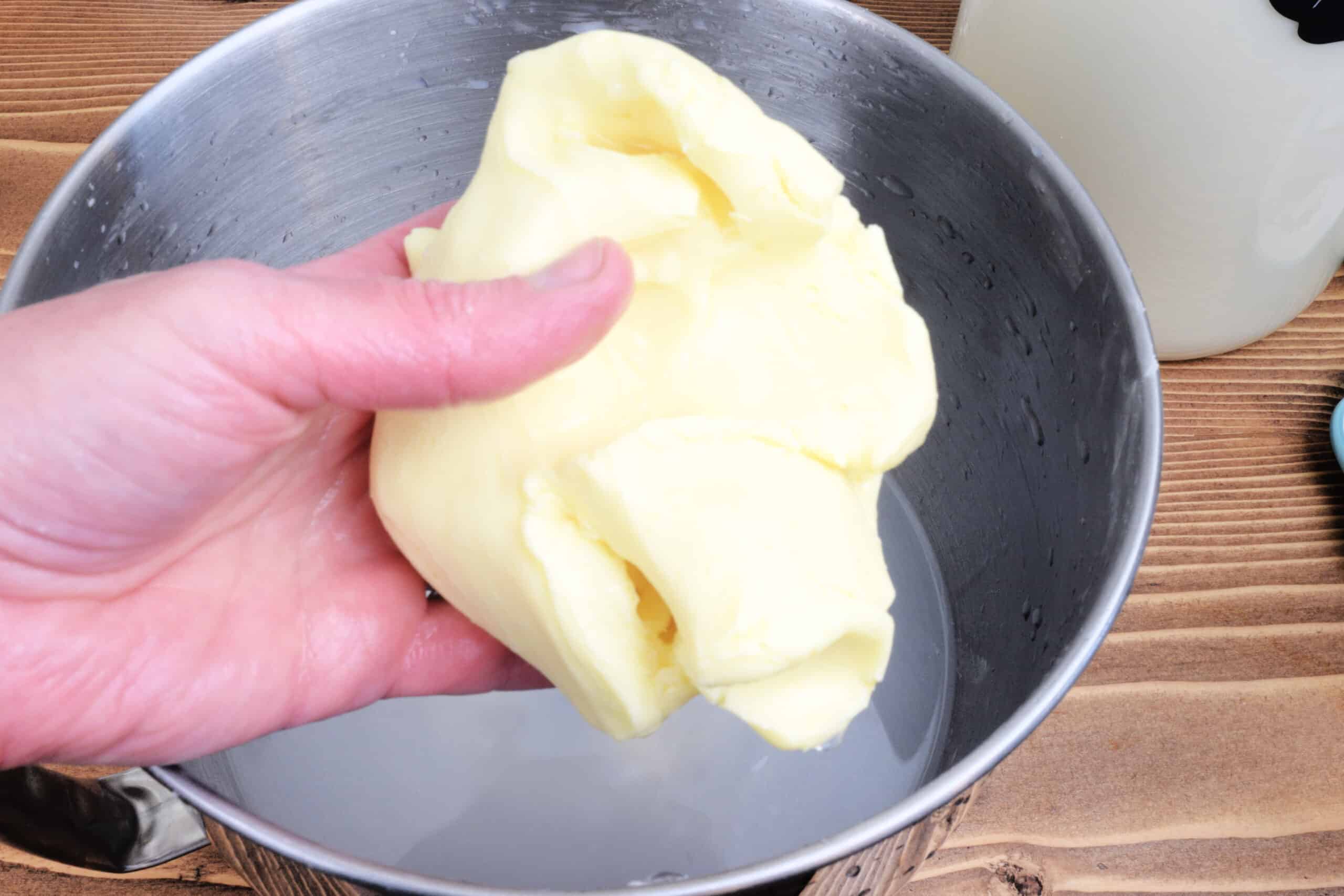
Step 5: Rinse the butter
Place the butter back into the mixer bowl and cover it with cold water. Use your hands or a wooden spoon to gently press and work the butter.
Drain the cloudy water and repeat with fresh cold water until the water runs mostly clear.

Step 6: Press out the liquid
Move the butter to a clean bowl. Press it gently with a wooden spoon to remove any remaining buttermilk or water.
This step is especially important if you want the butter to last longer in the refrigerator.
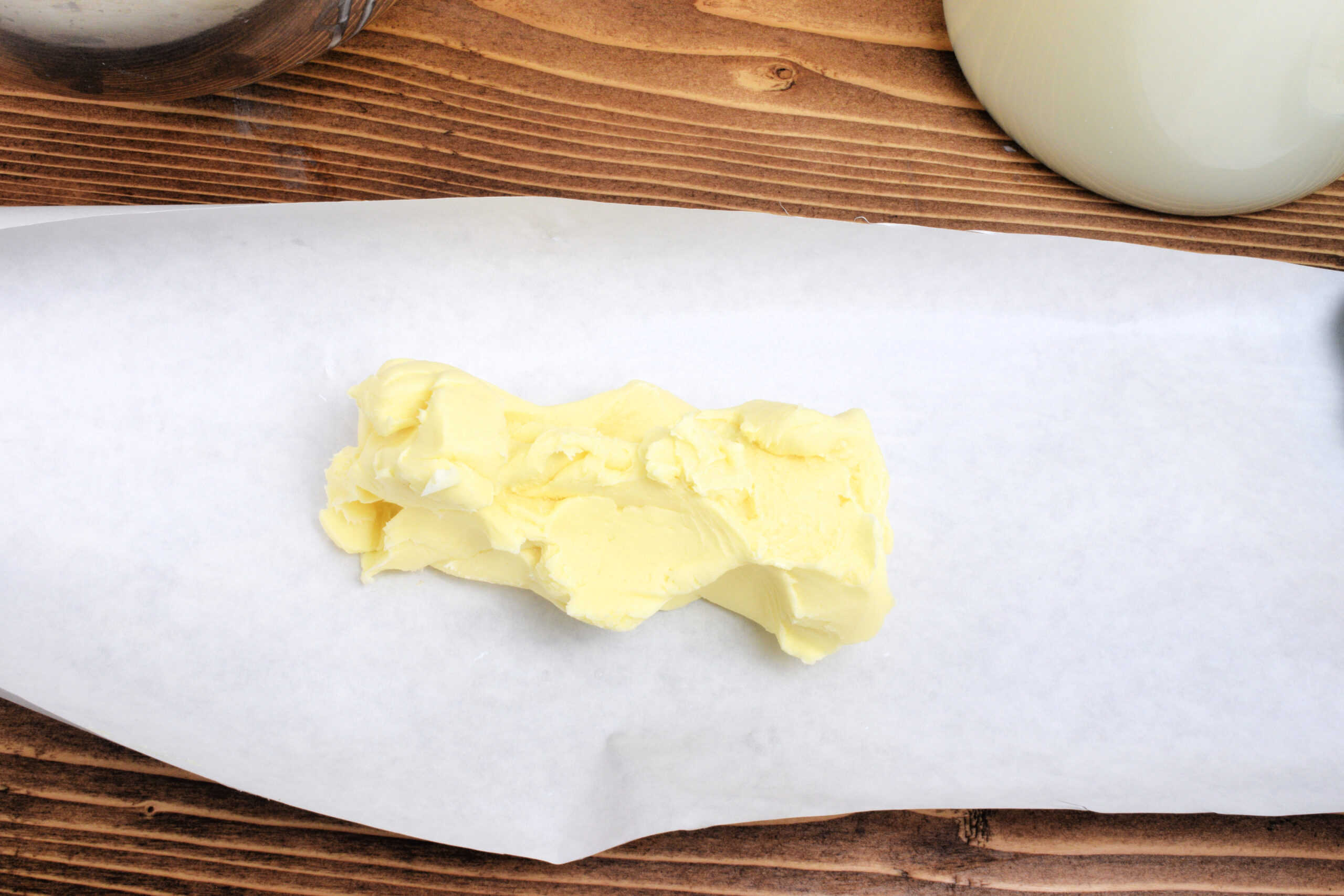
Step 7: Add salt if desired
Add salt to taste if you want salted butter, or leave it plain for unsalted butter.
Start with a small amount, mix it in, and taste before adding more.
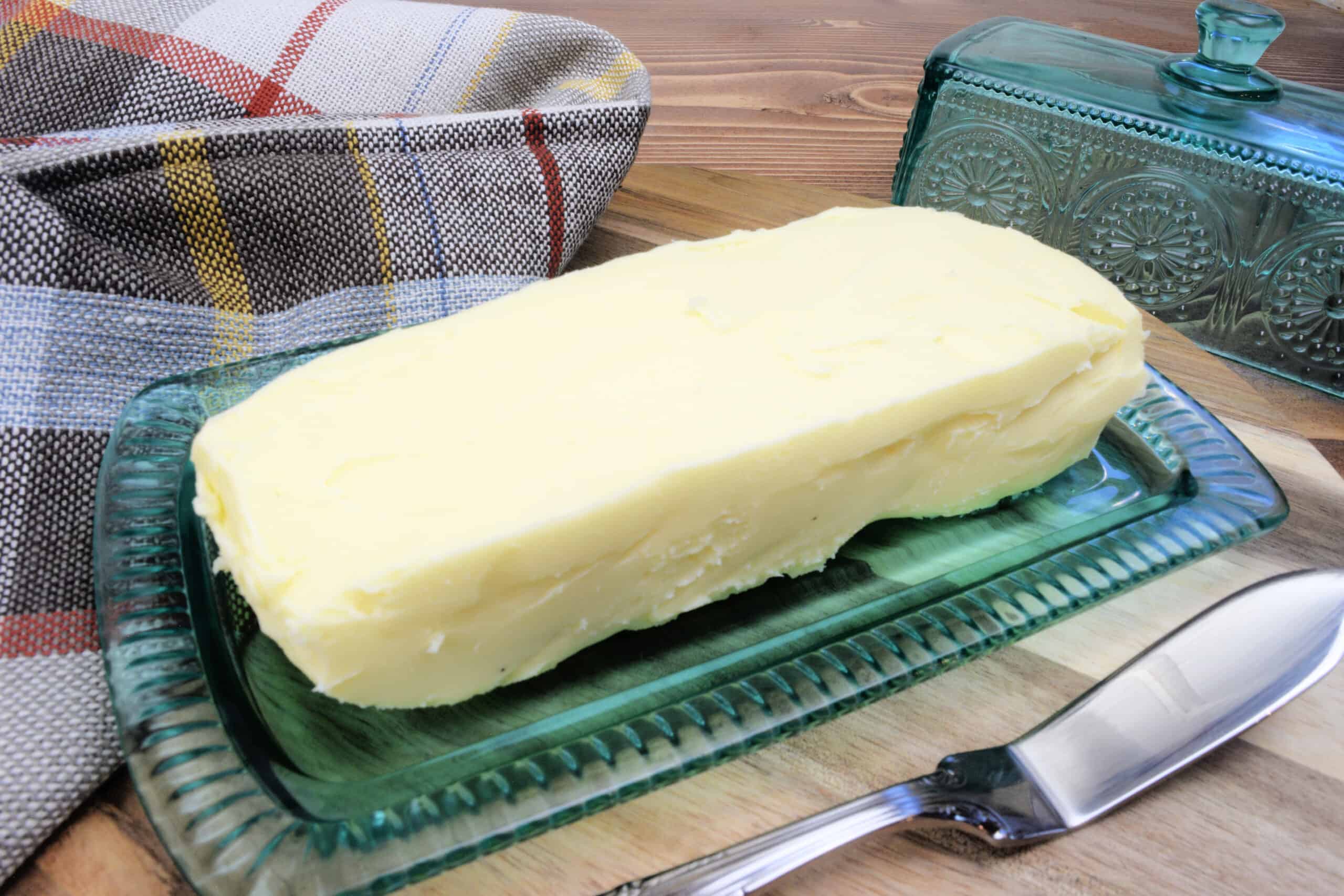
Step 8: Shape and store the butter
Shape the butter by hand, press it into a small bowl, or use a butter mold.
Store homemade butter in the refrigerator for short-term use or wrap it tightly and freeze it for longer storage.
Tips For Making Fresh Butter
Use a stand mixer with the whisk attachment for the easiest method. A blender or food processor can work, but I find the mixer easier to control and clean.
Use a splash shield if your mixer has one, or drape a clean towel over the mixer once the cream starts to thicken. When the cream separates, the buttermilk can splatter.
Let the cream sit at room temperature for a little while before churning. Slightly warmer cream usually turns into butter faster than cold cream.
Use enough cream for the whisk to work properly. About 2 cups of cream is a good minimum for most stand mixers.
Rinse the butter well with cold water if you plan to store it. Removing as much buttermilk as possible helps the butter keep longer.
You can save the buttermilk for baking!
How To Use Homemade Butter
Homemade butter is delicious anywhere you would use regular butter. It is wonderful on sourdough pancakes, homemade biscuits, and quick breads. I especially like homemade butter on my Whole Wheat Pancakes Recipe with Fresh Milled Flour and Sourdough Option.
For a sweeter version, you can turn fresh homemade butter into Homemade Whipped Honey Butter. That is one of my favorite ways to serve butter with bread, pancakes, or cinnamon raisin sourdough.
How To Store Homemade Butter
Store homemade butter in an airtight container in the refrigerator for about 1 week.
For longer storage, wrap it tightly in freezer paper and place it inside a freezer-safe bag. Freeze for several months.
If you plan to freeze the butter, make sure it is rinsed well and pressed to remove extra liquid first.
Frequently Asked Questions
Can I use store bought cream to make butter?
Yes, you can make homemade butter with store-bought heavy whipping cream. The process is the same as making butter from raw milk cream, and the result is still rich and delicious.
Why didn’t my cream turn into butter?
This usually happens when the cream is too cold, there is not enough cream in the mixer bowl, or it needs more time to separate. Let the cream warm slightly on the counter and keep mixing until the butterfat separates from the buttermilk.
How long does homemade butter last?
Homemade butter usually lasts about 1 week in the refrigerator when stored in an airtight container. For longer storage, wrap it tightly and freeze it.
Do I have to use raw milk to make homemade butter?
No, raw milk is not required. Raw milk cream can make a deeply flavorful butter, but store-bought heavy cream works well and is easier for many people to access.
Do I have to rinse homemade butter?
Yes, I recommend rinsing homemade butter if you plan to store it. Rinsing helps remove leftover buttermilk, which can make the butter spoil faster.
What can I do with the leftover buttermilk?
Save the buttermilk for baking. You can use it in pancakes, biscuits, quick breads, and other recipes that call for buttermilk or milk.

Tried this recipe?
I would love to see it! Tag me on Instagram @idiesfarm and #idiesfarm so I can share your beautiful creation!
How To Make Easy Homemade Butter From Raw Milk
Equipment
- Stand mixer with whisk attachment
- Splash shield or clean kitchen towel
- Rubber spatula
- Wooden spoon
- Clean bowl
- Fine mesh strainer, optional
- Storage container for buttermilk
- Freezer paper or airtight container for storing butter
Ingredients
- Raw milk cream or store-bought heavy cream
- Salt, optional
Instructions
Skim the cream
- Carefully skim the cream from the top of your raw milk using a ladle, turkey baster, or measuring cup. Let the cream sit at room temperature for a little while so it is not ice cold.
- If you are using store-bought heavy cream, pour it directly into the mixer bowl.
Whip the cream
- Pour the cream into the bowl of a stand mixer fitted with the whisk attachment. Place a splash shield or clean towel over the mixer.
- Start on low speed, then gradually increase to high. The cream will first turn into whipped cream.
Keep mixing until the cream separates
- Continue mixing past the whipped cream stage. The cream will begin to look grainy, then it will suddenly separate into yellow butter solids and liquid buttermilk.
- You may hear a splashing sound when this happens. That means the butter has separated.
- Pause the mixer and scrape down the sides of the bowl with a rubber spatula. Continue mixing until the butter fully clumps together and separates from the buttermilk.
Strain and save the buttermilk
- Remove the butter from the whisk and pour the buttermilk into a clean storage container.
- Do not throw it away. Fresh buttermilk can be used in baking and cooking, especially in pancakes, biscuits, and other homemade recipes.
Rinse the butter
- Place the butter back into the mixer bowl and cover it with cold water. Use your hands or a wooden spoon to gently press and work the butter.
- Drain the cloudy water and repeat with fresh cold water until the water runs mostly clear.
Press out the liquid
- Move the butter to a clean bowl. Press it gently with a wooden spoon to remove any remaining buttermilk or water.
- This step is especially important if you want the butter to last longer in the refrigerator.
Add salt if desired
- Add salt to taste if you want salted butter, or leave it plain for unsalted butter.
- Start with a small amount, mix it in, and taste before adding more.
Shape and store the butter
- Shape the butter by hand, press it into a small bowl, or use a butter mold.
- Store homemade butter in the refrigerator for short-term use or wrap it tightly and freeze it for longer storage.
Notes
Tips For Making Fresh Butter
Use a stand mixer with the whisk attachment for the easiest method. A blender or food processor can work, but I find the mixer easier to control and clean. Use a splash shield if your mixer has one, or drape a clean towel over the mixer once the cream starts to thicken. When the cream separates, the buttermilk can splatter. Let the cream sit at room temperature for a little while before churning. Slightly warmer cream usually turns into butter faster than cold cream. Use enough cream for the whisk to work properly. About 2 cups of cream is a good minimum for most stand mixers. Rinse the butter well with cold water if you plan to store it. Removing as much buttermilk as possible helps the butter keep longer. You can save the buttermilk for baking!
Welcome!
Hi! I’m Stephanie, also known as Idie. Follow me as I tap into the methods of the past and learn how to make my world a little smaller.

[…] Have Jersey Cows and swimming in heavy cream? Check out my homemade butter recipe here! […]