
This easy fresh basil pesto recipe is one of my favorite ways to use a large amount of fresh garden basil. It is made with fresh basil leaves, Parmesan cheese, pine nuts, garlic, olive oil, and just enough lemon juice to brighten the flavor without taking over.
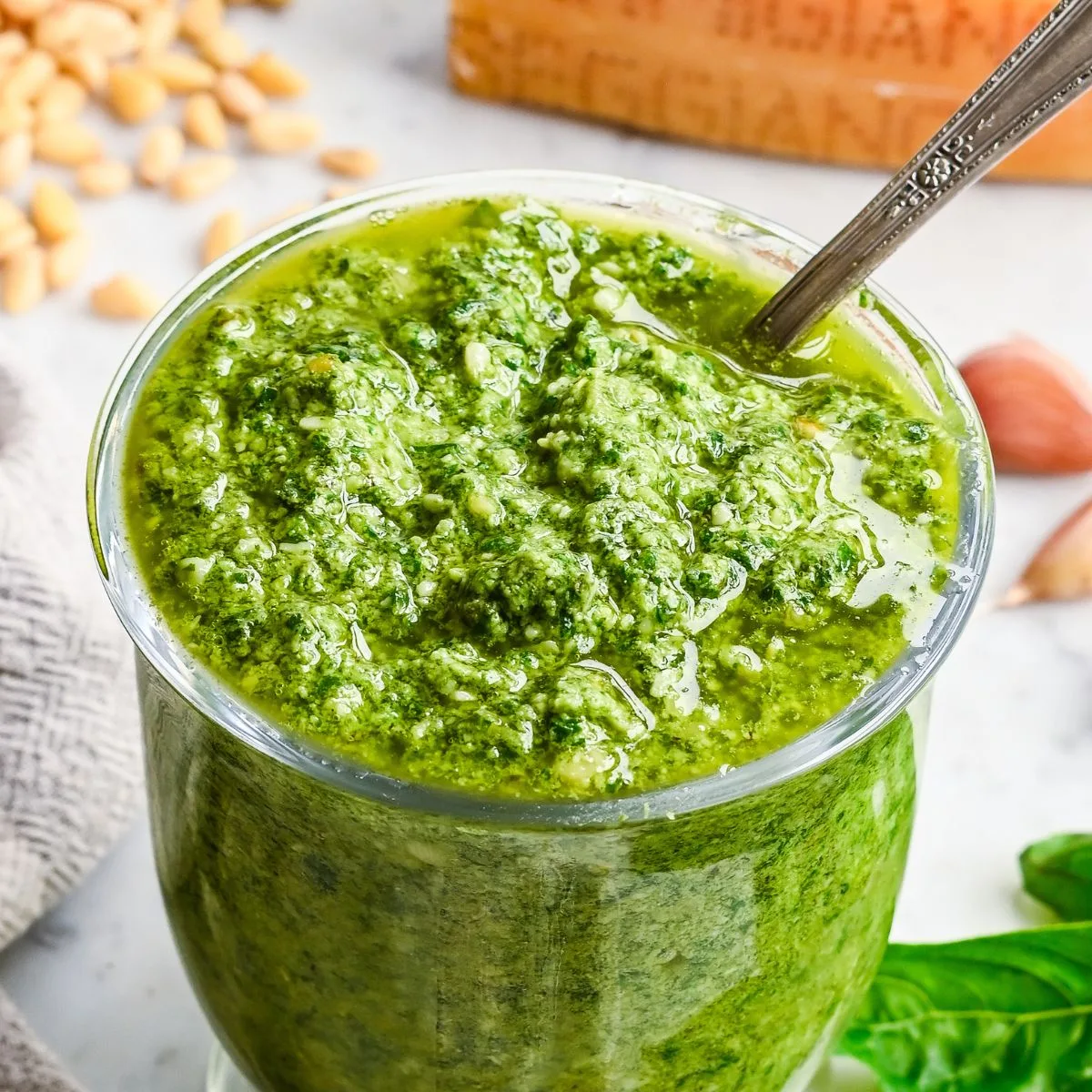
I grow a lot of basil every year, usually enough to have one section for drying and storing and another section for fresh recipes like this homemade pesto. When the basil plants are full and need to be picked, pesto is one of the easiest ways to turn those fresh leaves into something useful for pasta, sandwiches, eggs, vegetables, and bread. It is especially good served with a simple bread recipe like my Simple Sourdough Discard Focaccia Bread Recipe or mixed in with Easy Sourdough Pasta.
You can make this fresh basil pesto in either a food processor or a Vitamix. I use my Vitamix, but both methods work well for making homemade pesto. The key is to blend just until the ingredients come together, leaving a little texture without over blending or warming the pesto. I've included instructions for both methods below.
Table of Contents
This post contains affiliate links, which means I make a small commission at no extra cost to you. See my full disclosure here.
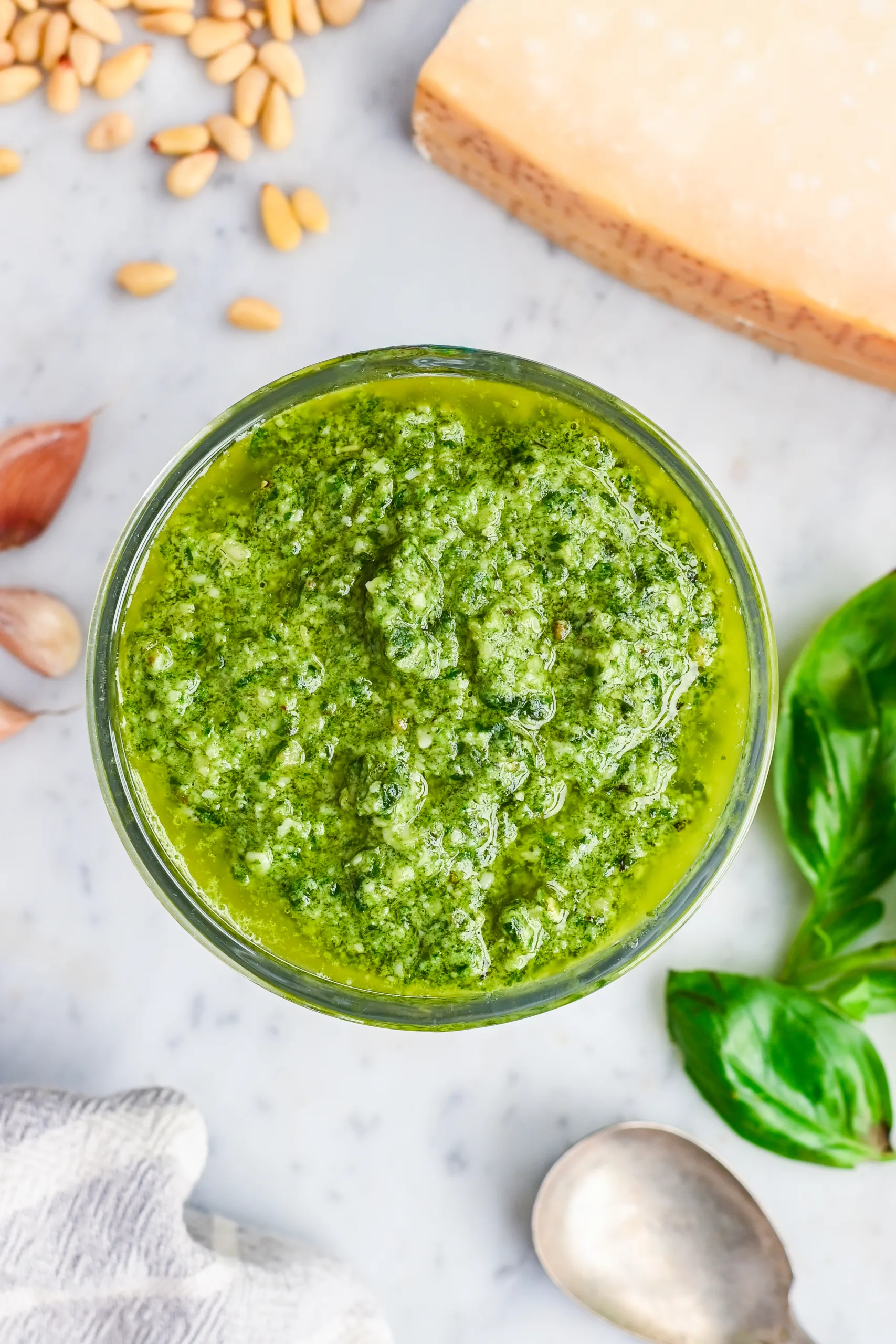
Quick Look
Prep: 10 minutes
Total: 10 minutes
Servings: About 1 ½ cups
Texture: Thick, slightly textured, and spoonable
Best Served: Fresh over pasta, bread, sandwiches, eggs, chicken, vegetables, or stirred into simple meals
Why You’ll Love This Fresh Basil Pesto
This pesto is a simple way to use a lot of fresh basil from the garden.
It is made with simple ingredients and comes together quickly.
The basil flavor stays front and center.
A small amount of lemon juice brightens the pesto without making it taste strongly lemony.
You can make it in a food processor, or carefully use a Vitamix or other high-powered blender.
It works with pasta, sandwiches, eggs, vegetables, soups, bread, and easy dinners.
It stores well in the refrigerator and can also be frozen for later.
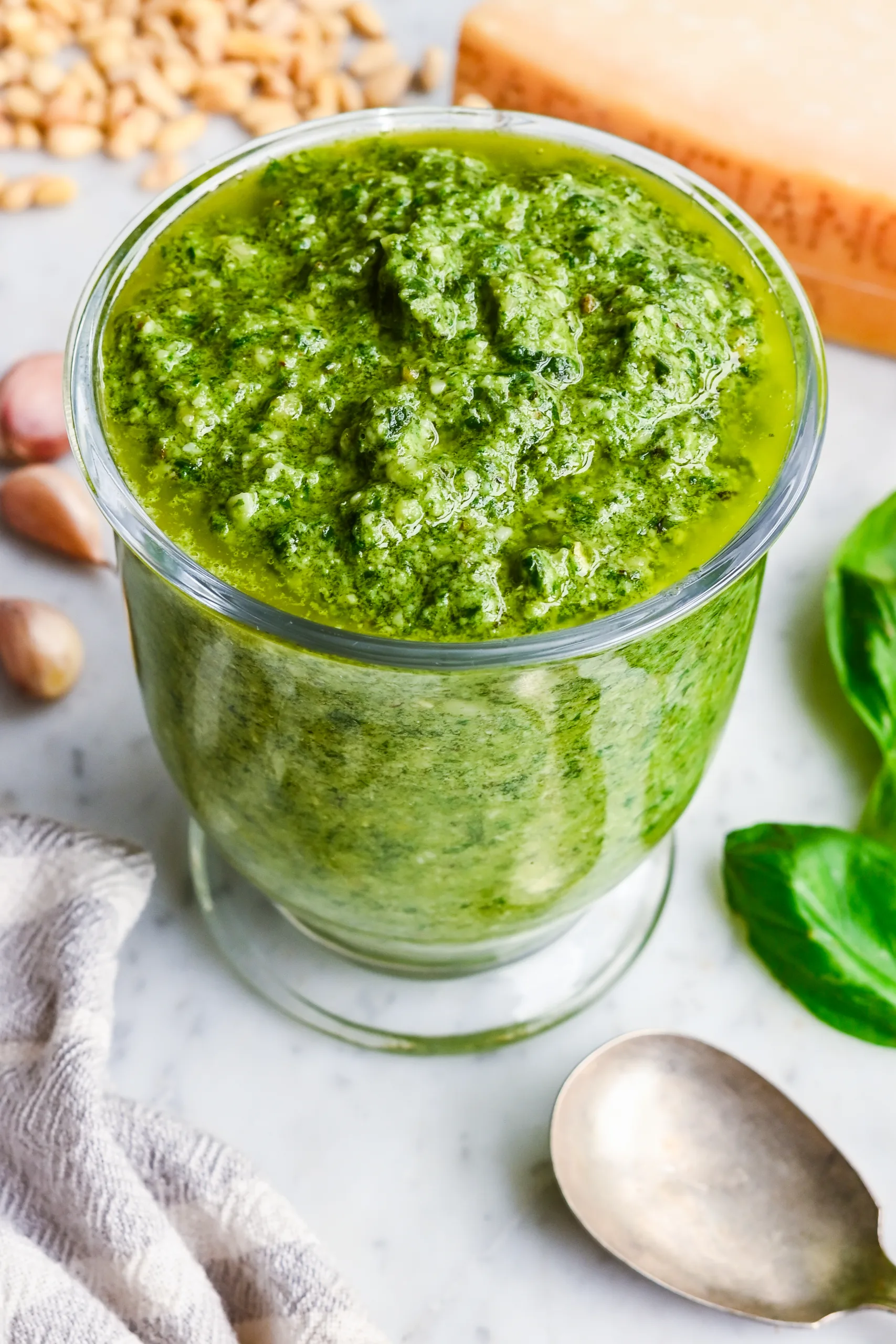
Equipment
Food processor, Vitamix, or Blender
Measuring cups and spoons
Rubber spatula
Small jar or airtight container for storage
Vitamix or other high-powered blender, optional
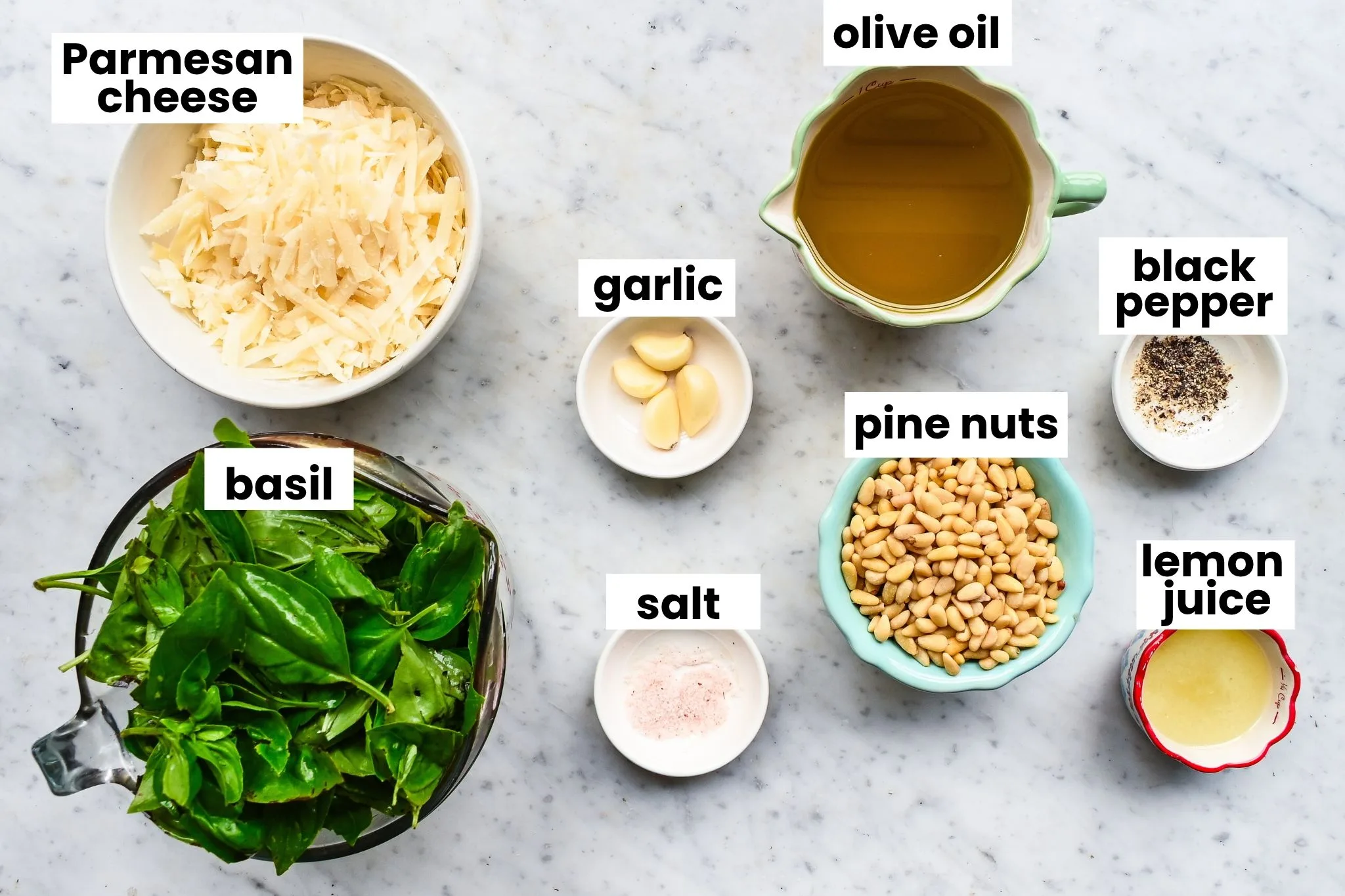
Ingredients for Fresh Basil Pesto
2 cups fresh basil leaves, tightly packed
¾ cup freshly grated Parmesan cheese
½ cup extra virgin olive oil
½ cup pine nuts
2 large garlic cloves
1 to 2 tablespoons fresh lemon juice
½ teaspoon salt, or to taste
¼ teaspoon black pepper
How to Make Fresh Basil Pesto
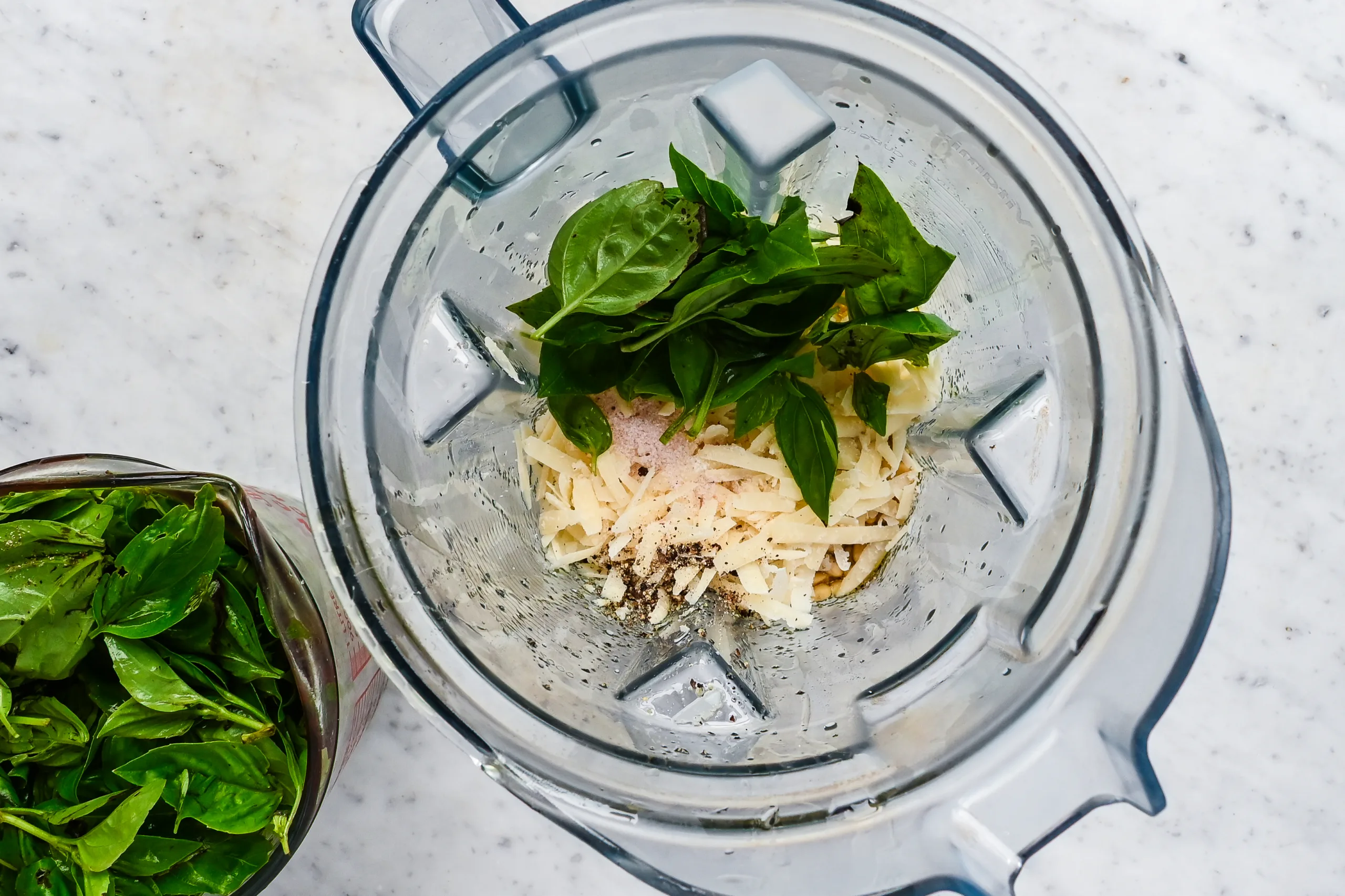
Wash the basil leaves and dry them thoroughly. For a food processor, add the basil, Parmesan cheese, pine nuts, garlic, lemon juice, salt, and black pepper to the bowl of the food processor.
For a blender or Vitamix, add the olive oil and lemon juice first, then add the garlic, pine nuts, Parmesan cheese, salt, black pepper, and basil leaves on top..
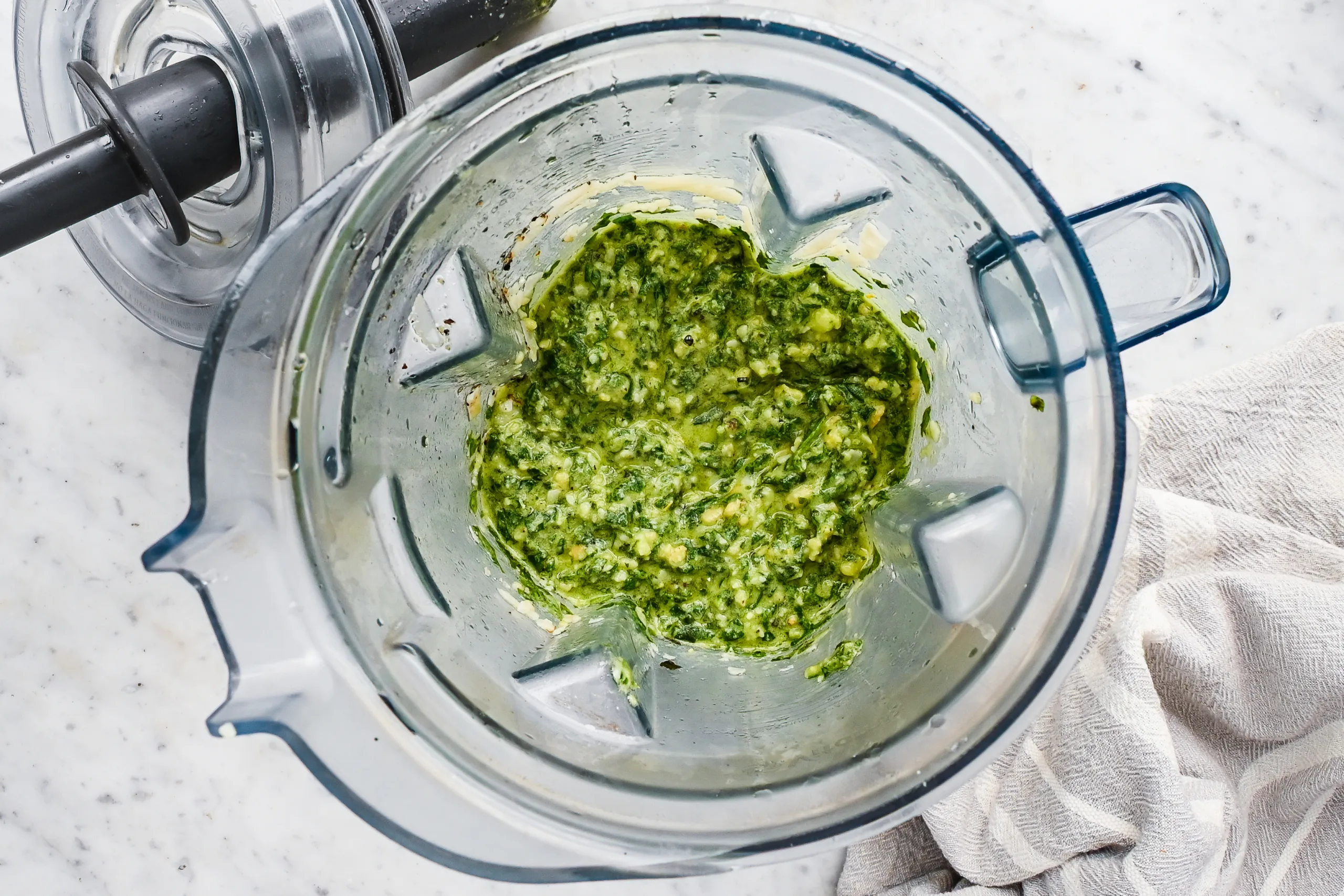
Pulse the food processor a few times until the ingredients are roughly chopped.
If using a blender, start on low speed and blend briefly, using the tamper as needed.
With the food processor running on low, slowly drizzle in the olive oil.
If using a blender, the olive oil is already in the container, so blend just until everything begins to come together.
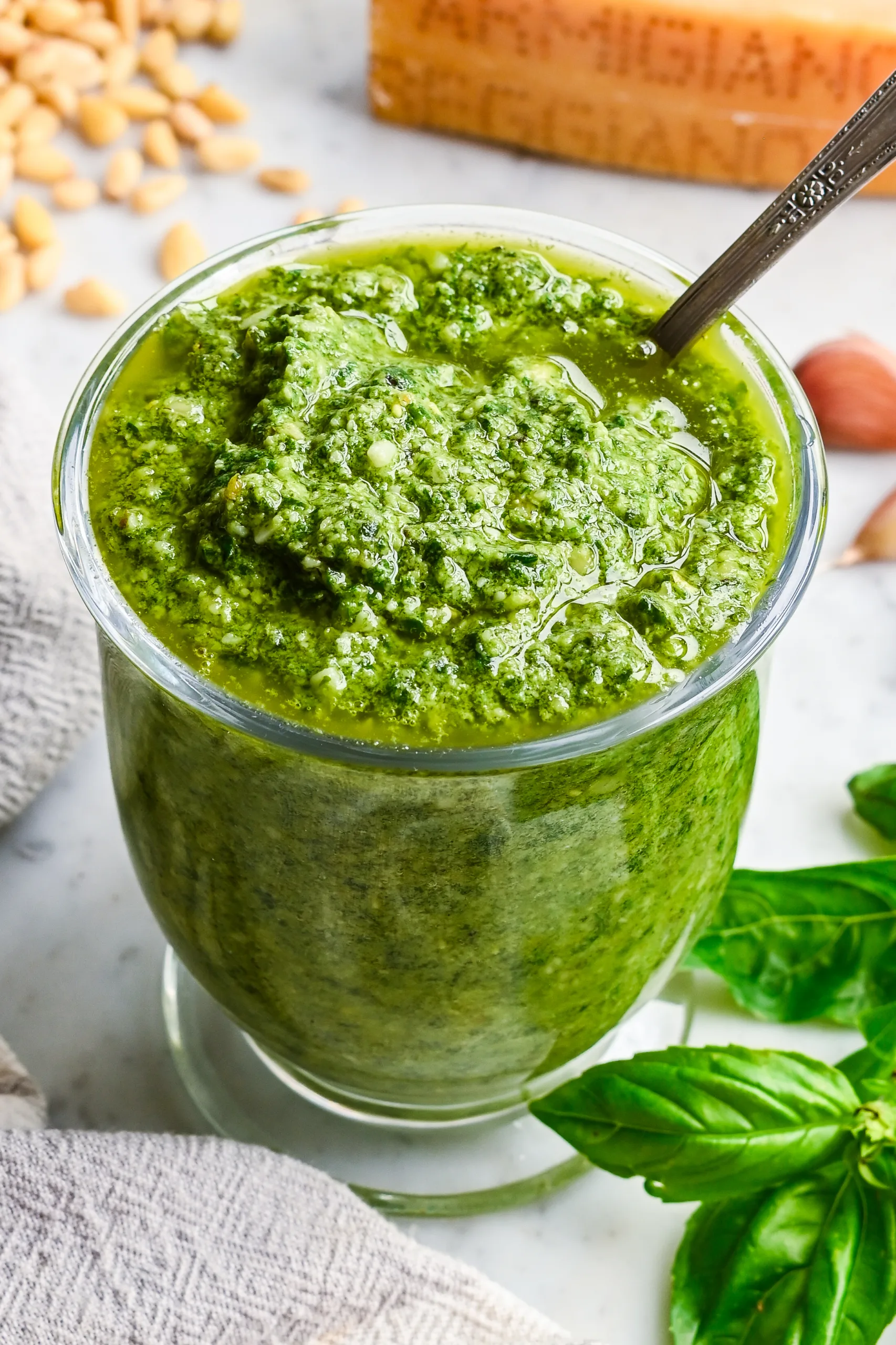
Pulse or blend only until the pesto reaches your desired consistency. Do not overblend, especially in a high-powered blender, or the pesto can become too smooth and warm.
Taste and adjust the salt or lemon juice if needed.
Serve immediately or transfer the pesto to an airtight container.
Tips for the Best Homemade Pesto
Dry the basil well before blending. Wet basil can make the pesto watery and may shorten the storage time.
Use a food processor for the most control over texture.
Do not overblend. Pesto should still have some texture, not be completely smooth.
Use freshly grated Parmesan for the best flavor and texture.
Start with 1 tablespoon of lemon juice, then add more if needed. This keeps the basil flavor from being overtaken by lemon.
Add a little extra olive oil if you want a thinner pesto for drizzling.
Taste before storing. Depending on the Parmesan and salt level, you may need a little more salt.
If using a Vitamix or blender, add the liquids first and blend briefly on low speed.
Ways to Use Fresh Basil Pesto
Fresh basil pesto is one of those simple recipes that can be used in a lot of different meals.
Toss it with warm pasta for a quick dinner.
Spread it on sandwiches or wraps.
Spoon it over grilled chicken or steak.
Add it to scrambled eggs or omelets.
Use it as a topping for roasted vegetables.
Stir it into soups right before serving.
Spread it on toast or sourdough bread.
Serve it with focaccia, crackers, or fresh vegetables.
Use it as a base for homemade pizza.
Add a spoonful to pasta salad or potato salad.
It also works well with savory bread recipes like Sourdough Discard Focaccia Bread if you want something homemade and flavorful to serve alongside it.
Frequently Asked Questions About Easy Fresh Basil Pesto Recipe
Should basil be washed before making pesto?
Yes, basil should be washed before making pesto, especially if it came from the garden. Dry it thoroughly before blending so the pesto does not become watery.
Why is my pesto bitter?
Pesto can taste bitter if it is overblended, if the olive oil is very strong, or if the basil is older and more bitter. Blend briefly and taste as you go.
Can I use walnuts instead of pine nuts?
Yes, walnuts can be used instead of pine nuts. The flavor will be a little stronger and earthier, but walnuts work well in homemade basil pesto.
Can basil pesto be frozen?
Yes, basil pesto freezes very well. I like to transfer my freshly made pesto directly into a freezer-safe bag, remove as much air as possible, and freeze it right away. I've had great results with this method, and it makes storing homemade pesto simple. You can also freeze it in small containers or ice cube trays if you prefer individual portions.
How long does homemade pesto last in the refrigerator?
Homemade pesto usually lasts about 4 to 5 days in the refrigerator when stored in an airtight container. A thin layer of olive oil over the top can help reduce browning.
Why did my pesto turn brown?
Pesto turns brown when the fresh basil is exposed to air. Store it with a thin layer of olive oil over the top to help slow browning.
How much lemon juice should I add to basil pesto?
Start with 1 tablespoon of fresh lemon juice, then add more to taste. For this recipe, 1 to 2 tablespoons is enough to brighten the pesto without making it taste strongly lemony.

Tried this recipe?
I would love to see it! Tag me on Instagram @idiesfarm and #idiesfarm so I can share your beautiful creation!
Easy Fresh Basil Pesto Recipe
Ingredients
- 2 cups fresh basil leaves tightly packed
- ¾ cup freshly grated Parmesan cheese
- ½ cup extra virgin olive oil
- ½ cup pine nuts
- 2 large garlic cloves
- 1 to 2 tablespoons fresh lemon juice
- ½ teaspoon salt or to taste
- ¼ teaspoon black pepper
Instructions
- Wash the fresh basil leaves and dry them thoroughly.
- If using a food processor, add the basil, Parmesan cheese, pine nuts, garlic, lemon juice, salt, and black pepper. If using a blender or Vitamix, add the olive oil and lemon juice first, followed by the garlic, pine nuts, Parmesan cheese, salt, black pepper, and basil leaves.
- Pulse the food processor a few times until the ingredients are roughly chopped. If using a blender, start on low speed and use the tamper as needed.
- With the food processor running on low, slowly drizzle in the olive oil. If using a blender, the olive oil is already added, so continue blending briefly until the ingredients begin to combine.
- Pulse or blend until the pesto reaches your desired consistency. Avoid over blending, especially in a high-powered blender, as the pesto can become too smooth and warm.
- Taste and adjust the salt or lemon juice as needed. Serve immediately or transfer to an airtight container for storage.
Notes

Welcome!
Hi! I’m Stephanie, also known as Idie. Follow me as I tap into the methods of the past and learn how to make my world a little smaller.



Leave a Reply