Making puff pastry at home has always felt a little magical to me. Flour, butter, and time come together to create delicate flaky layers that rise in the oven without yeast or commercial leavening. This sourdough puff pastry recipe follows that traditional method while using sourdough discard for added flavor and tenderness. The result is a pastry made with simple ingredients that works beautifully for both sweet and savory recipes, whether I am making sausage rolls or filling pastries with something simple like my homemade strawberry jam.
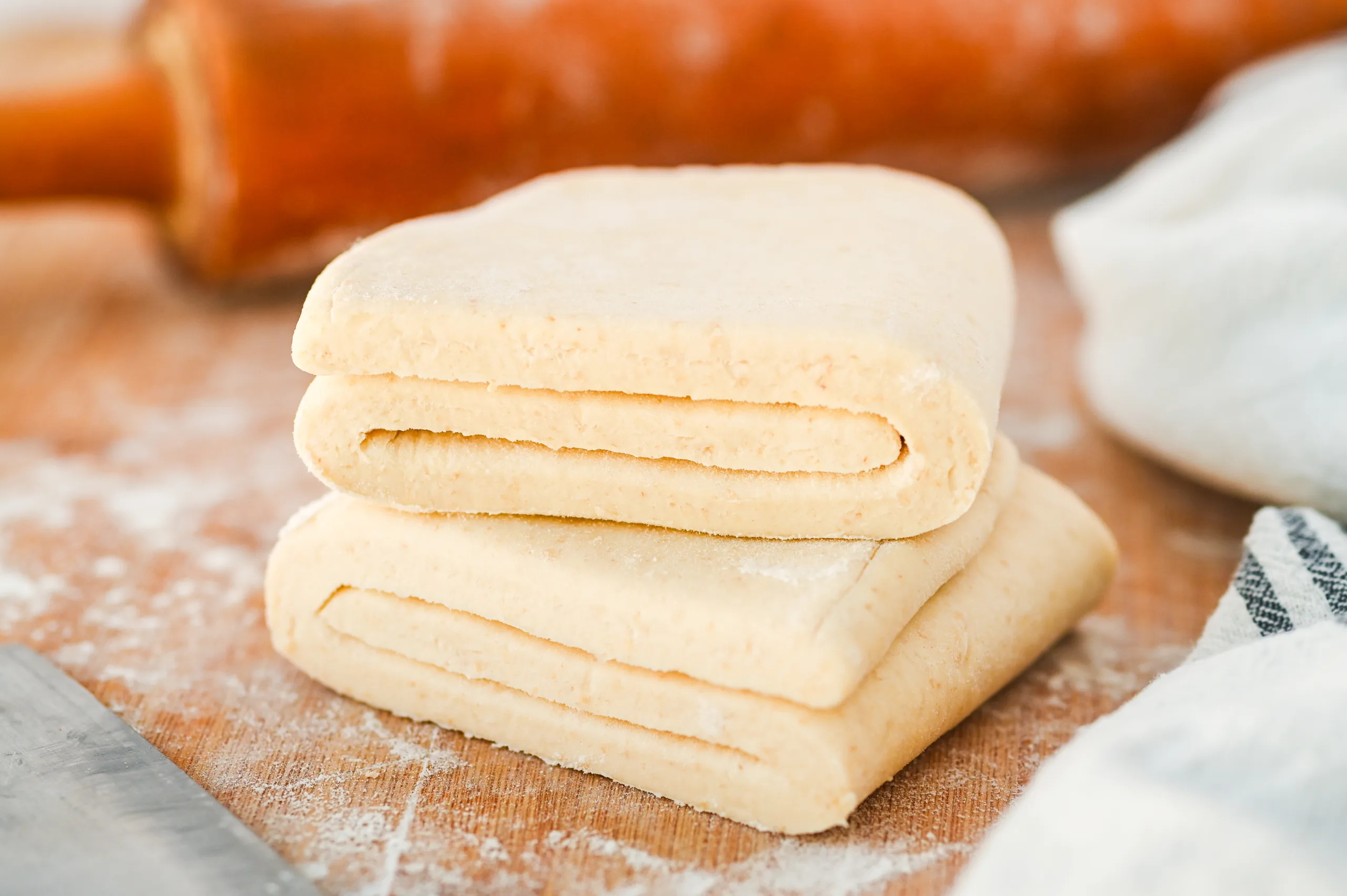
This sourdough puff pastry is closer to a classic puff pastry recipe than a rough puff pastry, but the method is still approachable for home bakers who want to learn the process without feeling overwhelmed. If you enjoy learning traditional techniques, you may also enjoy this Traditional Homemade Puff Pastry Recipe (Classic Flaky Butter Layers), which walks you through the classic butter layering method without sourdough.
Table of Contents
This post contains affiliate links, which means if you purchase through them, we may earn a small commission at no extra cost to you, helping keep Idie’s Farm running.
Quick Look at This Recipe
Recipe: Sourdough Puff Pastry
Prep Time: 30 minutes active time
Chill Time: 3 to 4 hours total
Yield: 1 large sheet of puff pastry
Method: Laminated pastry
Difficulty: Intermediate
Best For: Sausage rolls, turnovers, and sweet or savory pastry recipes
Why Make Puff Pastry with Sourdough Discard
Many sourdough recipes use active starter for rise, but puff pastry relies on steam created by butter and dough layers instead. Using sourdough discard allows you to add flavor while keeping the structure needed for flaky layers. The discard starter contributes mild tang and helps tenderize the dough without interfering with lamination.
Because this pastry uses cold butter and cold water, the dough stays firm and easier to roll. Keeping everything cold is the most important part of any puff pastry recipe!
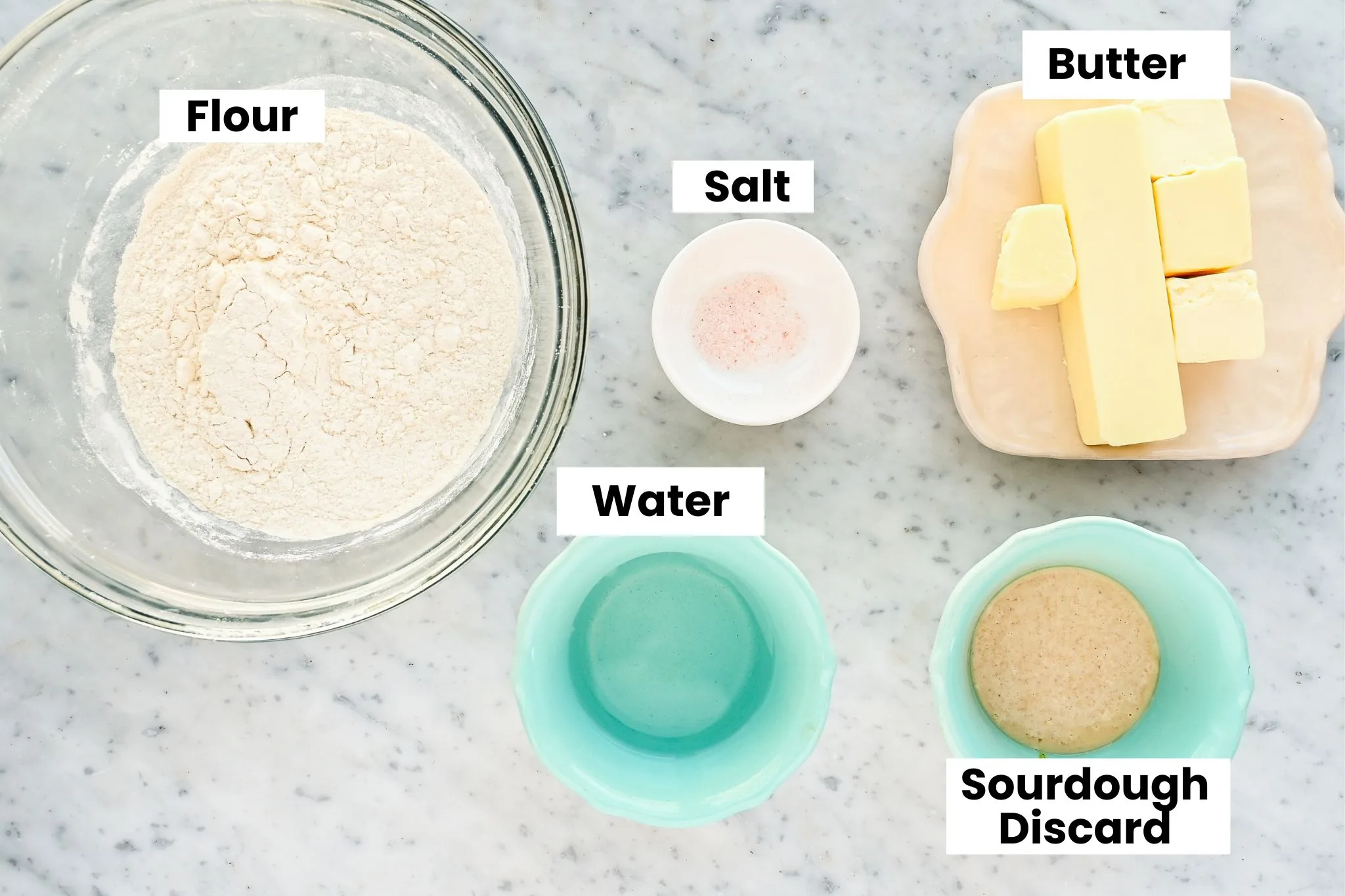
Ingredients for Sourdough Puff Pastry
Dough
225 g all-purpose flour (about 1 ½ cups + 2 tablespoons)
60 g sourdough discard starter (about ¼ cup)
95 g cold water (about ⅓ cup + 1 tablespoon)
½ teaspoon salt (¼ teaspoon if using salted butter)
20 g butter, softened (about 1 ½ tablespoons)
Butter Block (for lamination)
200 g cold butter (1¾ sticks or 14 tablespoons)
Equipment Needed
Rolling pin
Parchment paper
Bench scraper
Plastic wrap or reusable cover
How to Make Sourdough Puff Pastry

In a bowl, combine flour, sourdough discard starter, cold water, salt, and softened butter. Mix until a rough dough forms. The dough should feel firm but not dry.

Shape into a rectangle, wrap, and place in the fridge for at least 2 hours or overnight. Resting time allows the flour to hydrate and makes rolling easier.

Place the cold butter between two sheets of parchment paper and gently roll it into a flat rectangle about half the size of your dough. I prefer to hammer it out first with the rolling pin. This makes it much easier to roll.

The butter should be cold but pliable while rolling. If it becomes too soft at any point, return it to the fridge for several minutes until firm again.

Roll the chilled dough into a rectangle large enough to fully enclose the butter block.

Place the butter in the center of the dough. Fold each corner of the dough over the butter toward the center, overlapping slightly and sealing the edges so the butter is completely enclosed.
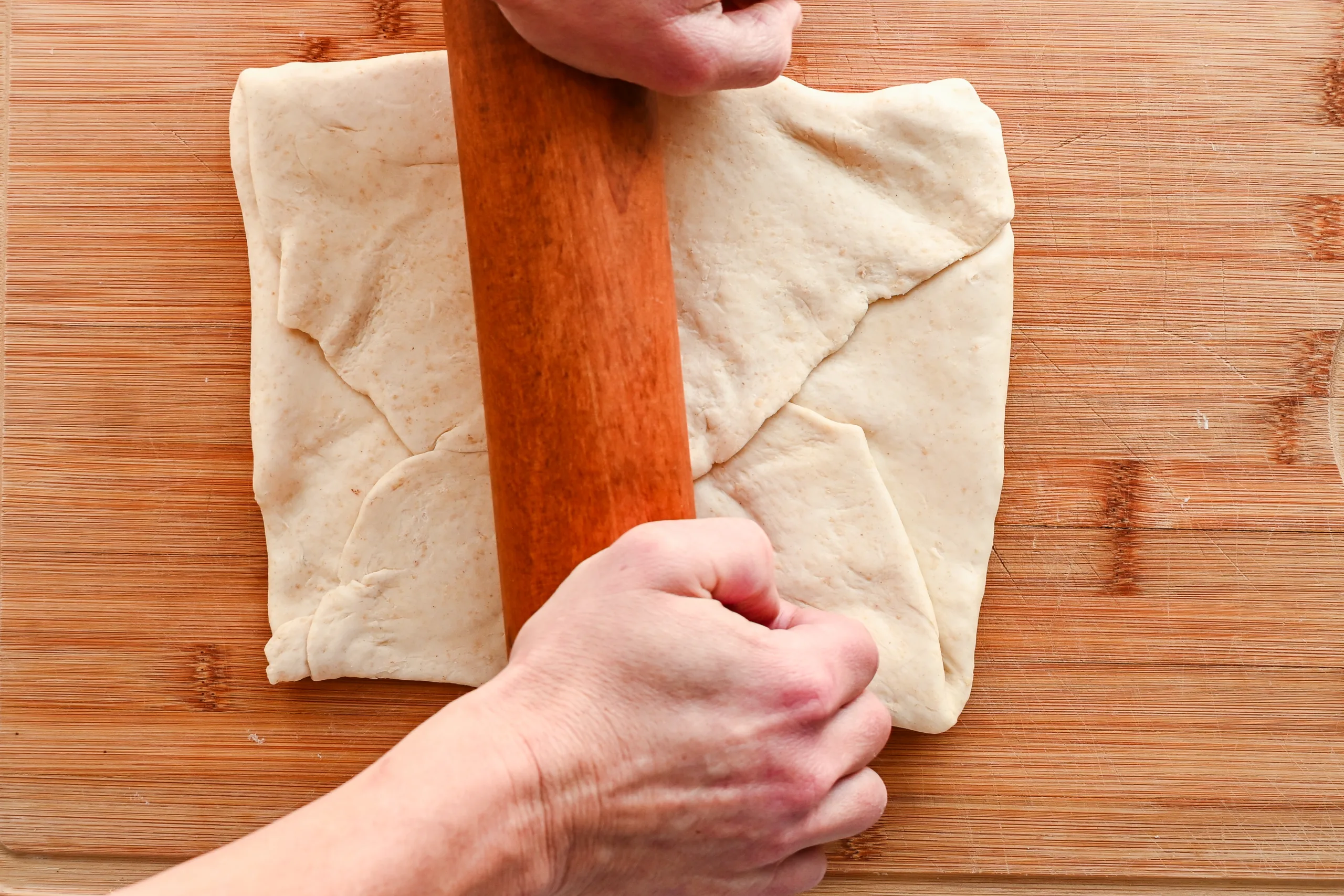
On a floured surface, roll the dough gently into a long rectangle.
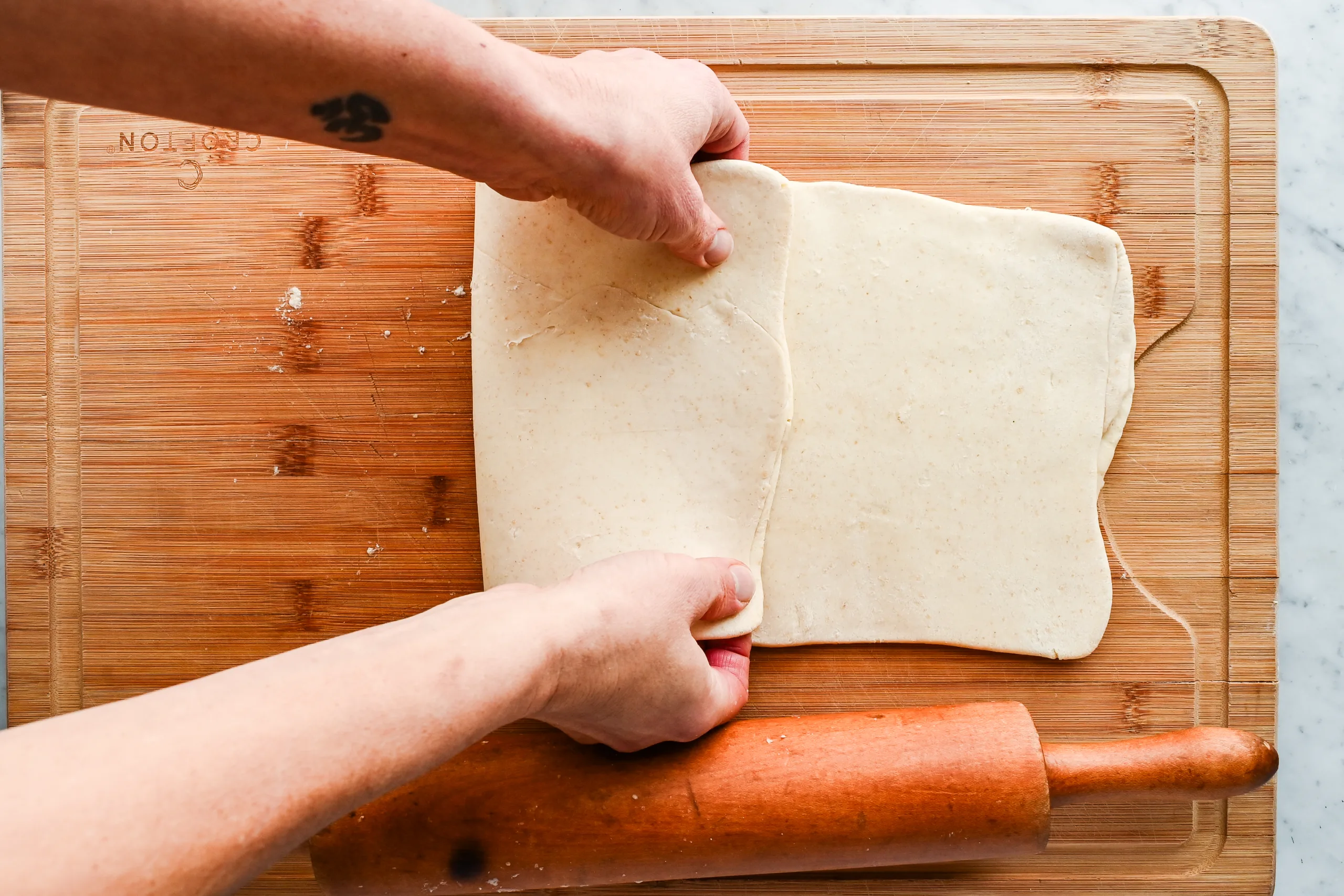
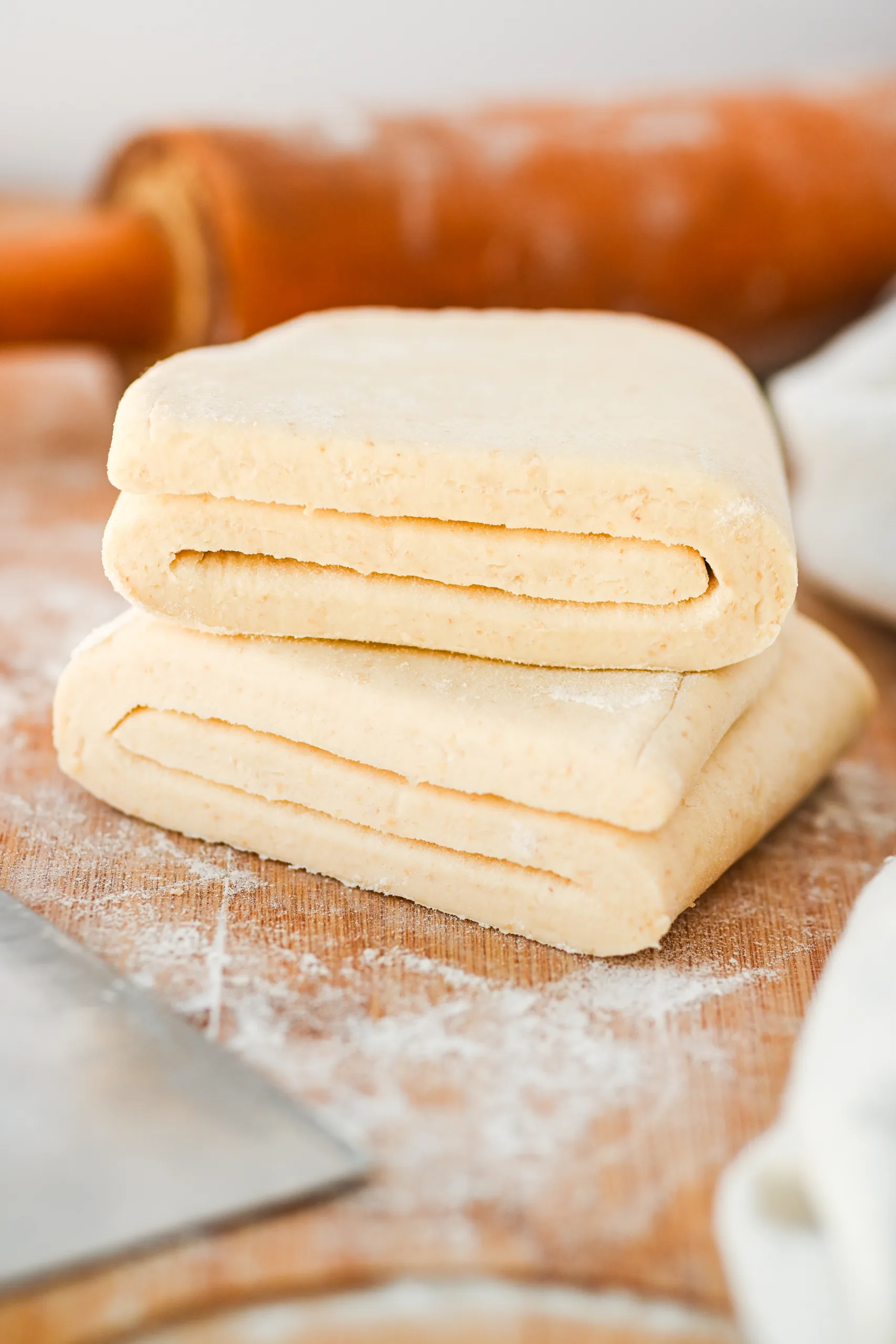
Fold the bottom third up and the top third down, like a letter.

Wrap and chill in the fridge for 30 to 45 minutes. Repeat the rolling and folding process two more times, chilling between each fold. These folds create the flaky layers that define puff pastry.
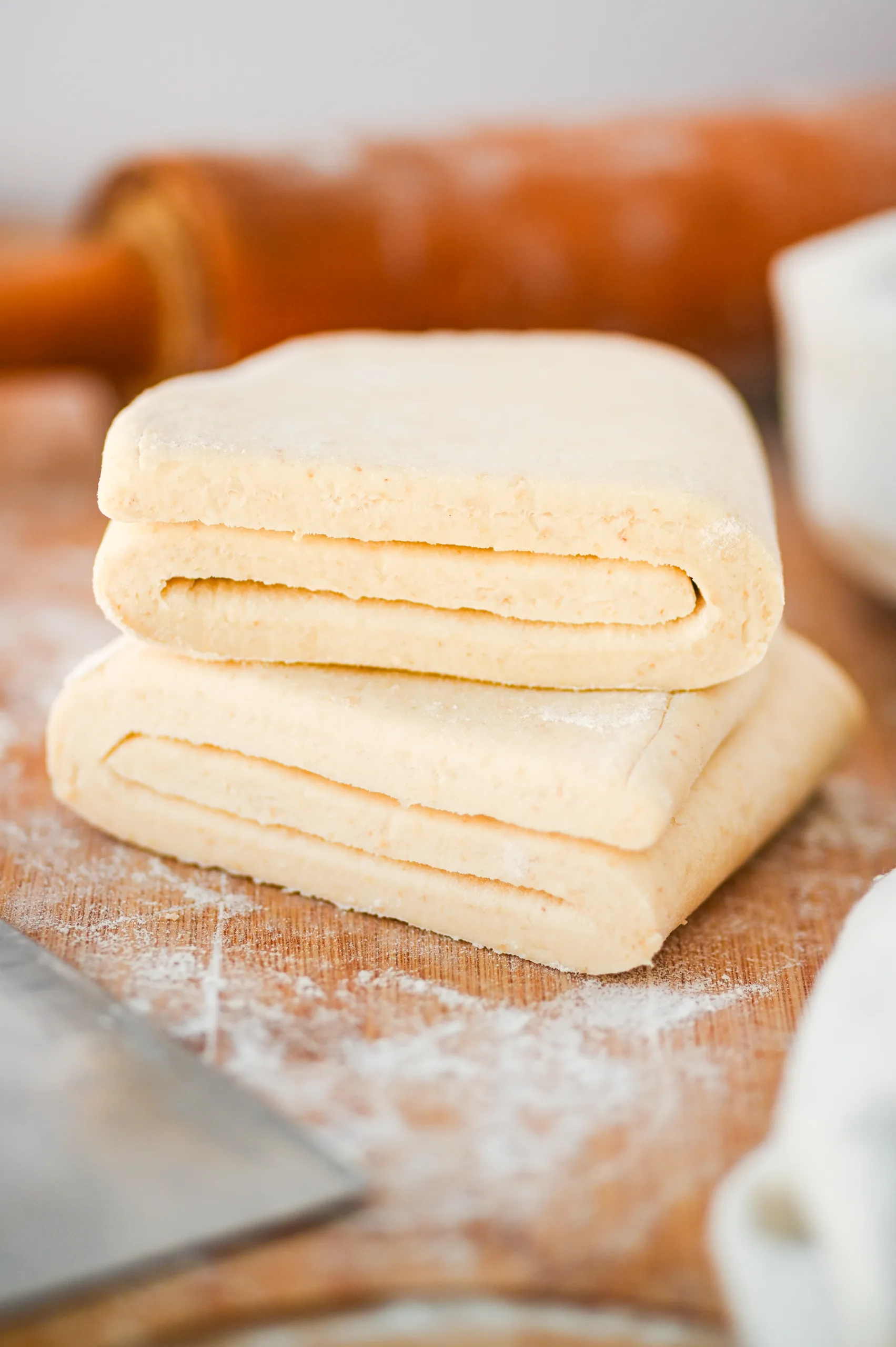
After the final fold, chill the dough for at least 2 hours before using. The pastry is now ready for recipes or can be stored in the fridge for up to two days, or frozen for up to 2 months.
Tips for Flaky Sourdough Puff Pastry
- If butter begins to soften or leak while rolling, place the dough back in the fridge.
- Work quickly and use light pressure when rolling to avoid pushing butter through the dough.
- Puff pastry needs cold butter to create steam, which forms the layers.
- If the dough resists rolling, let it rest in the fridge for 20 minutes before continuing.
- Lightly flour your work surface and rolling pin before rolling the dough. Sourdough puff pastry can be slightly softer than traditional puff pastry, and a light dusting of flour helps prevent sticking and tearing. If the dough begins to stick, lift it gently and add a little more flour underneath rather than pressing harder with the rolling pin. Brush away excess flour before folding to keep the layers clean.
How to Use Sourdough Puff Pastry
This pastry recipe works well for both sweet and savory recipes. Use it for sausage rolls, turnovers, hand pies, or simple baked pastries filled with fruit or cheese. For sweet pastries, fillings like Classic Homemade Strawberry Jam Without Pectin or Homemade Raspberry Jam (Easy, No Pectin Needed!) pair especially well with the buttery layers of sourdough puff pastry.
If decorating pastries or finishing hand pies with icing, a simple glaze or this Best Royal Icing Recipe Without Meringue Powder can be used once the pastry has cooled.
Frequently Asked Questions About Sourdough Puff Pastry
Can I make rough puff pastry with sourdough discard?
Yes. Rough puff pastry is a faster method where butter is mixed directly into the dough instead of laminated. It produces slightly less defined layers but still works well for many recipes.
Why doesn’t puff pastry need active sourdough starter?
Puff pastry rises from steam created by butter and water, not fermentation. Using discard starter adds flavor without excessive rise.
How long does sourdough puff pastry last in the fridge?
The dough can be kept in the fridge for up to 48 hours before baking.
Can I freeze sourdough puff pastry?
Sourdough puff pastry dough can be frozen for up to 2 months for best quality. Thaw overnight in the fridge before using to keep the flaky layers intact.

Tried this recipe?
I would love to see it! Tag me on Instagram @idiesfarm and #idiesfarm so I can share your beautiful creation!
Sourdough Puff Pastry Recipe (Flaky Layers Using Sourdough Discard)
Equipment
- Rolling Pin
- Parchment paper
- Bench scraper
- Plastic wrap or reusable cover
Ingredients
Dough
- 225 g all-purpose flour about 1 ½ cups + 2 tablespoons
- 60 g sourdough discard starter about ¼ cup
- 95 g cold water about ⅓ cup + 1 tablespoon
- ½ teaspoon salt ¼ teaspoon if using salted butter
- 20 g butter softened (about 1 ½ tablespoons)
Butter Block (for lamination)
- 200 g cold butter 1¾ sticks or 14 tablespoons
Instructions
- In a bowl, combine flour, sourdough discard starter, cold water, salt, and softened butter. Mix until a rough dough forms. The dough should feel firm but not dry.
- Shape into a rectangle, wrap, and place in the fridge for at least 2 hours or overnight. Resting time allows the flour to hydrate and makes rolling easier.
- Place the cold butter between two sheets of parchment paper and gently roll it into a flat rectangle about half the size of your dough. I prefer to hammer it out first with the rolling pin. This makes it much easier to roll.
- The butter should be cold but pliable while rolling. If it becomes too soft at any point, return it to the fridge for several minutes until firm again.
- Roll the chilled dough into a rectangle large enough to fully enclose the butter block.
- Place the butter in the center of the dough. Fold each corner of the dough over the butter toward the center, overlapping slightly and sealing the edges so the butter is completely enclosed.
- On a floured surface, roll the dough gently into a long rectangle.
- Fold the bottom third up and the top third down, like a letter.
- Wrap and chill in the fridge for 30 to 45 minutes. Repeat the rolling and folding process two more times, chilling between each fold. These folds create the flaky layers that define puff pastry.
- After the final fold, chill the dough for at least 2 hour before using. The pastry is now ready for recipes or can be stored in the fridge for up to two days, or frozen for up to 2 months.
Notes
- If butter begins to soften or leak while rolling, place the dough back in the fridge.
- Work quickly and use light pressure when rolling to avoid pushing butter through the dough.
- Puff pastry needs cold butter to create steam, which forms the layers.
- If the dough resists rolling, let it rest in the fridge for 20 minutes before continuing.
- Lightly flour your work surface and rolling pin before rolling the dough. Sourdough puff pastry can be slightly softer than traditional puff pastry, and a light dusting of flour helps prevent sticking and tearing. If the dough begins to stick, lift it gently and add a little more flour underneath rather than pressing harder with the rolling pin. Brush away excess flour before folding to keep the layers clean.

Welcome!
Hi! I’m Stephanie, also known as Idie. Follow me as I tap into the methods of the past and learn how to make my world a little smaller.