
There’s something extraordinary about watching a fresh milled wheat sourdough starter come to life, especially when it begins with freshly milled flour you grind yourself (like the kind I use in my Fresh Milled Whole Wheat Sourdough Discard Donuts and Milled Wheat Sourdough Pie Crust). The warm scent of grain, the quiet bubbles of fermentation, and the rhythm of daily feedings feel a lot like what I would imagine baking used to, the slow and simple approach that makes old-fashioned recipes so special. It’s the kind of baking that connects us back to a simpler time.
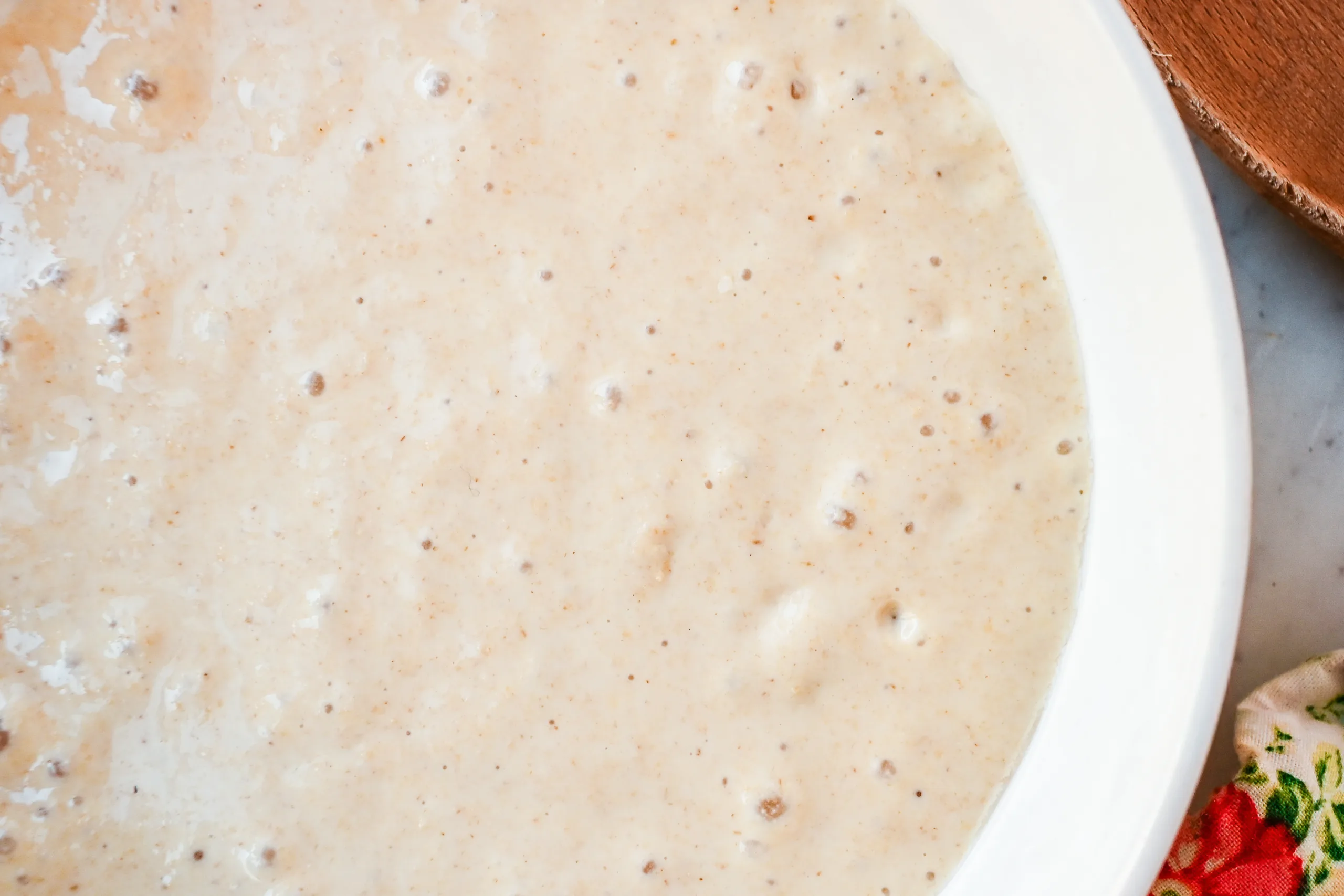
At Idie’s Farm, I love making a sourdough starter from grain to jar using flour milled straight from wheat berries. It feels simple, mindful, and connected to the old-fashioned way of cooking. It’s real food, full of natural flavor and life.
Find out how you can turn your all-purpose sourdough starter into a milled wheat sourdough starter!
Table of Contents
This post contains affiliate links, which means if you purchase through them, we may earn a small commission at no extra cost to you, helping keep Idie’s Farm running.

Quick Look at This Recipe
- Active time: about 5 minutes per feeding
- Total time: 5 to 7 days
- Flour used: 100% freshly milled wheat from hard or soft wheat berries
- Skill level: beginner friendly
- What you get: a lively sourdough starter made with fresh milled flour, ready for breads, rolls, and everyday baking

Why Use Freshly Milled Flour for Sourdough?
The secret to a strong active sourdough starter is life, and nothing brings more life to your starter than freshly milled flour. When grain is freshly ground, it’s still rich with natural oils, enzymes, and wild yeast spores. These nutrients feed your culture and help it grow stronger, faster, and more flavorful!
Fresh flour also ferments differently than store-bought whole wheat flour. You may notice your starter rising more quickly, or smelling sweeter and nuttier. This is normal, and it’s simply the freshness working its magic!
If you are milling wheat berries at home, this starter is the perfect way to use that fresh flour at its peak. You can also check out some of my other milled wheat sourdough recipes to put that starter to use!

What You’ll Need to Get Started
Making a sourdough starter using fresh milled flour doesn’t require much — just patience, warmth, and consistency.
Ingredients
- 100 grams freshly milled flour (like hard red wheat, hard white wheat, or soft white wheat)
- 80–100 grams water (filtered or dechlorinated)
- 1 clean jar or glass container
- Spoon for stirring
- A warm place at room temperature (around 70–75°F)
If you’re using fresh milled flour, start with a thicker consistency (like pancake batter). As your starter matures, you can adjust the hydration based on how quickly it ferments.
My Simple Rustic Whole Wheat Sourdough Bread is a perfect next step once your starter is active.
Step-by-Step: How to Make a Fresh Milled Sourdough Starter

Day 1: Mix and Wait
Combine 100 grams of freshly milled flour and 80 grams of water in your clean jar. Stir until smooth, then cover loosely. Leave it at room temperature for 24 hours.
You may not see much change yet. This is the quiet stage where wild yeast and bacteria begin settling in.

Day 2: First Feeding
Discard half of your mixture. You can save the discard for one of my sourdough discard recipes if you’d like to avoid waste. Add 50 grams of flour and 50 grams of water, then stir well. You may start to notice small bubbles or a slight rise, which is a good sign of early activity.

Days 3–5: Keep Feeding
Continue feeding every 24 hours using equal parts fresh milled flour and water. By Day 4 or 5, your starter should smell pleasantly sour and begin doubling in size between feedings.
If your kitchen is cooler, fermentation may take a little longer. Every home environment is different, so simply keep feeding and watching for steady activity.

Day 6: Ready to Bake
By now, your starter should be bubbly, airy, and rising reliably after each feeding. Place a rubber band around the jar to track its rise. Once it doubles within 4 to 6 hours of a feeding, it is ready to use.
Feeding and Maintaining Your Starter
Once your fresh milled wheat sourdough starter is strong and rising well, a simple feeding routine will keep it healthy.
At room temperature: feed once a day.
If stored in the refrigerator: feed once a week.
Each time you feed:
- Discard half
- Add equal weights of freshly milled flour and water
- Stir, cover, and let it sit at room temperature until bubbly again
If you plan to bake often, keeping your starter warm and active on the counter works well. If you bake only occasionally, store it in the fridge and give it a feeding a day or two before you plan to make bread, leaving it out to get to room temperature before baking.
You can use the discard in recipes like my Milled Wheat Strawberry Sourdough Quick Bread or any of your favorite sourdough discard recipes.
Baking with Fresh Milled Starters
The wheat berries you choose will shape the flavor and structure of your fresh milled wheat sourdough starter. Hard red wheat has a hearty, classic taste with strong gluten strength that works well for everyday loaves and sourdough sandwich bread. Hard white wheat has a gentler flavor and creates a softer crumb, making it a good choice for rolls or lighter breads.
When you bake with a fresh milled starter, you may notice your dough developing a little faster. Fresh flour is full of natural enzymes and flavor, so fermentation can move along more quickly than recipes written for bagged whole wheat flour. Watch your dough rather than the clock, and adjust proofing times based on how your starter behaves.
Fresh milled flour often gives your bread a richer color, a fuller aroma, and a wholesome flavor that fits right into an old-fashioned kitchen. Whether you’re making artisan loaves, sandwich bread, or sweet recipes like my Homemade Milled Wheat Sourdough Graham Crackers, your home milled grains can shine in every bake.

Why Fresh Milled Starters Fit an Old-Fashioned Kitchen
Making a sourdough starter from freshly milled flour is more than a baking project, it is a small return to the slower pace many of us miss. Milling wheat berries, stirring a jar each day, and watching a living culture grow brings you closer to the kind of kitchen work, and family life, that once filled ordinary homes.
At Idie’s Farm, this process reminds me of why I value old-fashioned living. A fresh milled starter teaches patience, thrift, and gratitude for simple ingredients. When your kitchen smells like warm grain and rising dough, it feels like a piece of the past settling right back in where it belongs.
Frequently Asked Questions
Can I make a sourdough starter with 100 percent fresh milled flour?
Yes. A starter made with fresh milled flour develops beautifully and becomes active quickly once it finds its rhythm.
Do I have to feed my starter with fresh milled flour every time?
You can, but you don’t have to. Freshly milled flour keeps the culture strong, but it will still stay healthy if you occasionally feed with whole wheat or bread flour.
Why does my starter ferment so fast?
Fresh milled flour is full of natural activity from the grain itself, so it often rises faster than starters fed with bagged flour. If it is moving too quickly, feed smaller amounts more often.
Can I use a fresh milled starter for sourdough sandwich bread?
Absolutely. A fresh milled wheat sourdough starter works well in sandwich bread, artisan loaves, rolls, and most everyday baking.
Can I use my discard?
Yes. Save it for recipes like crackers, waffles, muffins, or any of your favorite sourdough discard bakes. It’s an old-fashioned way to keep waste low and flavor high.
Bringing It All Together
Starting a sourdough starter with fresh milled flour is one of the most natural ways to begin your baking journey. From grinding your wheat berries to feeding your growing culture each day, every step brings you closer to the old-fashioned ways that once shaped everyday kitchen life.
This is the heart of Idie’s Farm. Simple ingredients, patient hands, and the joy of watching something real come alive in a jar. If you’re ready for your next step, explore more of my sourdough recipes and fresh milled flour guides to keep learning and baking with confidence.

Tried this recipe?
I would love to see it! Tag me on Instagram @idiesfarm and #idiesfarm so I can share your beautiful creation!

How to Make a Fresh Milled Wheat Sourdough Starter (From Grain to Jar)
Ingredients
Method
- Combine 100 grams of freshly milled flour and 80 grams of water in your clean jar. Stir until smooth, then cover loosely. Leave it at room temperature for 24 hours. You may not see much change yet. This is the quiet stage where wild yeast and bacteria begin settling in.
- Discard half of your mixture. You can save the discard for one of our sourdough discard recipes if you’d like to avoid waste. Add 50 grams of flour and 50 grams of water, then stir well. You may start to notice small bubbles or a slight rise, which is a good sign of early activity.
- Continue feeding every 24 hours using equal parts fresh milled flour and water. By Day 4 or 5, your starter should smell pleasantly sour and begin doubling in size between feedings. If your kitchen is cooler, fermentation may take a little longer. Every home environment is different, so simply keep feeding and watching for steady activity.
- By now, your starter should be bubbly, airy, and rising reliably after each feeding. Place a rubber band around the jar to track its rise. Once it doubles within 4 to 6 hours of a feeding, it is ready to use.
Notes
If stored in the refrigerator: feed once a week. Each time you feed:
- Discard half
- Add equal weights of freshly milled flour and water
- Stir, cover, and let it sit at room temperature until bubbly again

Welcome!
Hi! I’m Stephanie, also known as Idie. Follow me as I tap into the methods of the past and learn how to make my world a little smaller.