
Caring for a sourdough starter is one of those old-fashioned kitchen rituals that connects us to a simpler time. It’s a simple job, a routine of feeding, watching, and waiting, much like caring for a small window garden. At Idie’s Farm, we love that rhythm. Feeding our starter with whole wheat flour or freshly milled flour not only keeps it strong, but also brings back the honest simplicity of baking from scratch.
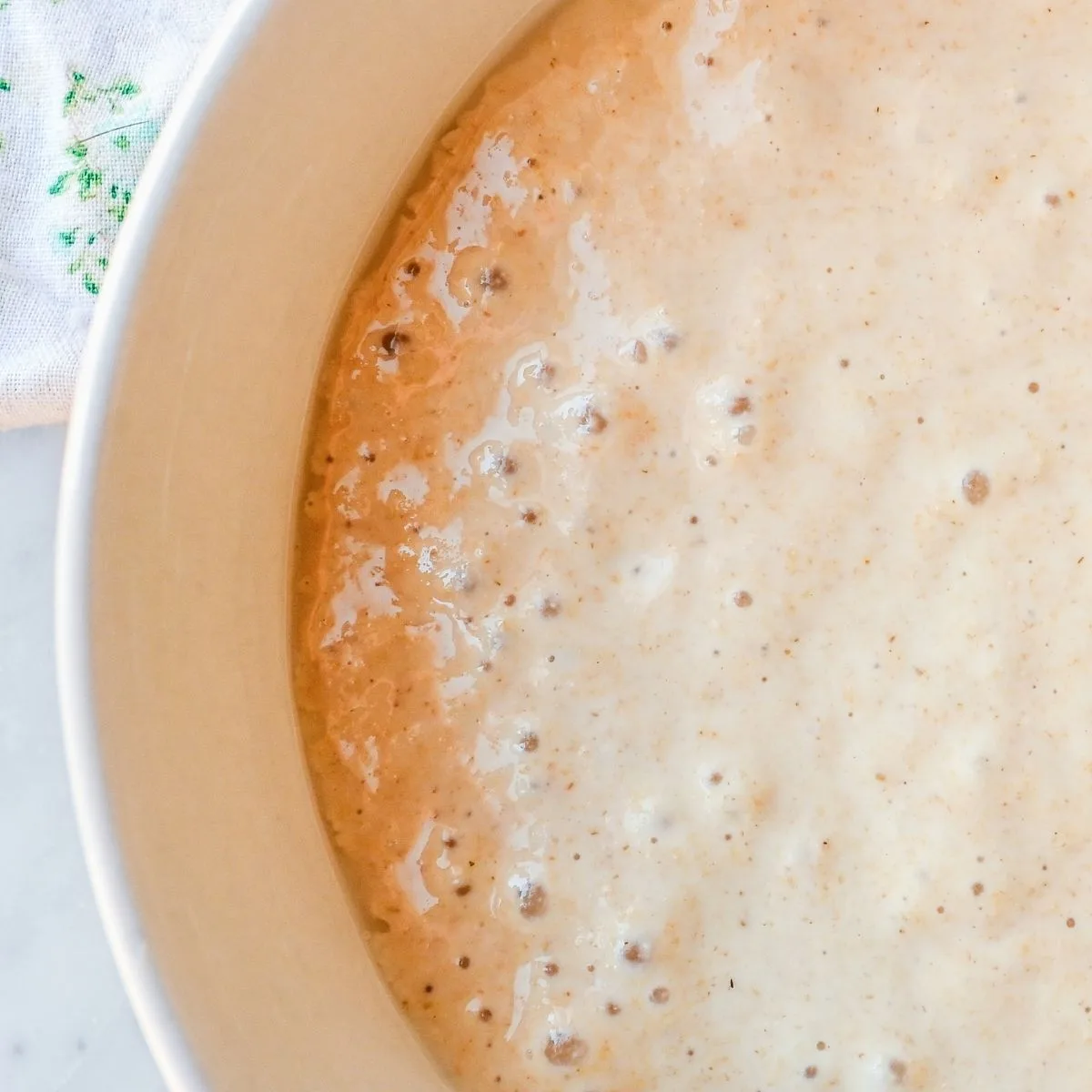
If you’ve already created your own sourdough starter, keeping it alive is easy. You just need flour, water, and a little time.
Table of Contents
This post contains affiliate links, which means I make a small commission at no extra cost to you. See my full disclosure here.
Quick Look at This Guide
- Type: Sourdough starter care (whole wheat or freshly milled flour)
- Skill level: Beginner friendly
- Feeding schedule: Daily at room temperature or weekly in the refrigerator
- Best flours: Whole wheat, fresh milled flour, rye
- What you learn: How to feed, switch flours, store, and maintain a healthy starter
Once you’ve mastered feeding your starter with any flour you choose, you can learn how to dry it and bring it back to life whenever you need it. Dried starter is wonderful for gifting, selling, or storing as a dependable backup for your own kitchen.
Why Feed with Whole Wheat or Freshly Milled Flour?
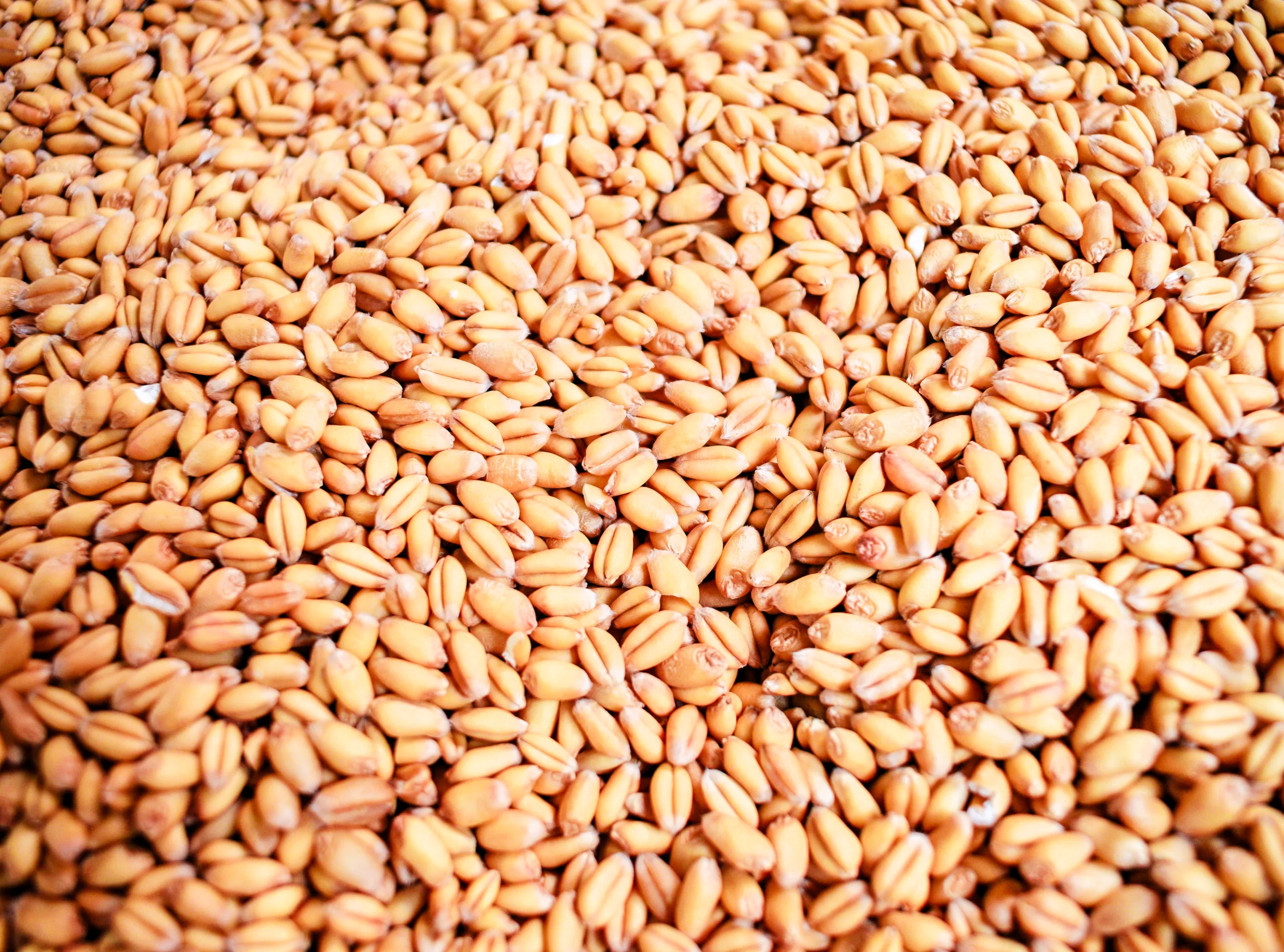
Most bakers start their sourdough starter with all-purpose flour or bread flour, but using whole wheat flour or whole grain flour offers a richer flavor and faster fermentation. That’s because whole wheat still contains the bran, germ, and natural oils that provide the starter with a stronger food source.
Here’s what makes whole or freshly milled flour special:
- Nutrient-rich: Wheat flour and grain flour are full of natural enzymes that boost fermentation.
- Flavorful: Whole grain feeding adds a nutty depth that carries through your bread recipes.
- Traditional: Before modern processing, all sourdough bread began with whole grains, nothing was stripped away.
Learn how to make a Whole Wheat Sourdough Starter from scratch.
When and How Often to Feed
How often you feed your starter depends on where you keep it.
- At room temperature: Feed once daily if you bake often. Your starter will stay active and ready to use at any time.
- In the fridge: Feed once a week. Remove it from the fridge, let it warm to room temperature, then feed and let it rise before returning it to the fridge.
If your starter says it’s hungry, meaning it’s fallen and smells acidic like acetone, it’s time to feed again.

Feeding Ratios and Ingredients
Basic Feeding Ratio:
1 part starter : 1 part flour : 1 part water (by weight)
For example:
- 50 grams starter
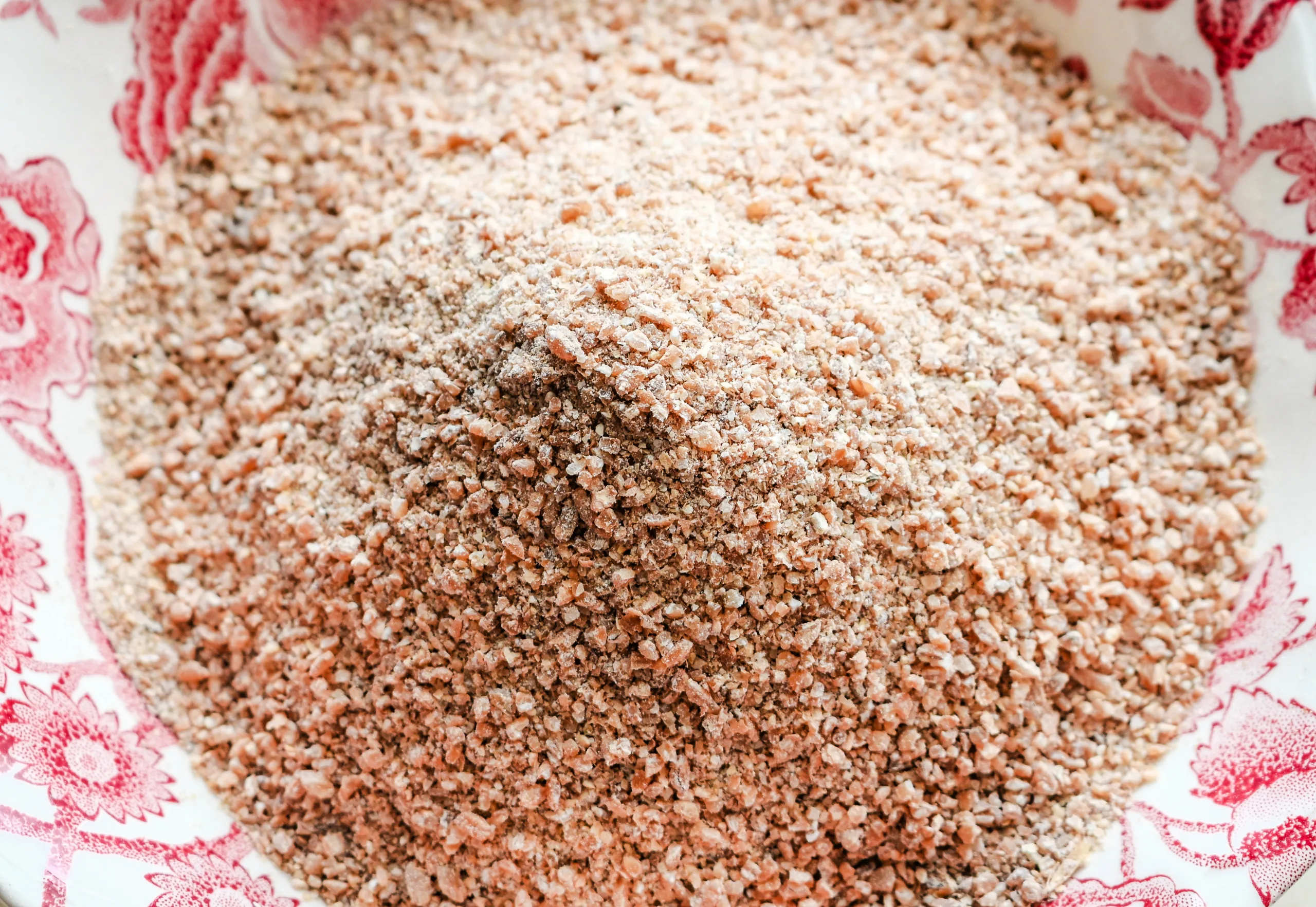
- 50 grams whole wheat flour (or freshly milled flour)
- 50 grams water (filtered or dechlorinated)
Instructions

STEP 1: Add the fresh milled wheat to the jar of all-purpose sourdough starter.
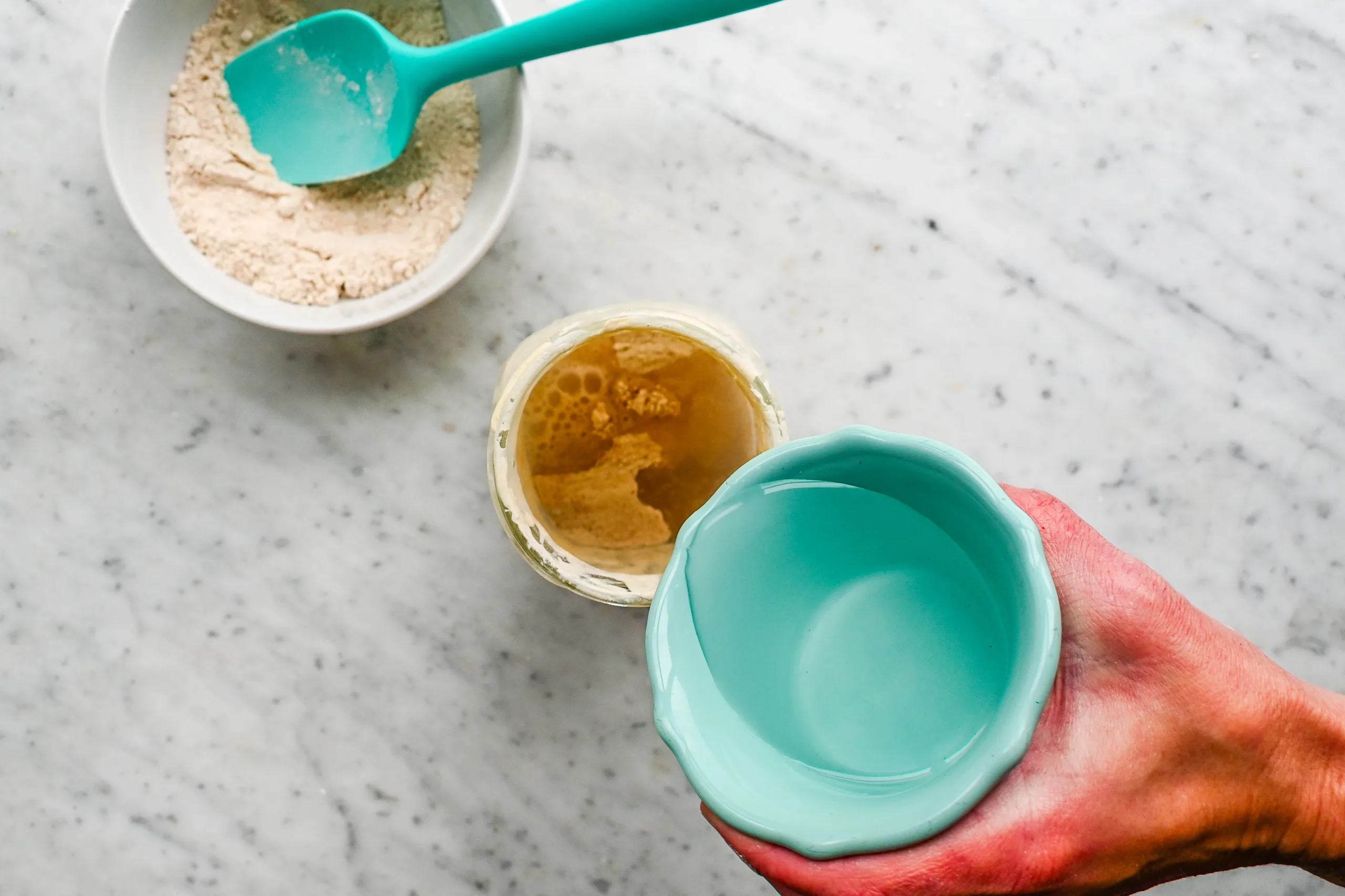
STEP 2: Pour the water over the milled wheat.
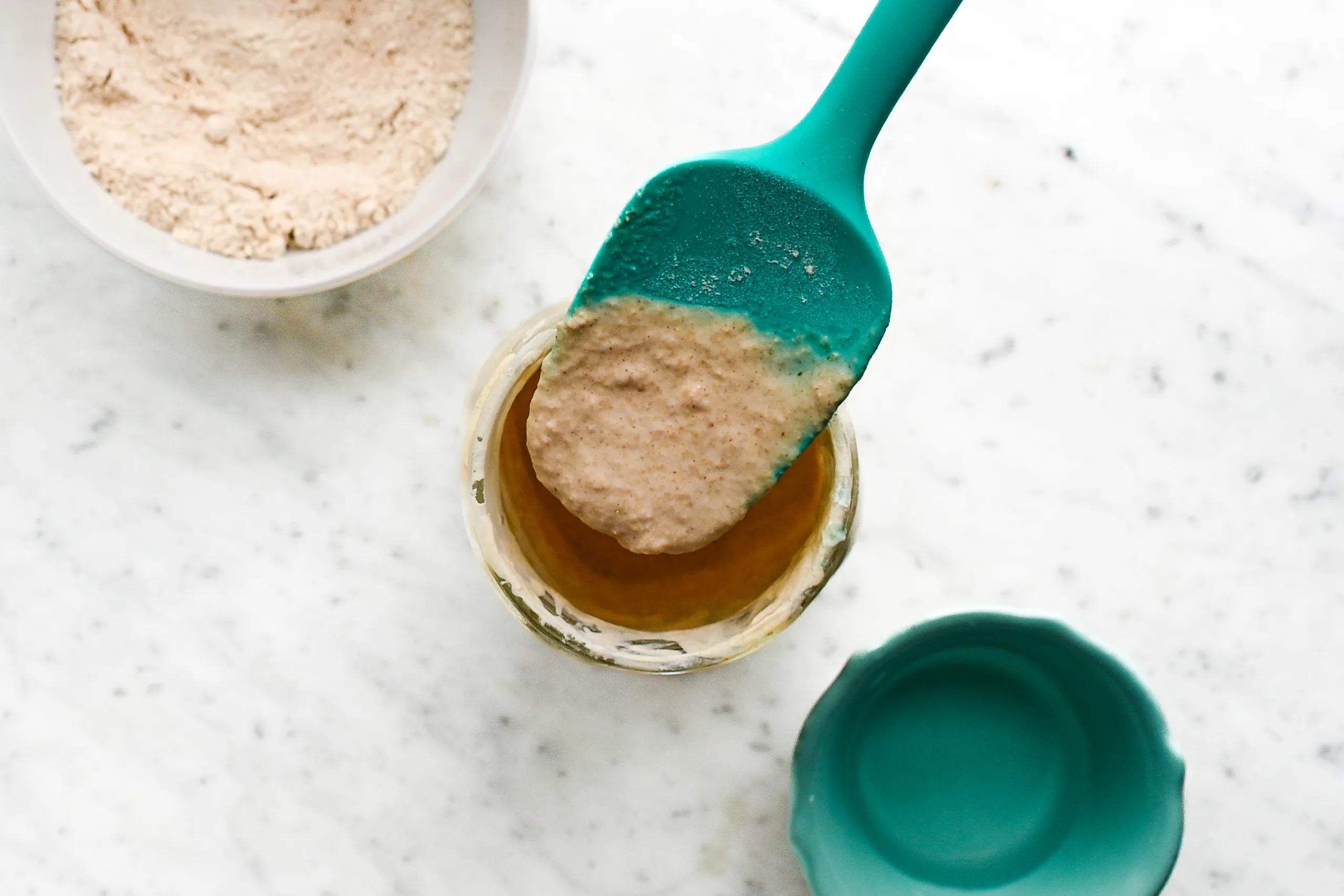
Step 3: Stir all of the ingredients until fully incorporated. Cover loosely and leave it at room temperature for 4–6 hours, or until bubbly and doubled. You can also feed with rye flour occasionally, it’s high in natural yeast and adds a nice flavor to your bread dough.
Switching Flour Types
If your starter was originally built with all-purpose flour, you can switch to whole wheat or freshly milled flour at any time. Gradually introduce it by mixing half and half for a few feedings. This helps your starter adjust to its new food source without slowing fermentation.
After two or three feedings, it should be fully adapted and thriving on whole grain flour.
Many bakers rotate between bread flour and whole wheat flour depending on what they’re baking. The beauty of sourdough is its flexibility.
Storing and Maintaining a Healthy Starter
- Keep your starter in a clean glass jar or crock.
- Store it at room temperature if baking frequently, or refrigerate between bakes.
- Always feed it before putting it in the fridge to keep it strong.
- If you notice hooch (a layer of liquid), it’s just a sign your starter needs feeding, stir it in or pour it off, then refresh as usual.
Use any leftover discard in Sourdough Discard Lemon Blueberry Quick Bread or other sourdough discard recipes to avoid waste.
Baking with a Whole Wheat Starter
When baking sourdough bread recipes with a whole wheat or freshly milled flour starter:
- Expect slightly faster fermentation.
- Hydrate your bread dough more — whole grain flour absorbs more water.
- The flavor will be deeper and earthier than bread made with all-purpose flour.
You can use your starter for everything from homemade sandwich loaves to artisan bread recipes. The difference is noticeable, with a wholesome flavor that feels truly homemade.
Try using your starter in our Perfect Milled Wheat Sourdough Pie Crust Recipe or explore other milled wheat recipes.
Frequently Asked Questions About Feeding a Whole Wheat Sourdough Starter
Can I feed my sourdough starter with any type of flour?
Yes! You can feed it with whole wheat flour, rye flour, bread flour, or even all-purpose flour. Just stay consistent once your starter adjusts to a new food source.
Why does my starter rise faster with whole wheat?
Whole wheat flour contains more nutrients and natural yeast than refined flour, so fermentation speeds up — especially at warm room temperature.
Can I refrigerate my starter?
Yes, keep it in the fridge if you bake less often. Just bring it to room temperature before feeding or baking.
How do I know when my starter is ready to bake with?
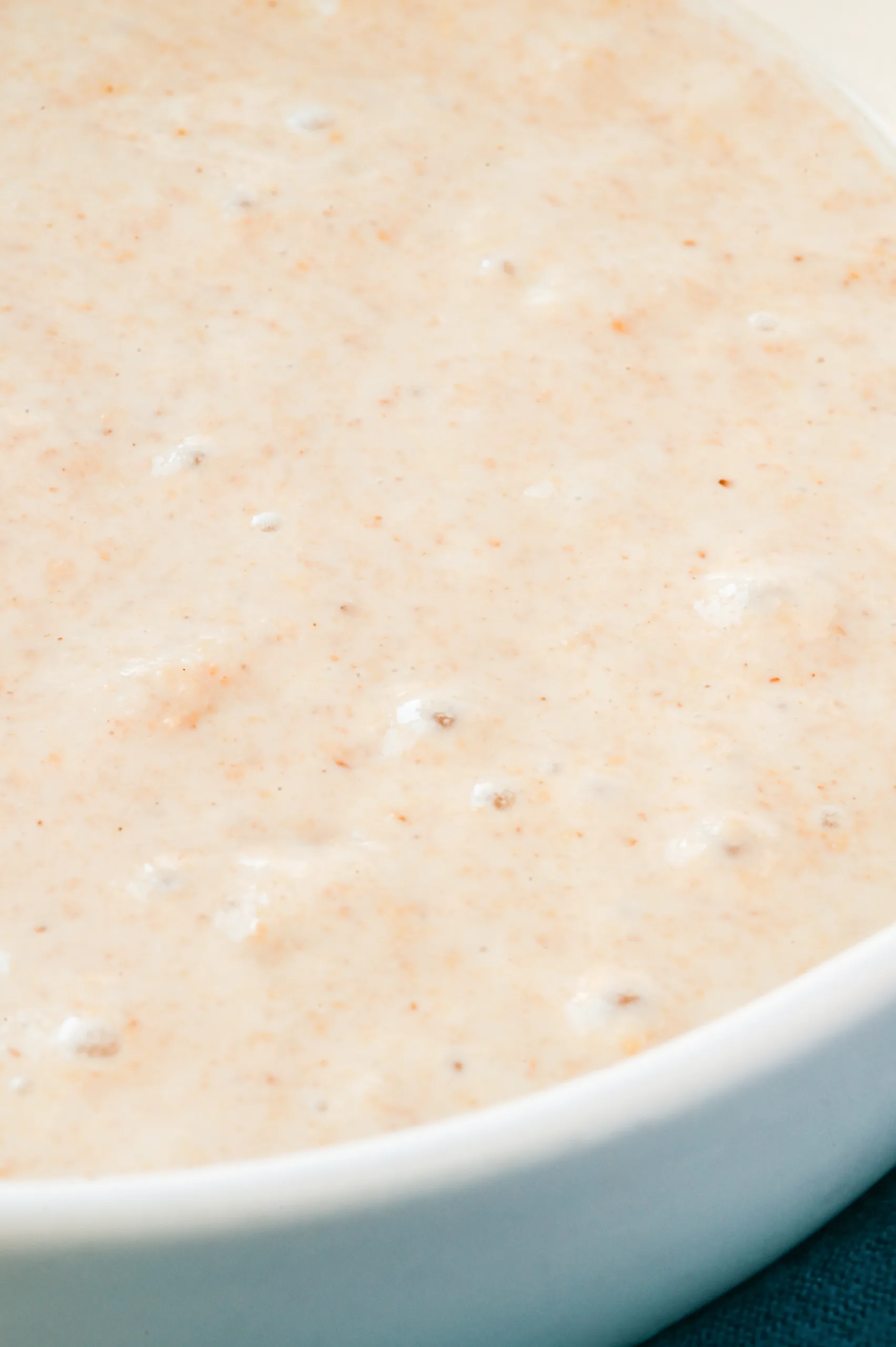
A healthy starter should double in size 4–6 hours after feeding and smell slightly tangy. When a spoonful floats in water, it’s ready to bake.
What should I do with my sourdough discard?
Use it in discard recipes like pancakes, crackers, or muffins. It adds flavor and prevents waste — another nod to the frugality of old-fashioned living.
Bringing It All Together
Feeding your sourdough starter with whole wheat flour or freshly milled flour keeps your culture healthy and your bread flavorful. More than that, it’s a small act of care, one that slows your day down and connects you to the traditions that built every homestead kitchen.
When you feed your starter, you’re not just maintaining a recipe, you’re nurturing something alive, just as bakers did long before us. That’s the heart of Idie’s Farm: old-fashioned living made simple again.
Explore more of my sourdough recipes and fresh milled flour guides to keep your starter thriving and your baking simple.

Tried this recipe?
I would love to see it! Tag me on Instagram @idiesfarm and #idiesfarm so I can share your beautiful creation!

How to Feed a Sourdough Starter with Whole Wheat or Freshly Milled Flour
Ingredients
Equipment
Method
- Add the whole wheat flour or freshly milled flour to the jar with your sourdough starter.
- Pour the water over the flour.
- Stir until everything is fully combined. Cover loosely and leave it at room temperature for 4 to 6 hours, or until bubbly and doubled.
- Optional: You can occasionally feed with rye flour, which is high in natural yeast and gives your starter a flavor boost.
Notes
Switching Flour Types
- If your starter was originally built with all-purpose flour, you can switch to whole wheat or freshly milled flour at any time.
- Transition gradually by feeding half all-purpose and half whole wheat for a few feedings.
- After two or three feedings, your starter should be fully adapted to whole grain flour.
- Many bakers rotate between bread flour and whole wheat depending on what they’re baking.
Storing and Maintaining a Healthy Starter
- Keep your starter in a clean glass jar or crock.
- Store it at room temperature if baking daily, or refrigerate between bakes.
- Always feed it before refrigerating to keep it strong.
- If you notice hooch forming, stir it in or pour it off, then feed as usual.

Welcome!
Hi! I’m Stephanie, also known as Idie. Follow me as I tap into the methods of the past and learn how to make my world a little smaller.