Learning how to clean a cast iron pan without ruining the seasoning is one of those simple kitchen skills that makes cast iron much less intimidating. Once you understand the basic routine, it becomes easy to keep your pan clean, dry, lightly oiled, and ready for the next meal.
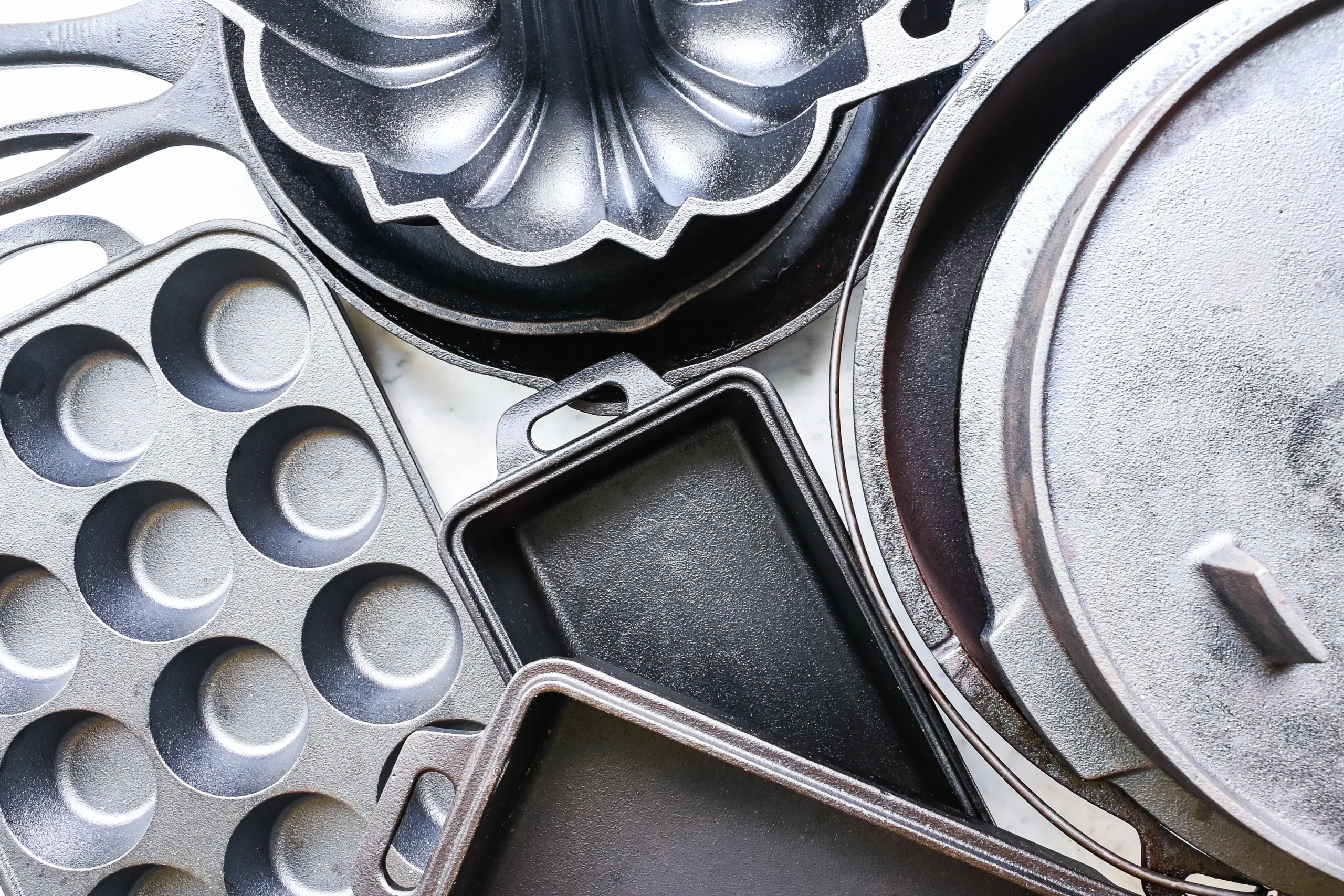
Table of Contents
This post contains affiliate links, which means I make a small commission at no extra cost to you. See my full disclosure here.
The best way to clean a cast iron pan is to wipe out any food while the pan is still warm, rinse it with warm water if needed, scrub away stuck-on bits, dry it completely, and rub on a very thin layer of oil before storing it. The most important part is keeping the pan dry so rust does not have a chance to form. A well-seasoned cast iron pan can handle regular cleaning without losing its seasoning.
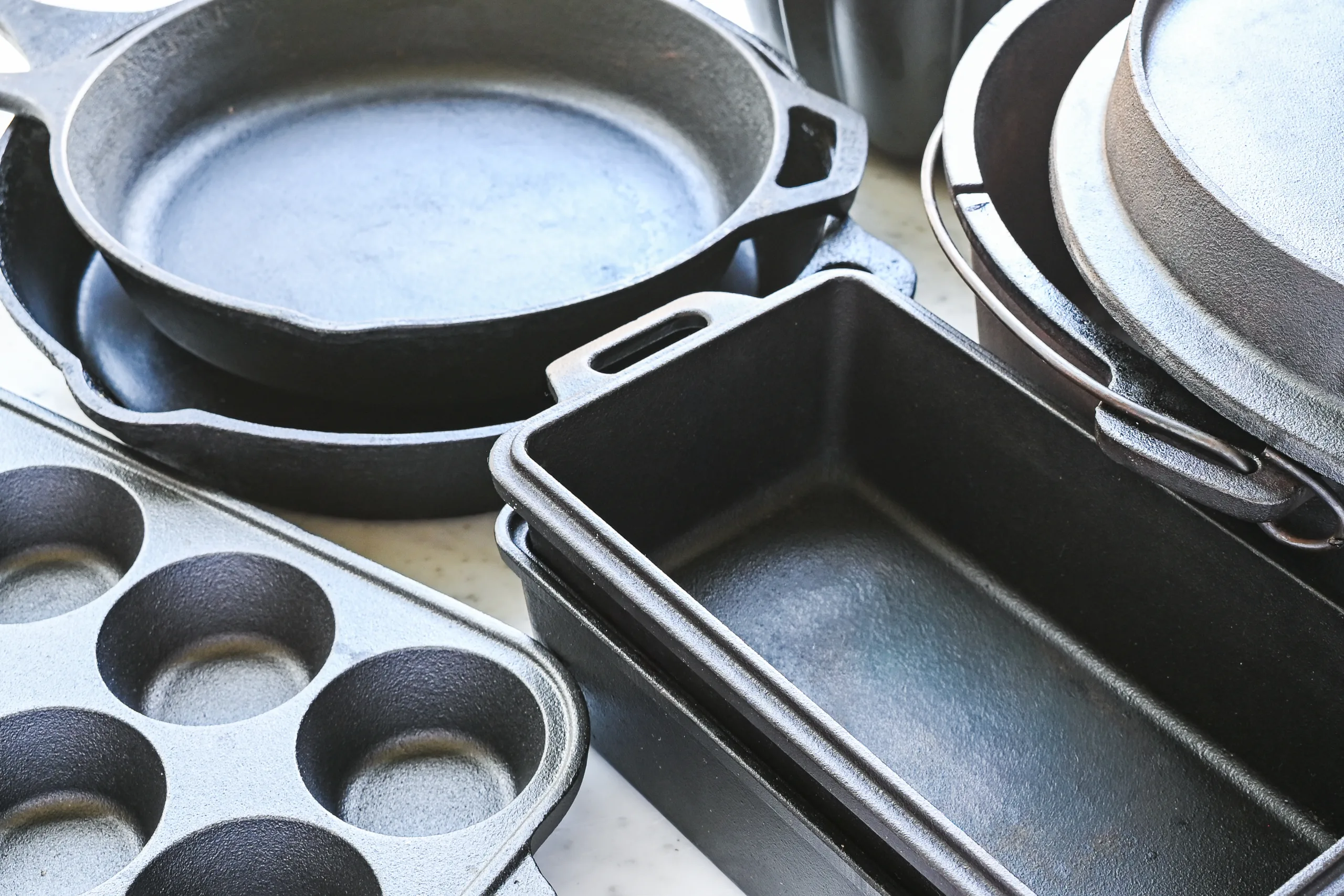
Over the past few years, I have slowly started replacing more of my bakeware with cast iron. If you look back through my older posts and then compare them with my more recent ones, you will probably notice that shift. I love how sturdy cast iron is, and once it is seasoned properly, it works beautifully for bread, stovetop meals, and even baked goods. I have used it for recipes like my Sourdough Dutch Baby (German Pancake Made with Sourdough Starter) and How To Oven Cook Seared Salmon In A Cast Iron Skillet, and I have also come to love cast iron for baking loaves like Fresh Milled Whole Grain Spelt Bread.
I also like that cast iron is uncoated. Nonstick coatings and some grease-resistant food-contact papers may involve PFAS, depending on the product. The FDA notes that PFAS have been authorized in some food-contact uses, including nonstick coating applications and grease-proof agents for paper food packaging. That does not mean every piece of parchment paper or every coated pan is the same, but it is one reason I have been moving toward simple, durable bakeware when and where I can.
Quick Look at This Guide
Prep time: 2 minutes
Cleaning time: 5 to 10 minutes
Total time: 7 to 12 minutes
Best for: Cast iron pans, cast iron skillets, and everyday cast iron care
Main goal: Clean the pan without stripping the seasoning
Most important step: Dry the pan completely before storing
Why Cast Iron Cleaning Feels Confusing
Cast iron has a reputation for being hard to care for, but most of that comes from mixed advice. Some people say never use soap, some say always scrub with salt, and others worry that one wrong move will ruin the whole pan.
In reality, cast iron is much more forgiving than that. The goal is simple: clean off the food, protect the seasoning, prevent rust, and store the pan dry. Once you get that routine down, cleaning cast iron becomes just another part of cooking.
What Is Cast Iron Seasoning?
Cast iron seasoning is the thin, protective layer that builds up on the pan when oil is heated onto the surface. That layer helps protect the iron from moisture and helps food release more easily over time.
Seasoning is not the same as leaving food or grease stuck to the pan. A clean cast iron pan should not feel sticky or dirty. It should be clean, dry, and lightly protected with oil.
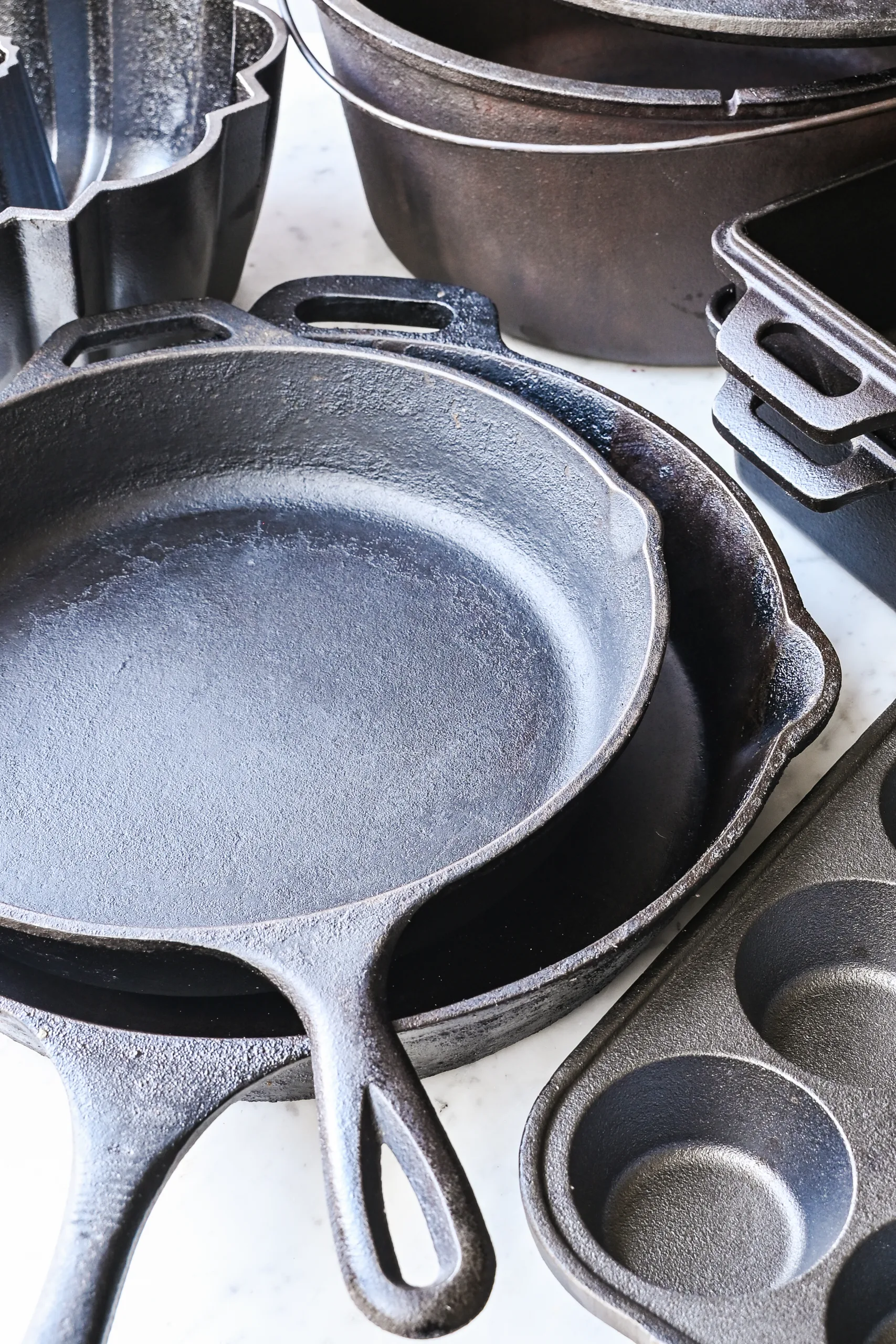
Equipment
- paper towel or clean kitchen towel
- warm water
- scraper or stiff brush
- coarse salt, optional for stuck-on food
- mild dish soap, optional
- stove burner or warm oven for drying
- neutral oil for a light finishing coat
How to Clean a Cast Iron Pan After Cooking
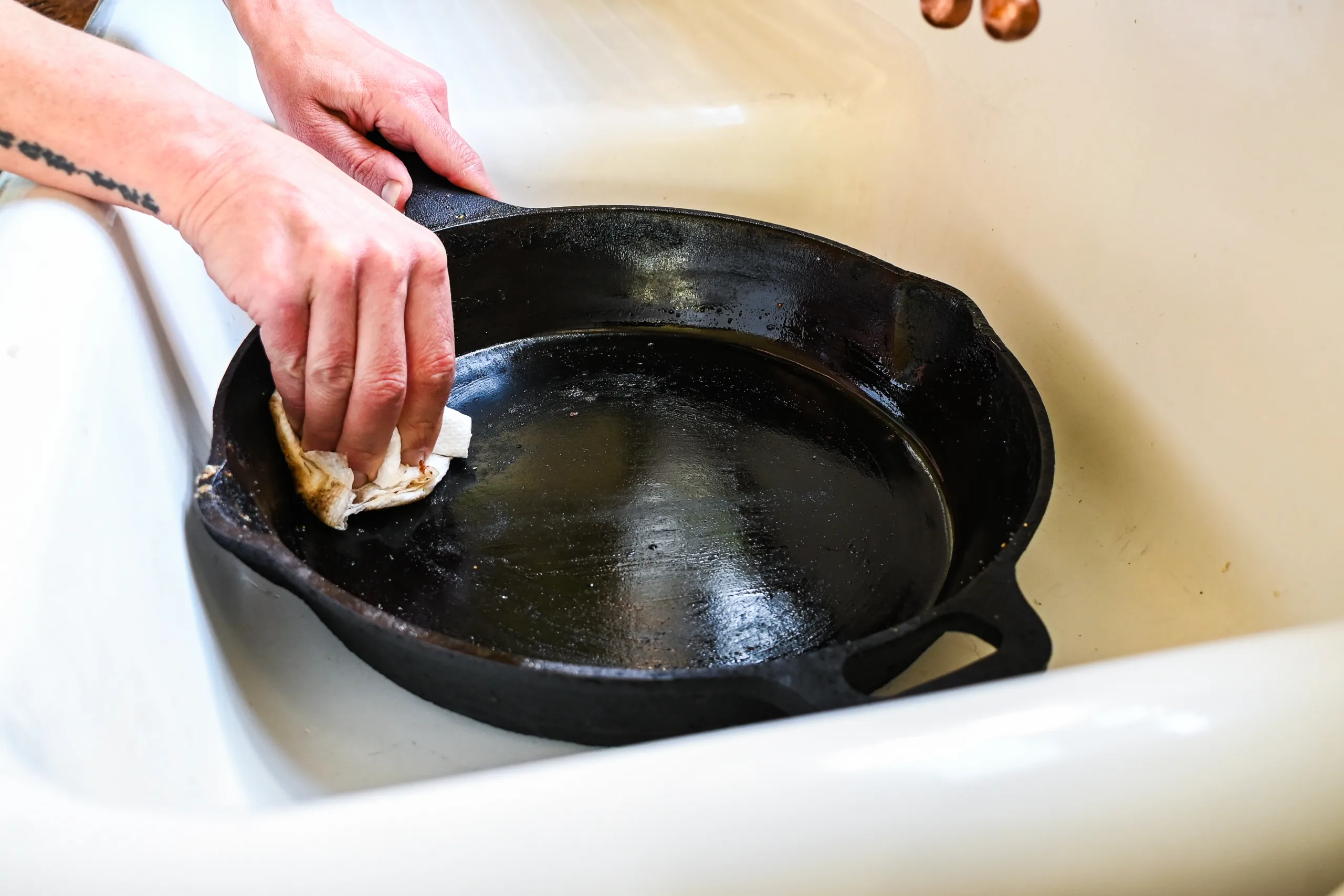
Step 1: Wipe out the pan while it is still warm
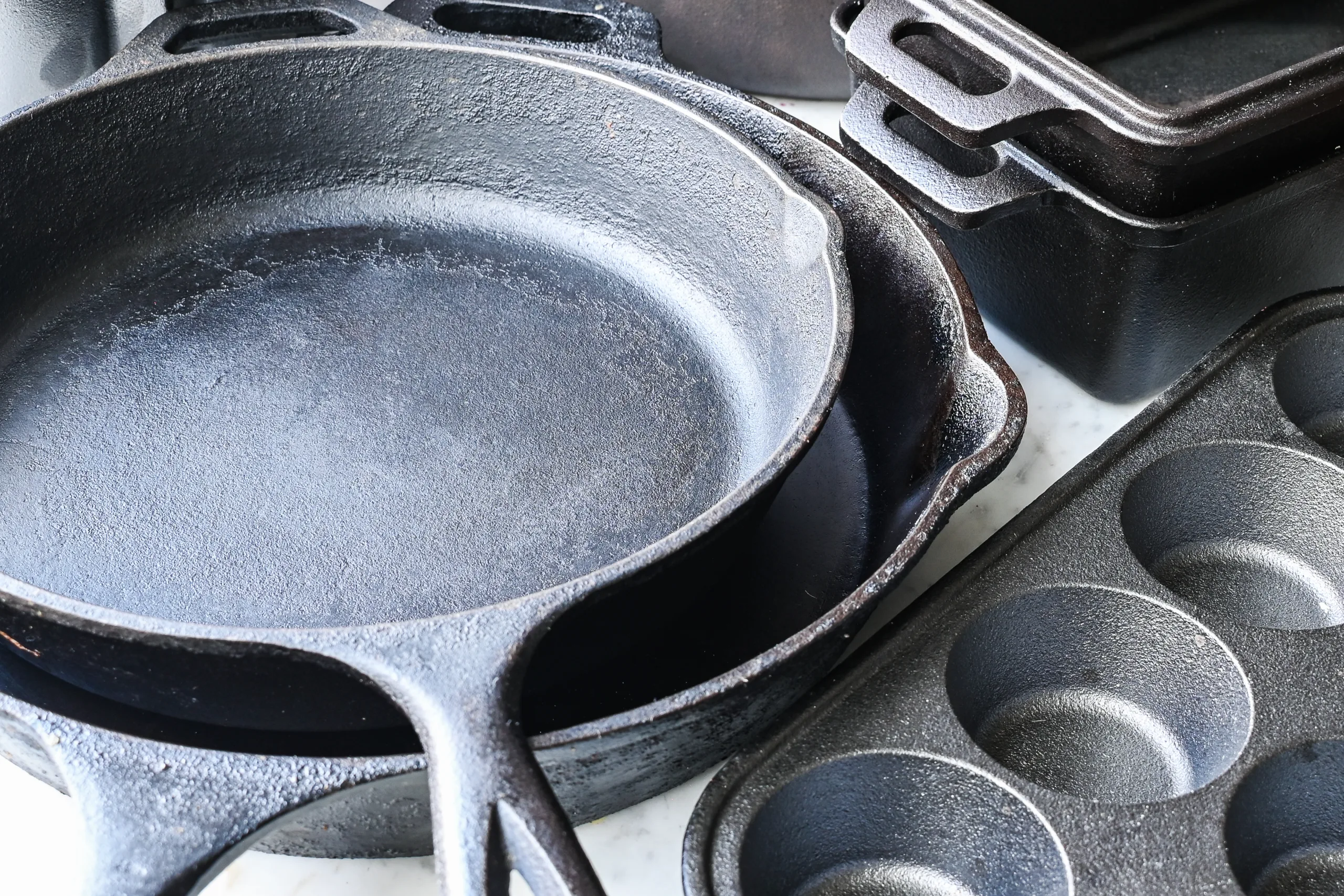
After cooking, let the pan cool slightly so it is safe to handle, but do not let food sit in it for hours. Use a paper towel or clean cloth to wipe out loose crumbs, grease, or food bits. If the pan only has a little oil or residue left behind (as pictured above), then this may be all it needs before drying and oiling. If bits of food are stuck, proceed to the next step.
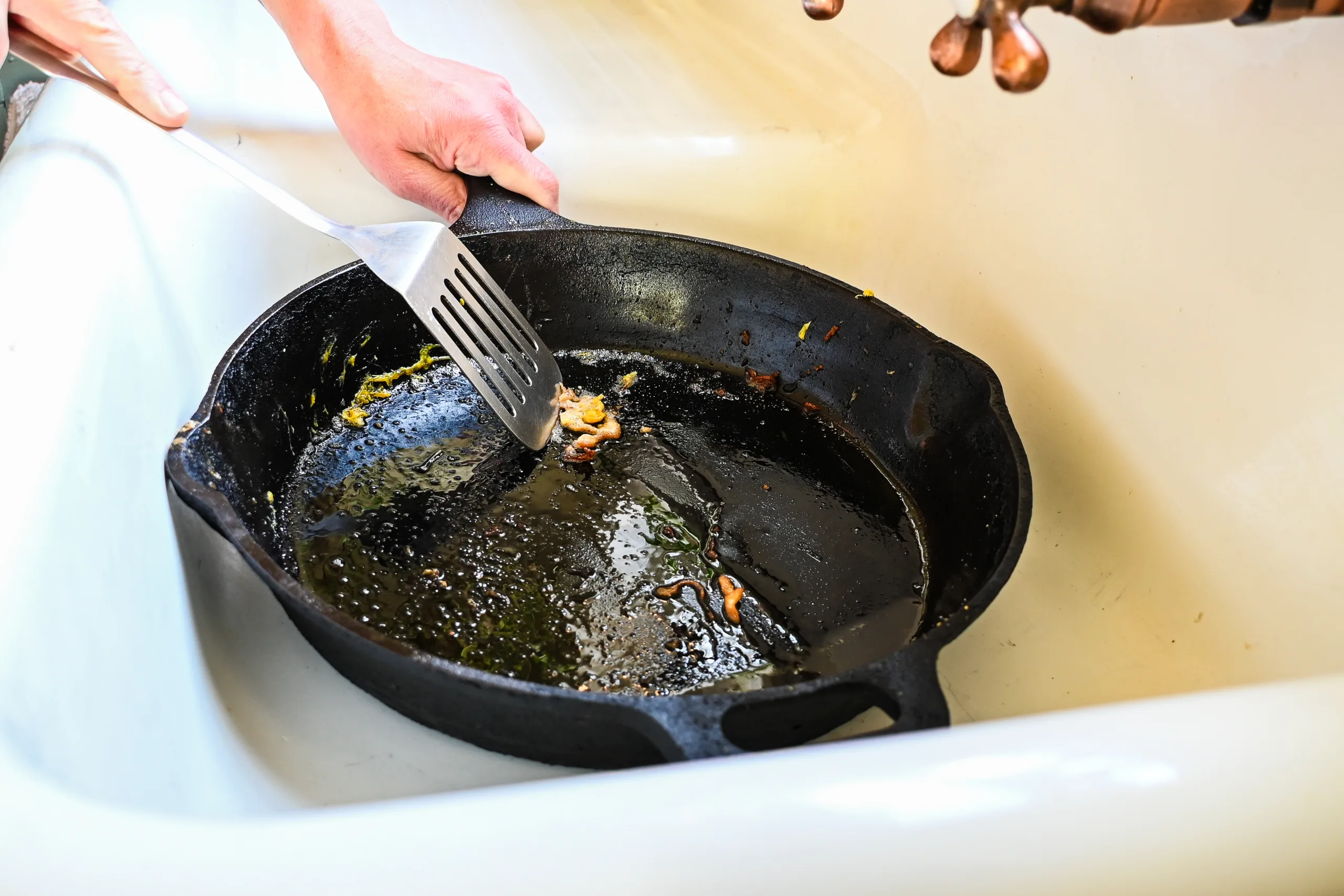
Step 2: Rinse with warm water if needed
If food is stuck to the pan, rinse it with warm water. Warm water helps loosen cooked-on bits without shocking the pan. Use a scraper, stiff brush, or non-scratch scrubber to lift away the food. A metal spatula can be used so long as you refrain from aggressive gouging. Avoid soaking the pan in water, since standing moisture is what can lead to rust.
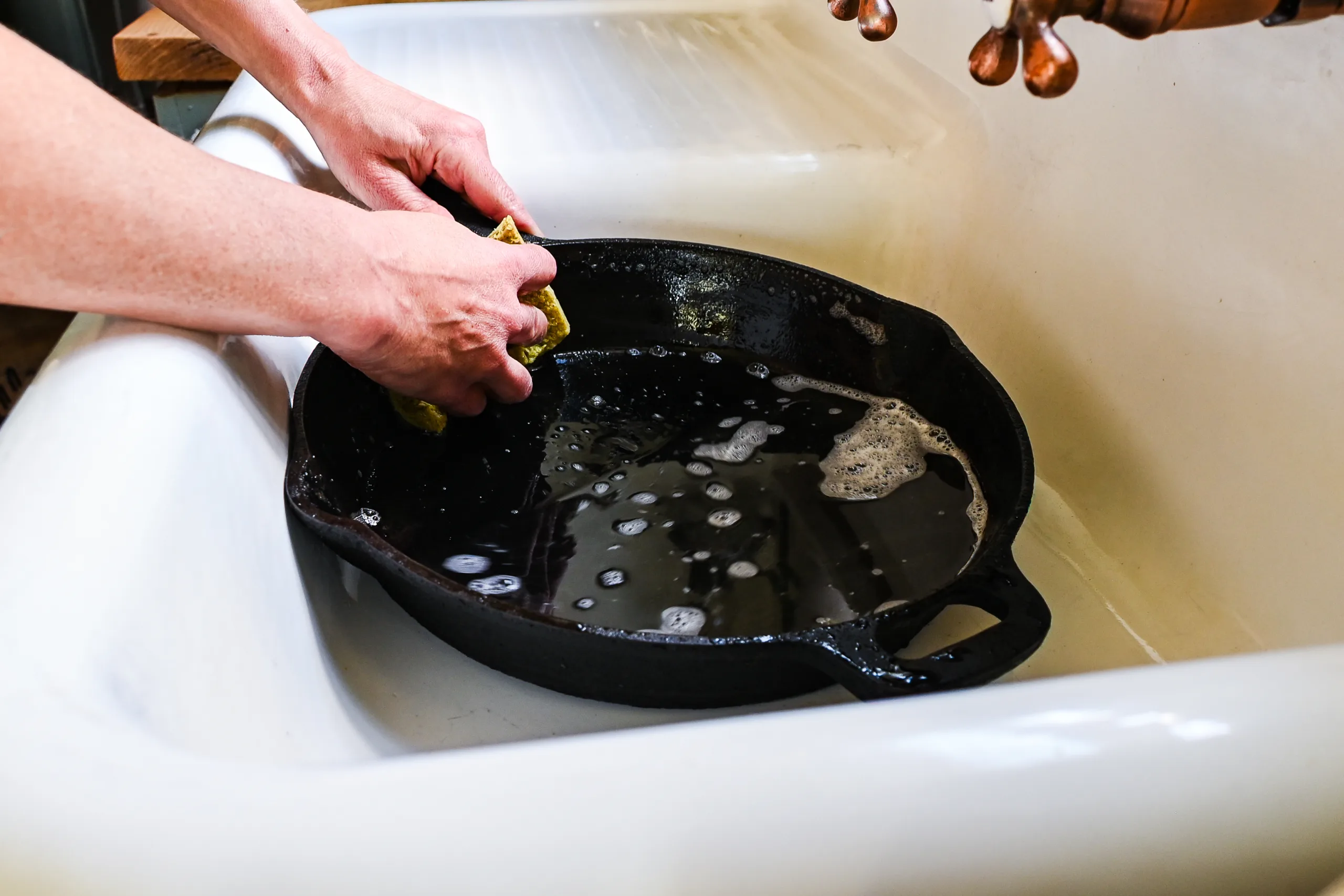
Step 3: Use a little soap only when necessary
You can use a small amount of mild dish soap if the pan needs it. A properly seasoned cast iron pan should not be ruined by a quick wash with a little soap. The key is not to soak it, scrub aggressively with harsh cleaners, or leave it wet afterward. Clean it, rinse it, and move right into drying. For stubborn spots, sprinkle a little coarse salt into the pan and scrub with a damp paper towel or cloth. The salt gives you gentle abrasion without being too harsh on the seasoning. Once the stuck-on food is gone, rinse the pan briefly with warm water.
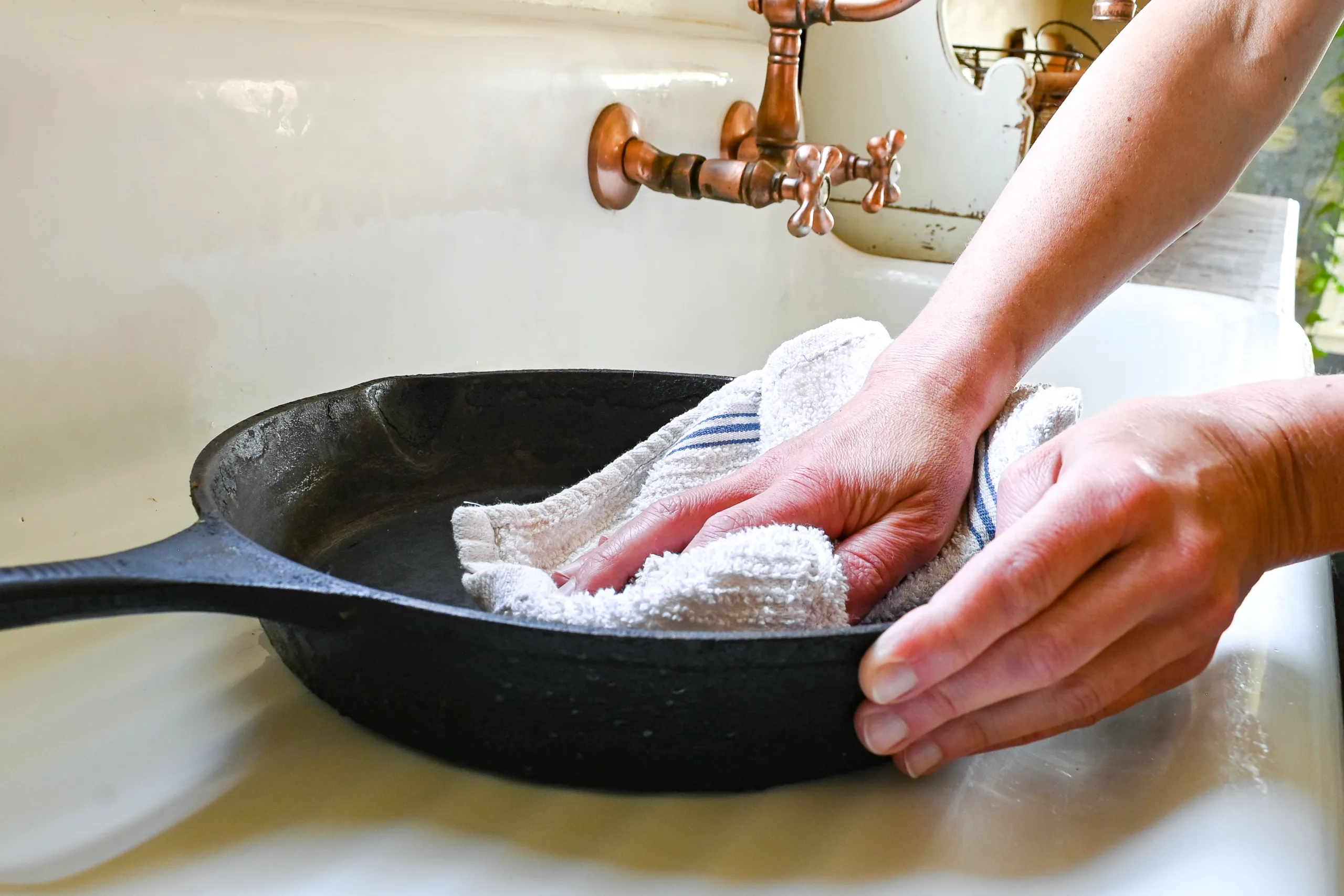
Step 4: Dry the pan completely
This is the most important step. Dry the pan right away with a towel, then place it over low heat on the stove for a minute or two to make sure every bit of moisture is gone. Cast iron can rust if it is stored damp, so do not skip this part.
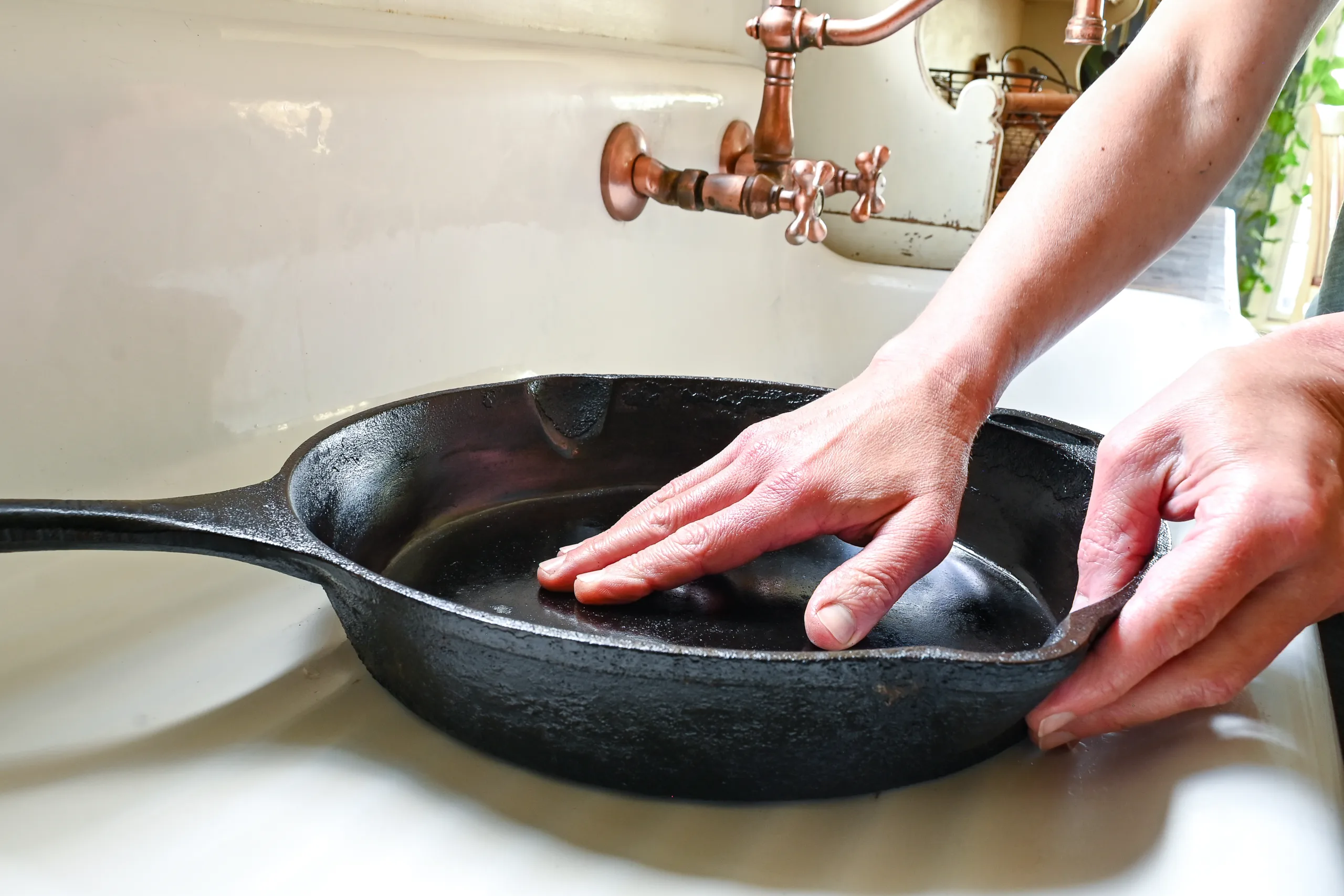
Step 6: Add a very thin layer of oil
Once the pan is dry, rub a tiny amount of neutral oil over the surface. Then wipe away the excess with a clean paper towel. The pan should look lightly conditioned, not greasy. Too much oil can leave the surface sticky.
How to Clean Rust from a Cast Iron Pan
If you find a little rust on your cast iron pan, it does not mean the pan is ruined. Light surface rust can often be removed with baking soda and a damp sponge or cloth.
Sprinkle a small amount of baking soda over the rusty area, then scrub gently until the rust lifts. Rinse the pan, dry it completely right away, and warm it briefly on the stove to remove any remaining moisture.
If the rust was very minor, you can rub on a very thin layer of oil and keep using the pan. But if the rust removal leaves behind dull gray spots or bare iron, the pan should be reseasoned.
For heavier rust, scrub the pan with steel wool or a scouring pad until the rust is removed. Rinse well, dry it completely, then apply a very thin coat of oil over the entire pan, inside and out. Wipe away the excess so the pan does not feel greasy. Place the pan upside down in a 450°F oven with a baking sheet or foil on the rack below to catch any drips, and bake it for 1 hour. Turn off the oven and let the pan cool inside. This helps rebuild the protective layer and keeps the pan from rusting again.
Rust usually happens when cast iron is left wet, soaked too long, or stored in a damp place, so the best prevention is to dry the pan fully after every cleaning.
Why I Use Cast Iron for Baking Too
I used to think of cast iron mostly as something for the stovetop, but I have started using it more and more for baking. A well-seasoned cast iron pan or baking dish can work beautifully for bread and other baked goods because it holds heat so well.
When I bake in cast iron, I still like to butter and flour the pan first. Even when the pan is seasoned well, that extra step gives me a little more insurance that the bread or baked goods will release cleanly. One of my favorite parts is that I often do not need parchment paper. Even brown parchment paper may be coated or treated differently depending on the product, so I prefer to avoid relying on it whenever I can.
For bread, a properly seasoned and prepared cast iron surface can release beautifully when it is used the right way. That is one reason cast iron has become a bigger part of my kitchen, especially for recipes where I want dependable heat and fewer disposable baking materials.
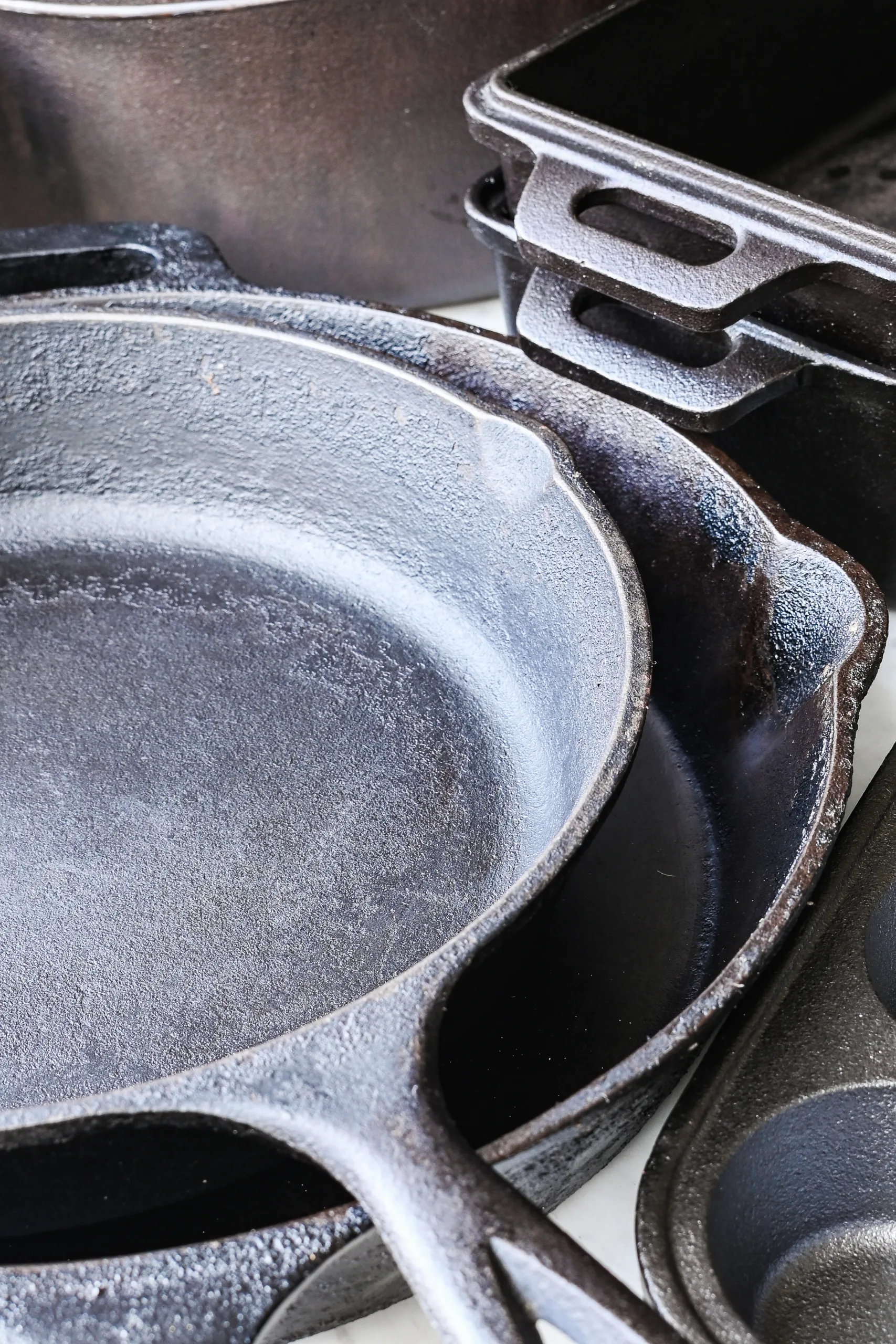
Tips for Keeping Cast Iron Seasoned
- Clean the pan soon after cooking instead of letting food sit.
- Do not soak cast iron in the sink.
- Dry the pan completely every time.
- Use only a very thin layer of oil after cleaning.
- Store cast iron in a dry place.
- Cook with it often, since regular use helps build the seasoning.
- Avoid leaving acidic foods in the pan for long periods.
What Not to Do When Cleaning Cast Iron
Do not soak the pan overnight. Do not put it in the dishwasher. Do not store it while it is damp. These are the habits that usually cause rust or damage the seasoning.
I would also avoid using too much oil after cleaning. It is easy to think more oil means more protection, but too much can leave the pan sticky. A tiny amount, wiped thin, is all you need.
Frequently Asked Questions About How to Clean a Cast Iron Pan Without Ruining the Seasoning
What is the best way to clean a cast iron pan?
The best way to clean a cast iron pan is to wipe out food while it is still warm, rinse with warm water if needed, scrub away stuck-on bits, dry the pan completely, and finish with a very thin layer of oil.
Can I use soap on a cast iron pan?
Yes, you can use a little mild soap on cast iron when you need to. This is one of the biggest cast iron cleaning myths. That said, I do not use soap every single time. I honestly use it very rarely. Most of the time, warm water, a scraper, and a good wipe are enough. If the pan has a strong smell for instance if I used it to cook fish, or if it has a cooked-on residue, or something especially greasy, a small amount of soap is fine as long as the pan is rinsed, dried, and lightly oiled afterward.
How do I keep cast iron from rusting?
Keep it dry. Rust forms when cast iron is exposed to moisture for too long. After cleaning, dry the pan with a towel and warm it briefly on the stove before adding a thin layer of oil.
Why is my cast iron sticky after oiling?
A sticky cast iron pan usually means too much oil was left on the surface. Use only a tiny amount and wipe away the excess with a paper towel.
Can I clean cast iron with just a paper towel?
Sometimes, yes. If the pan only has a little oil or light residue, wiping it clean with a paper towel may be enough. If there is stuck-on food, use warm water and a scraper or brush.
How do I clean stuck-on food from cast iron?
Use warm water and a scraper first. If the food is stubborn, sprinkle coarse salt into the pan and scrub gently with a damp cloth or paper towel.
Can I bake bread in cast iron without parchment paper?
Yes, a properly seasoned cast iron pan or Dutch oven can work well for bread without parchment paper. The key is using a well-seasoned surface and the right baking method for the recipe.
Is cast iron good for baked goods?
Yes, cast iron can be wonderful for baked goods because it holds heat evenly. Once seasoned well, it can work for bread, skillet recipes, and other baked foods.

Tried this recipe?
I would love to see it! Tag me on Instagram @idiesfarm and #idiesfarm so I can share your beautiful creation!
How to Clean a Cast Iron Pan Without Ruining the Seasoning
Equipment
- paper towel or clean kitchen towel
- warm water
- scraper or stiff brush
- coarse salt, optional for stuck-on food
- mild dish soap, optional
- stove burner or warm oven for drying
- neutral oil for a light finishing coat
Instructions
Wipe out the pan while it is still warm
- After cooking, let the pan cool slightly so it is safe to handle, but do not let food sit in it for hours. Use a paper towel or clean cloth to wipe out loose crumbs, grease, or food bits. If the pan only has a little oil or residue left behind (as pictured above), then this may be all it needs before drying and oiling. If bits of food are stuck, proceed to the next step.
Rinse with warm water if needed
- If food is stuck to the pan, rinse it with warm water. Warm water helps loosen cooked-on bits without shocking the pan. Use a scraper, stiff brush, or non-scratch scrubber to lift away the food. A metal spatula can be used so long as you refrain from aggressive gouging. Avoid soaking the pan in water, since standing moisture is what can lead to rust.
Use a little soap only when necessary
- You can use a small amount of mild dish soap if the pan needs it. A properly seasoned cast iron pan should not be ruined by a quick wash with a little soap. The key is not to soak it, scrub aggressively with harsh cleaners, or leave it wet afterward. Clean it, rinse it, and move right into drying. For stubborn spots, sprinkle a little coarse salt into the pan and scrub with a damp paper towel or cloth. The salt gives you gentle abrasion without being too harsh on the seasoning. Once the stuck-on food is gone, rinse the pan briefly with warm water.
Dry the pan completely
- This is the most important step. Dry the pan right away with a towel, then place it over low heat on the stove for a minute or two to make sure every bit of moisture is gone. Cast iron can rust if it is stored damp, so do not skip this part.
Add a very thin layer of oil
- Once the pan is dry, rub a tiny amount of neutral oil over the surface. Then wipe away the excess with a clean paper towel. The pan should look lightly conditioned, not greasy. Too much oil can leave the surface sticky.
Notes
- Do not soak cast iron in the sink.
- Clean the pan soon after cooking instead of letting food sit.
- Dry the pan completely every time.
- Use only a very thin layer of oil after cleaning.
- Store cast iron in a dry place.
- Cook with it often, since regular use helps build the seasoning.
- Avoid leaving acidic foods in the pan for long periods.

Welcome!
Hi! I’m Stephanie, also known as Idie. Follow me as I tap into the methods of the past and learn how to make my world a little smaller.