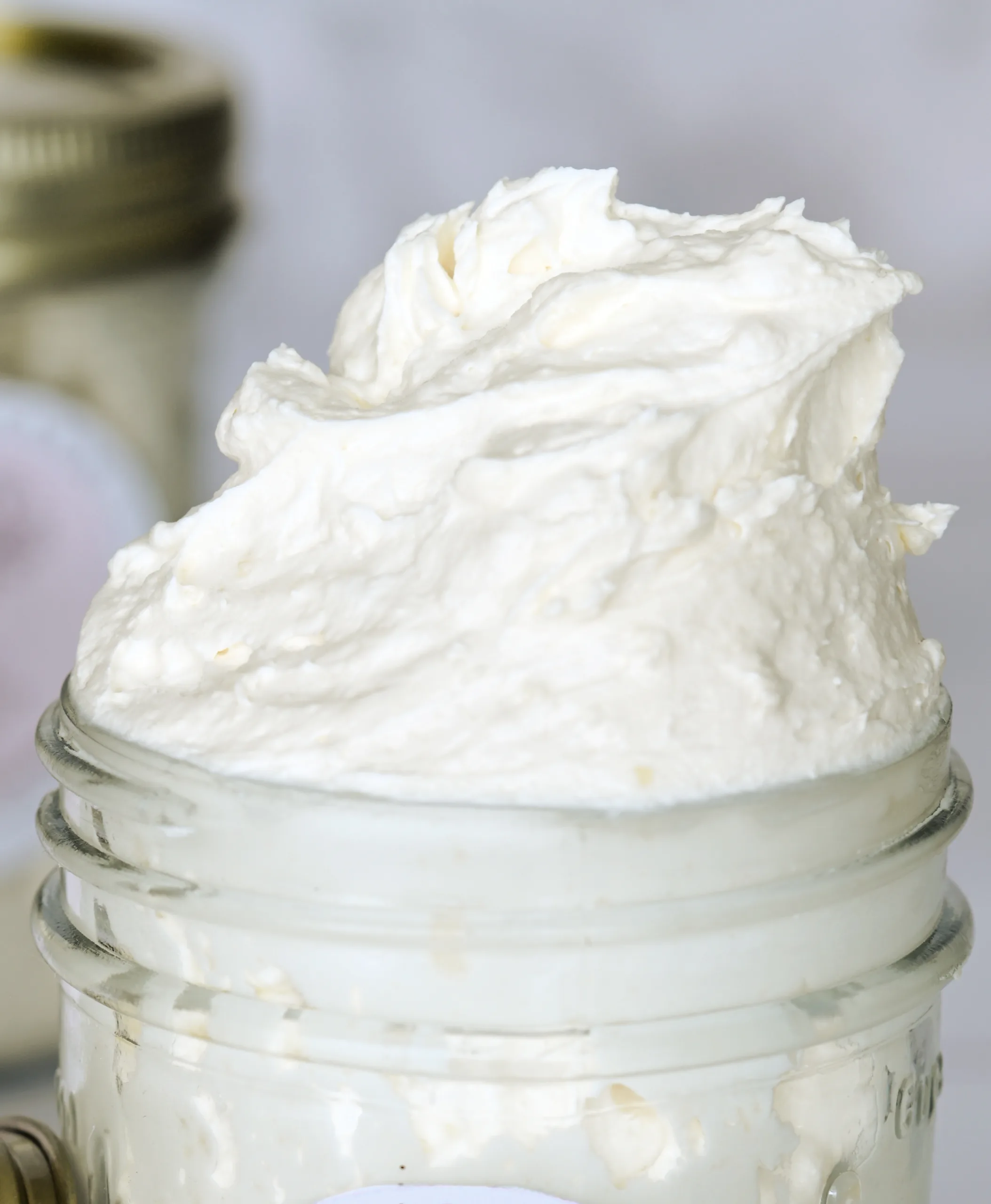
Making homemade whipped tallow balm is one of the simplest ways to create a rich, old-style skin balm with just a few basic ingredients. I use rendered beef tallow, a little olive oil or avocado oil, and optional essential oils to make a soft, fluffy balm that spreads easily and feels deeply moisturizing on dry skin.

Table of Contents
This post contains affiliate links, which means I make a small commission at no extra cost to you. See my full disclosure here.
Homemade whipped tallow balm is made by gently melting rendered beef tallow with a liquid oil, letting it cool until soft, and whipping it until light and creamy. Because this balm is made without water, it has a rich, concentrated texture that works well for dry hands, feet, elbows, knees, and other rough areas. Tallow acts as an emollient-style ingredient, which means it helps soften the skin and support the skin’s moisture barrier. Dermatology sources often recommend thicker creams or ointments for dry skin because they help add and hold moisture better than lighter lotions.
I like this recipe because it is simple, practical, and easy to customize. If you enjoy making tallow-based skincare at home, you may also like my Tallow and Honey Balm (Old-Fashioned Honey Tallow Balm Recipe) for a richer balm with honey, or my DIY Foot Scrub With Tallow (Natural Sugar Scrub for Soft Skin) for rough heels and dry feet. Tallow is also useful in other homemade products, like my Homemade Natural Pomade Recipe (Tallow & Beeswax for Men’s Hair), Natural Deodorant Recipe (Tallow-Based, With Baking Soda), and Tallow Soap Bar Recipe (Nourishing, Creamy & Moisturizing!).
Quick Look at This Recipe
Prep time: 10 minutes
Cook time: 5 to 10 minutes
Total time: About 45 minutes, including cooling and whipping
Servings: About 1 small jar
Texture: Light, fluffy, rich, and creamy
Best served: As a simple balm for dry hands, feet, elbows, knees, and rough skin
What Is Tallow Balm?
Tallow balm is a simple skin balm made with rendered animal fat, usually beef tallow, and a small amount of liquid oil to soften the texture. Tallow comes from slowly rendering fat until the impurities are removed and the fat becomes clean, smooth, and solid at room temperature.
For skincare, I like to use clean, well-rendered grass-fed beef tallow. Once it is melted with olive oil or avocado oil and whipped, it turns into a smooth balm that is much easier to apply than plain solid tallow.
If you need to make your own tallow first, you can start with my guide on how to render fat to make homemade beef tallow.
Why I Like Whipped Tallow Balm
I like whipped tallow balm because it is simple and versatile. It does not require a long list of ingredients, and it is a good alternative for anyone trying to avoid heavily fragranced store-bought lotions or products with ingredients they do not want in their daily routine.
This balm is especially nice during colder months when my skin tends to feel dry from cold air, indoor heat, and frequent handwashing. Emollients can help soften dry, rough, or flaky skin by forming a protective layer on the surface, and thicker moisturizers are often recommended for dry skin because they help the skin feel more comfortable.
Is Tallow Balm Good for Skin?
Tallow balm can be a helpful option for dry skin because it is rich and oil-based. It helps soften rough areas and creates a protective layer that can help reduce moisture loss. I use it most often on hands, feet, elbows, knees, and other spots that need something heavier than a regular lotion.
I avoid claiming that tallow balm cures skin conditions, heals wounds, treats eczema, or reverses aging, because those are medical-style claims and need a much higher level of evidence. If you have eczema, psoriasis, rosacea, acne-prone skin, broken skin, or a known allergy, it is best to patch test first and check with a healthcare professional if you are unsure.
Equipment
measuring cups and spoons
double boiler or heatproof bowl set over simmering water
mixing bowl
hand mixer or stand mixer with whisk attachment
spatula
glass jar with lid
Ingredients for Homemade Tallow Balm
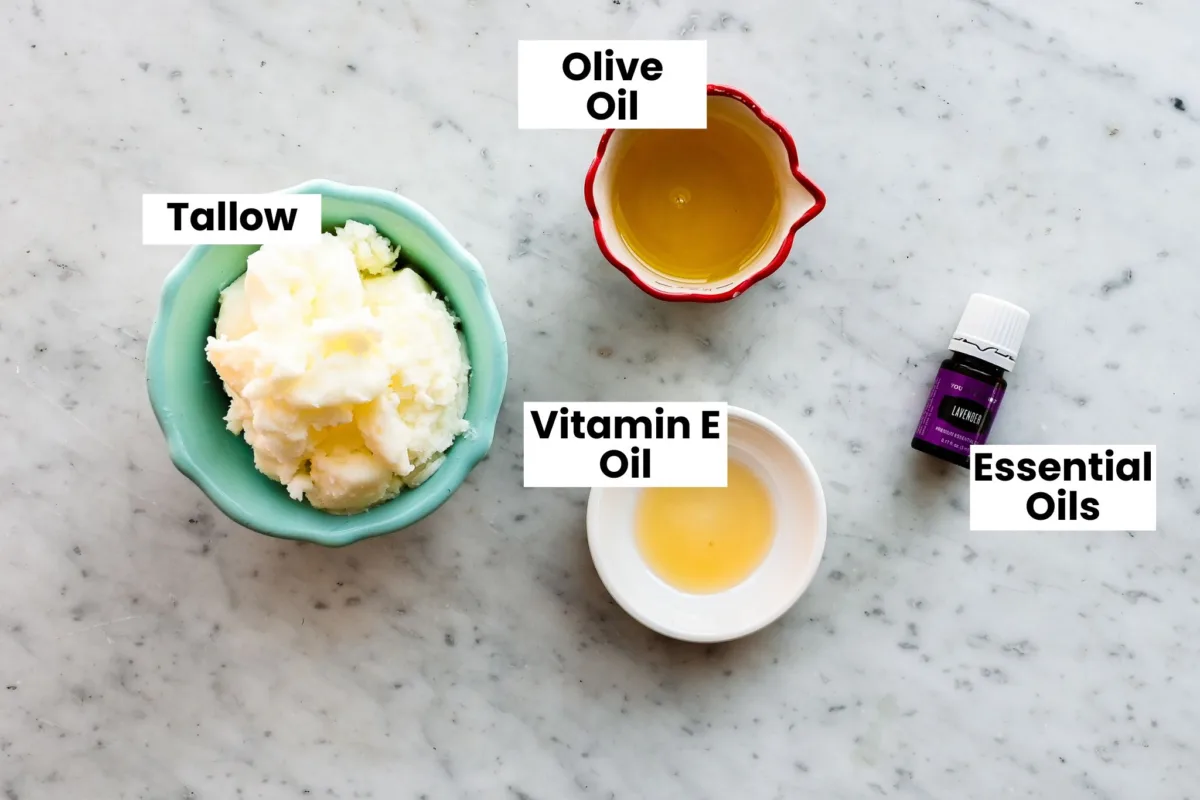
- ½ cup grass-fed beef tallow, about 4 ounces
- 2 tablespoons extra virgin olive oil or avocado oil
- 27 drops of a good quality essential oils, optional
- ½ teaspoon vitamin E oil, optional
Essential oils are optional. This balm is effective without them. If you do use essential oils, choose oils that are safe for topical use, dilute them properly, and avoid using them on babies or very sensitive skin unless you have guidance from a qualified professional. The FDA notes that “natural” plant-based ingredients, including some essential oils, can still irritate the skin or cause allergic reactions.
When I link to essential oils, I’m linking to the brand I personally use and trust. Young Living offers a 10% share discount on orders of 50 PV or more with code SHAREYL, if you’d like to take advantage of it.
How to Make Homemade Whipped Tallow Balm
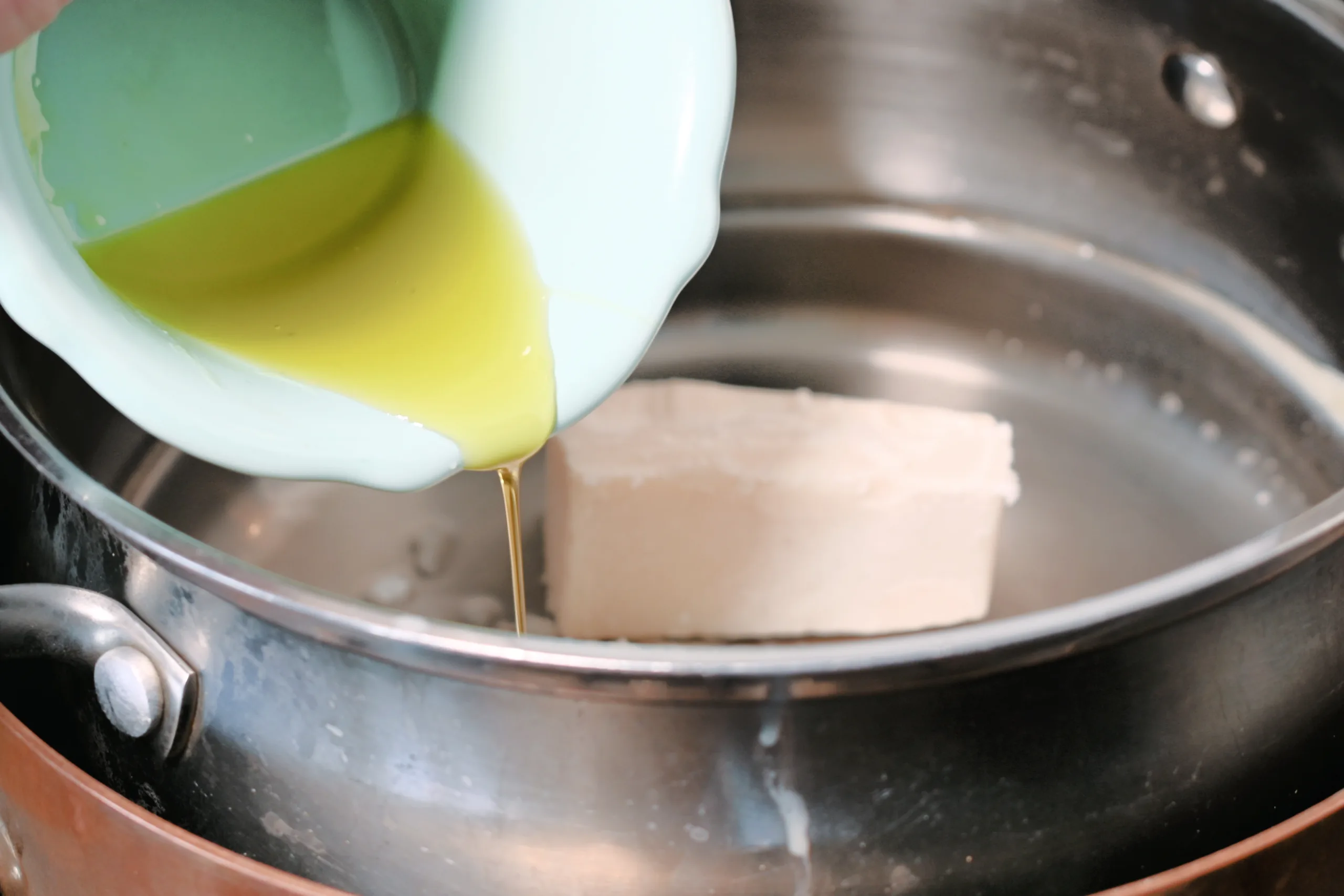
Step 1: Add the beef tallow and olive oil or avocado oil to a double boiler. Warm gently over low heat until everything is fully melted and combined. Stir occasionally and avoid overheating the mixture. You only need enough heat to melt the tallow.
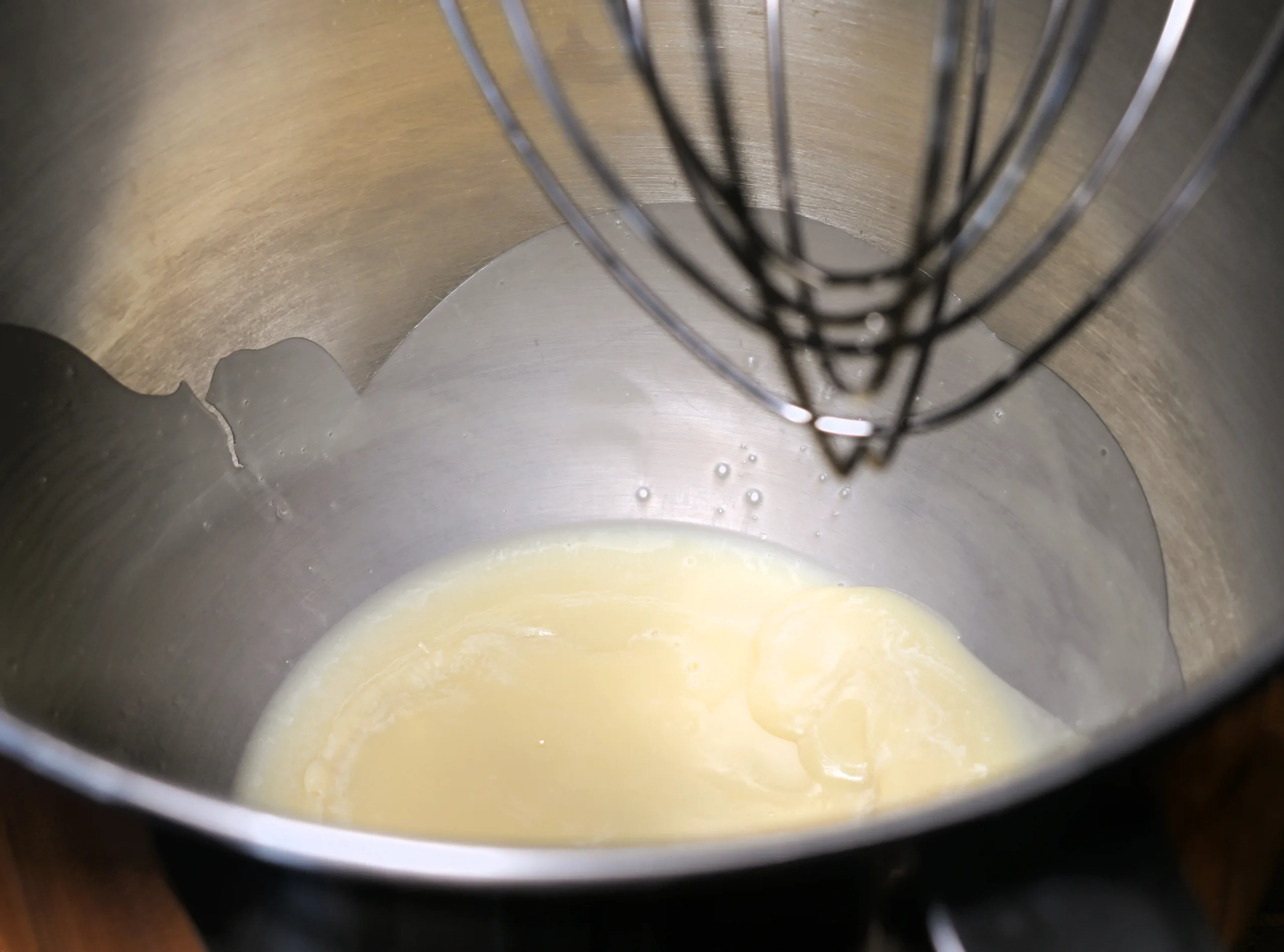
Step 2: Remove the melted mixture from the heat. If you are using vitamin E oil or essential oils, let the mixture cool slightly before adding them. Pour the mixture into a shallow bowl and let it cool until it begins to thicken. It should look soft and semi-solid, not fully hardened.
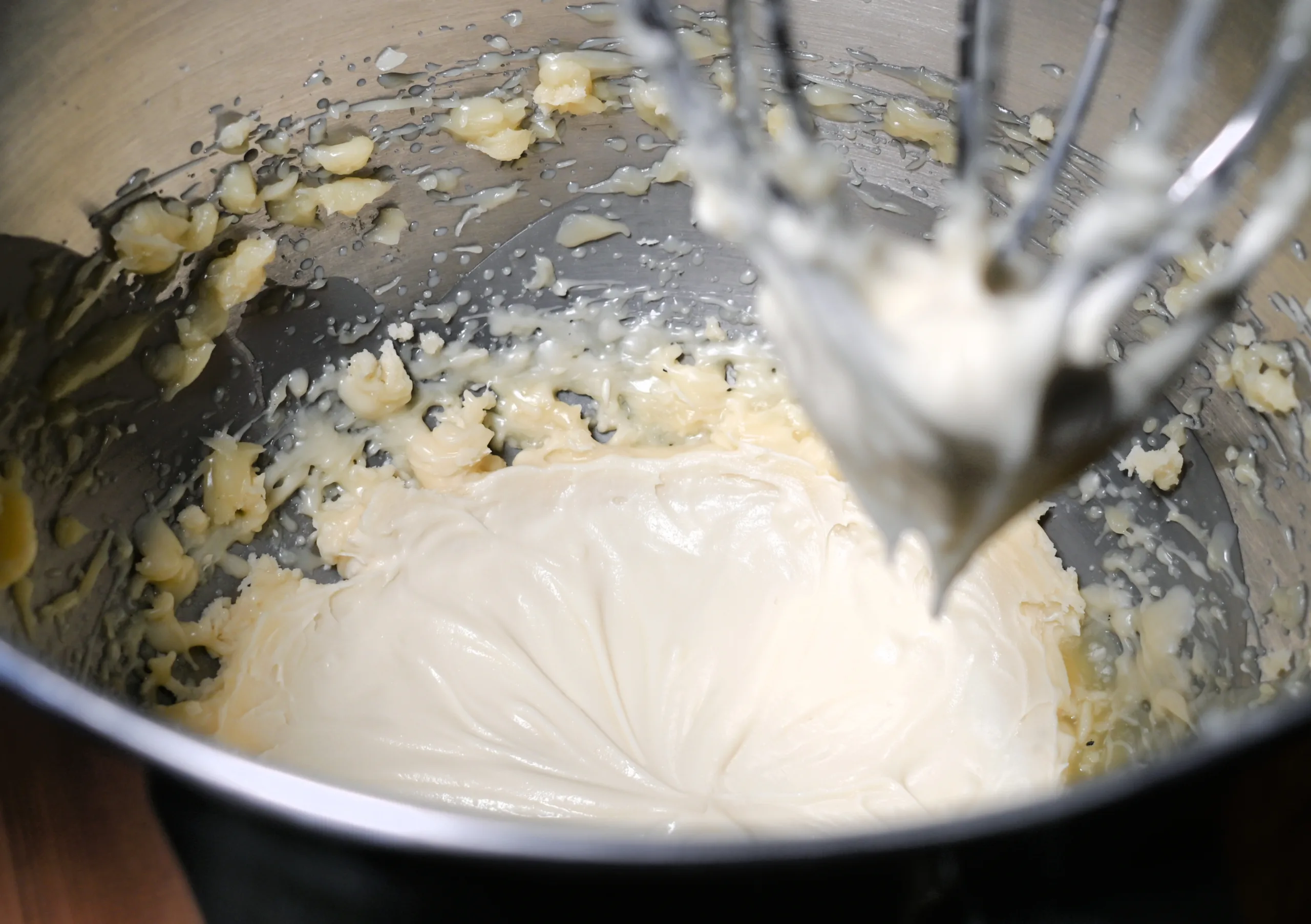
Step 3: Use a hand mixer or stand mixer with a whisk attachment to whip the balm for 3 to 5 minutes.
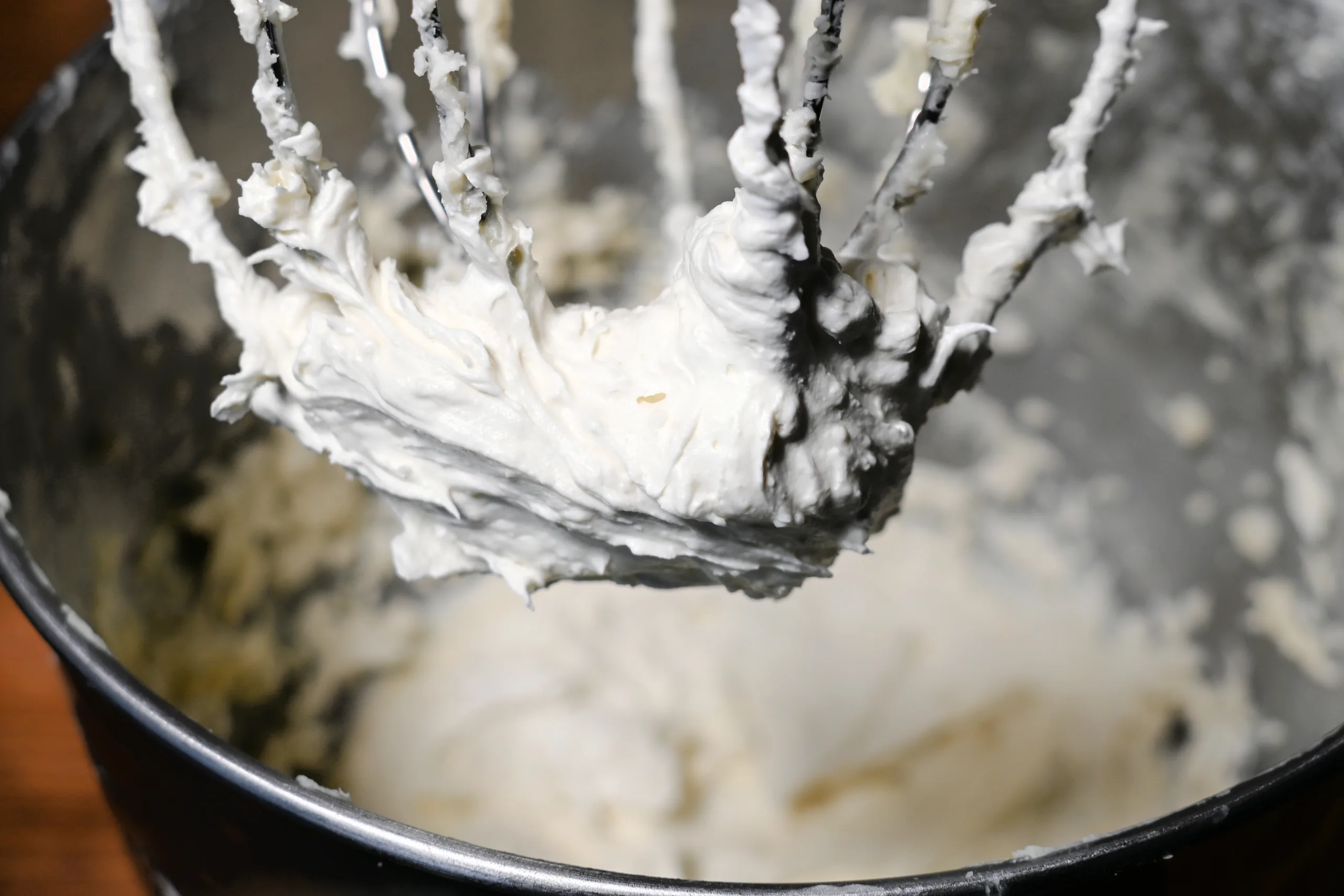
Step 4: Whip until it becomes light, airy, and creamy. The finished texture should look similar to whipped butter.
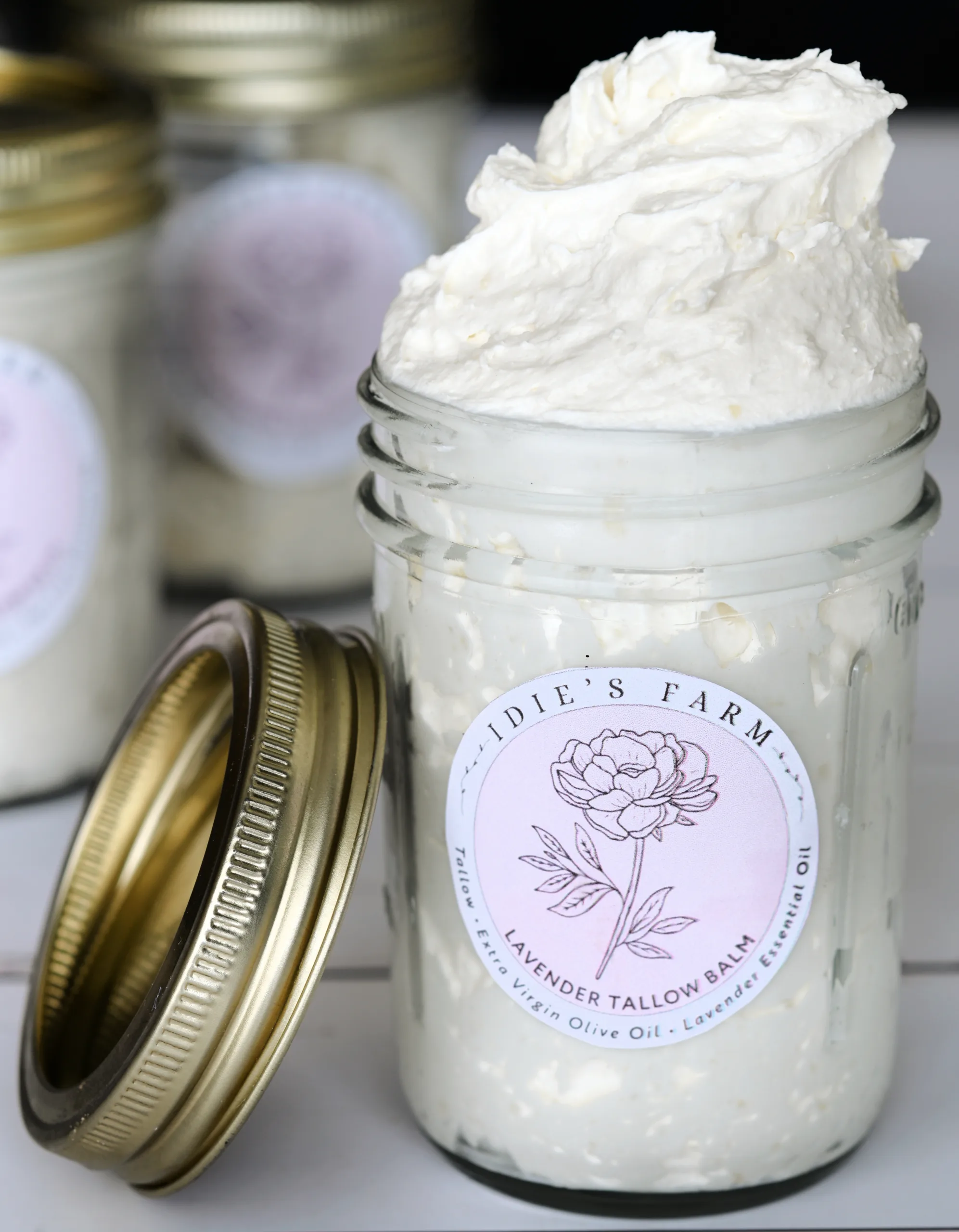
Step 5: Spoon the whipped tallow balm into a clean glass jar. Add the lid and store it in a cool, dry place away from direct sunlight.
How to Use Whipped Tallow Balm
Use a small amount at a time. This balm is rich, so a little goes a long way.
I like to apply it to dry hands, elbows, knees, heels, and other rough areas. It can also be used as a simple body balm after washing, when the skin is clean and slightly damp. Applying a balm or moisturizer soon after washing can help seal in moisture, which is a common recommendation for dry skin care.
For very rough feet, I like using this balm after exfoliating with my DIY Foot Scrub With Tallow (Natural Sugar Scrub for Soft Skin). The scrub helps smooth dry skin, and the balm adds a richer finish afterward.
Tips for the Best Whipped Tallow Balm
- Use clean, well-rendered tallow so the balm has the best texture and mildest scent.
- Do not overheat the tallow. Warm it only until melted.
- Let the mixture cool until soft before whipping.
- If the balm turns grainy, gently remelt it, cool it more slowly, and whip again.
- Use essential oils lightly, or leave them out for sensitive skin.
- Store the balm away from heat and sunlight.
- Keep water out of the jar to help it last longer.
How to Store Homemade Tallow Balm
Store whipped tallow balm in a clean glass jar with a lid. I keep mine at room temperature in a cool, dry place away from direct sunlight.
Because this recipe does not contain water, it generally keeps longer than a homemade lotion that contains water. Still, always use clean hands or a small spoon when scooping it out, and do not introduce water into the jar. If the balm ever smells off, changes texture in an unusual way, or shows signs of contamination, throw it away.
Frequently Asked Questions About Homemade Whipped Tallow Balm
What is whipped tallow balm used for?
Whipped tallow balm is used as a rich moisturizing balm for dry hands, feet, elbows, knees, and rough areas of skin. It is especially useful when you want something heavier than a regular lotion.
Why is my whipped tallow balm grainy?
Whipped tallow balm can become grainy if the fats cool unevenly or too slowly at certain temperatures. To fix it, gently remelt the balm, let it cool until soft, and whip it again.
Can I use tallow balm on my face?
Some people use tallow balm on the face, but this whipped body balm may feel too rich for certain skin types. If you want a face-specific version, try my Deeply Hydrating Old-Fashioned Tallow Face Cream or my Tallow Face Balm for Fine Lines and Mature Skin. If you are acne-prone, sensitive, or unsure how your skin will respond, patch test first and use a very small amount.
Does tallow balm need a preservative?
This recipe does not contain water, so it does not need the same preservative system as a water-based lotion. Keep water out of the jar and use clean hands or a small spoon when applying it.
How long does homemade tallow balm last?
Homemade tallow balm can last for several months when stored in a clean jar in a cool, dry place. The exact shelf life depends on the freshness of your tallow and oils, how clean your jar is, and whether water gets into the balm.
What oil is best for whipped tallow balm?
Olive oil and avocado oil both work well. Olive oil gives a rich feel, while avocado oil keeps the balm smooth and easy to spread.
Can I add honey to whipped tallow balm?
For this whipped version, I would keep the recipe simple. If you want a honey version, my Tallow and Honey Balm (Old-Fashioned Honey Tallow Balm Recipe) is a better place to start because it is written specifically for that texture.
What else can I make with tallow?
Tallow can be used in several homemade products. I use it in recipes like Homemade Natural Pomade Recipe (Tallow & Beeswax for Men’s Hair), Homemade Tallow Lip Balm Recipe (Nourishing & Long-Lasting), and Tallow Soap Bar Recipe (Nourishing, Creamy & Moisturizing!).
Can You Make This Without Essential Oils?
Yes, and I often prefer it that way. Plain whipped tallow balm has a mild natural scent when the tallow is rendered well, and it is a good option if you want a simple balm without added fragrance.
Fragrance is one of those places where less can be better, especially for sensitive skin. The FDA notes that fragrance ingredients can cause allergic reactions or sensitivities in some people, so leaving essential oils out is a good choice if you are making this for children, sensitive skin, or anyone who reacts easily to scented products.

Tried this recipe?
I would love to see it! Tag me on Instagram @idiesfarm and #idiesfarm so I can share your beautiful creation!

How to Make Homemade Whipped Tallow Balm (Diy Recipe)
Equipment
- Measuring cups and spoons
- double boiler or heatproof bowl set over simmering water
- Mixing bowl
- hand mixer or stand mixer with whisk attachment
- Rubber spatula
- glass jar with lid
Ingredients
- ½ cup grass-fed beef tallow about 4 ounces
- 2 tablespoons extra virgin olive oil or avocado oil
- 27 drops of a good quality essential oils optional
- ½ teaspoon vitamin E oil optional
Instructions
- Add the beef tallow and olive oil or avocado oil to a double boiler. Warm gently over low heat until everything is fully melted and combined. Stir occasionally and avoid overheating the mixture. You only need enough heat to melt the tallow.
- Remove the melted mixture from the heat. If you are using vitamin E oil or essential oils, let the mixture cool slightly before adding them. Pour the mixture into a shallow bowl and let it cool until it begins to thicken. It should look soft and semi-solid, not fully hardened.
- Use a hand mixer or stand mixer with a whisk attachment to whip the balm for 3 to 5 minutes.
- Whip until it becomes light, airy, and creamy. The finished texture should look similar to whipped butter.
- Spoon the whipped tallow balm into a clean glass jar. Add the lid and store it in a cool, dry place away from direct sunlight.
Notes
-
-
Tips for the Best Whipped Tallow Balm
- Use clean, well-rendered tallow so the balm has the best texture and mildest scent.
- Do not overheat the tallow. Warm it only until melted.
- Let the mixture cool until soft before whipping.
- If the balm turns grainy, gently remelt it, cool it more slowly, and whip again.
- Use essential oils lightly, or leave them out for sensitive skin.
- Store the balm away from heat and sunlight.
- Keep water out of the jar to help it last longer.
-

Welcome!
Hi! I’m Stephanie, also known as Idie. Follow me as I tap into the methods of the past and learn how to make my world a little smaller.
Suzanne Juen says
This is way interesting. I guess I can get beef tallow at Eastside Meat Market?? After those darn hives, nothing is helping with our rashy, leathery skin!!
Very cool Stephanie!
Stephanie says
Yes, they should have suet! And it is dirt cheap! It works wonders!